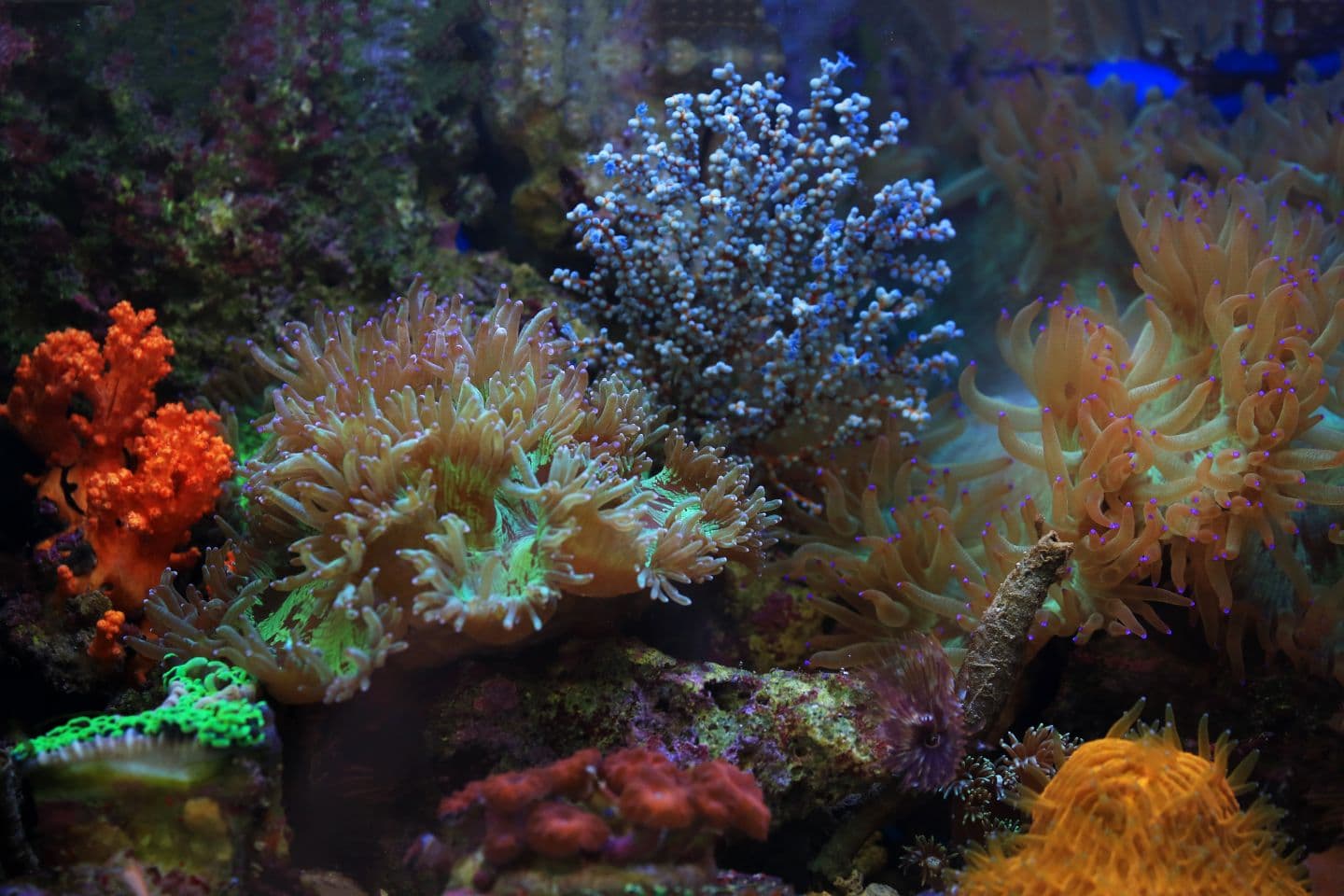
Phosphates in a Saltwater Tank: Why They Build Up and How to Bring Them Down
Phosphate rarely gets the same attention as ammonia or nitrite, but in an established saltwater aquarium it is one of the two nutrients, alongside nitrate, most directly responsible for nuisance algae
Phosphate rarely gets the same attention as ammonia or nitrite, but in an established saltwater aquarium it is one of the two nutrients, alongside nitrate, most directly responsible for nuisance algae outbreaks and for holding corals back from their best colour and growth.
Where it comes from
Phosphate enters a tank from fish food, fish waste, decaying organic matter, and sometimes from the source water itself, since ordinary tap water and even some RO units can carry a surprising phosphate load. Live rock and certain substrates can also leach phosphate that has bound to them over time, particularly if the tank's pH has dipped below around 8.
Why it matters for corals specifically
Beyond fuelling algae, elevated phosphate interferes with coral calcification, slowing growth and dulling colour. Very low phosphate is not automatically better, though, since corals do need a small amount, and stripping it too aggressively can leave coral tissue pale and stressed. The aim is a stable, moderate level, not zero.
Bringing levels down
Regular water changes remove phosphate directly. A fifty percent change removes roughly half of whatever is currently dissolved in the water.
Reduce feeding, or switch to a more targeted feeding approach so less food goes uneaten and breaks down into the water column.
Use a phosphate removing media such as GFO in a reactor for tanks running persistently high readings.
Grow macroalgae such as chaetomorpha in a refugium to take up phosphate as it grows, then export it by harvesting and discarding the macroalgae regularly.
Test your source water as well as your tank water. If your RO or RO/DI unit's membrane or resin is due for replacement, it can start passing phosphate straight through.
A useful ratio to keep in mind
Many reef keepers find it helpful to watch the balance between nitrate and phosphate rather than fixating on phosphate in isolation. A rough nitrate to phosphate ratio of around 10 to 1 is often cited as a sign the tank's nutrients are in reasonable balance, useful context if your phosphate reading looks fine on its own but algae is still a persistent problem.
An India note on testing
Reliable phosphate test kits from established marine brands are readily available through Indian aquarium importers and online marketplaces, and are worth the investment over relying on visual algae growth as your only indicator. Since municipal water quality varies significantly between Indian cities, testing your specific tap and RO source water once, rather than assuming it matches what other hobbyists online are reporting, will save a lot of guesswork later.
The scissortail rasbora, Rasbora trilineata, gets its name from the black-and-white banded tail fin, which opens and closes in a scissoring motion as the fish swims, a genuinely visible behaviour rath
Flushing a fish, whether dead or simply unwanted, down the toilet is a habit many Indian households have inherited without questioning it, and it carries real risks that are worth understanding.
A cover might seem like an afterthought compared to filtration or lighting, but for a saltwater tank it does real, unglamorous work: cutting evaporation, which matters a great deal given how salinity