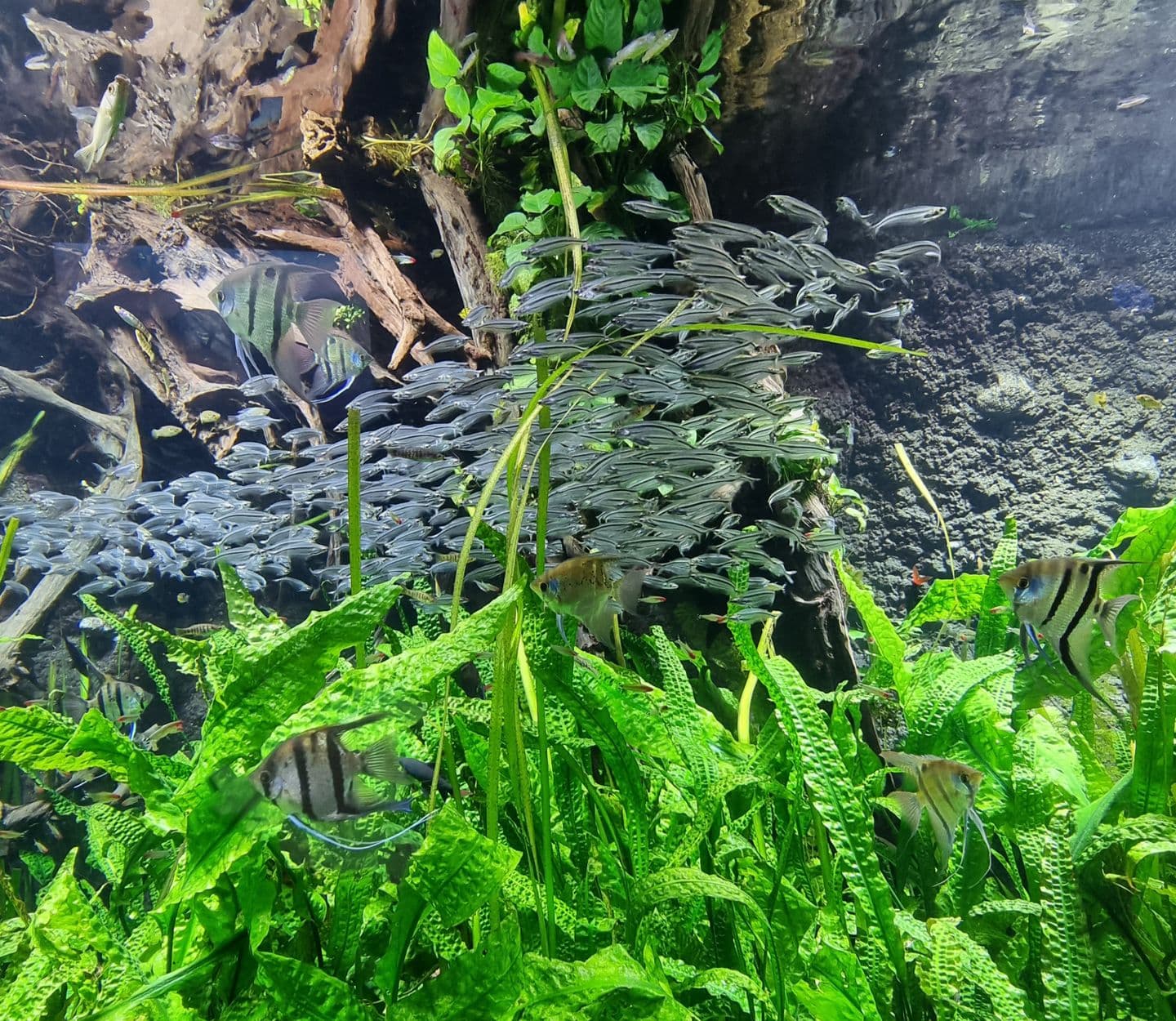
Schooling Fish: Why Numbers Matter in Your Aquarium
Species like tetras, danios, rasboras and barbs are frequently sold as single fish or in small pairs, which misses the point of what these fish actually need to display natural, healthy behaviour.
Species like tetras, danios, rasboras and barbs are frequently sold as single fish or in small pairs, which misses the point of what these fish actually need to display natural, healthy behaviour.
Why schooling fish need groups
In the wild, these species move in large groups as a defence against predators, and that instinct does not switch off in a home aquarium. A schooling fish kept alone or in a group of two or three typically shows chronic low-level stress, hiding more, eating less confidently, and displaying duller colour than the same species kept in a proper school.
How many is enough
A minimum group size of six is a reasonable working rule for most commonly available schooling species, and larger groups of eight to twelve, where tank size allows, produce noticeably calmer, more naturally behaved fish. Splitting your stocking budget across fewer species in proper school sizes generally produces a more attractive and less stressed tank than a small number of many different species.
Popular Indian aquarium shop schooling species
Zebra danios and pearl danios, active, hardy, and ideal for a first schooling group
Neon tetras and cardinal tetras, prized for colour but happier in a settled, established tank than a brand new one
Harlequin rasboras, calm and peaceful, good alongside gouramis or dwarf cichlids
Tiger barbs, active and best kept in a proper school specifically because a small group tends to nip fins out of frustrated social behaviour, a problem that eases in larger numbers
Tank size considerations
Schooling fish need horizontal swimming space more than they need depth, so a longer, lower tank generally suits a school better than a tall, narrow one of the same volume. Leave open swimming areas rather than filling the whole footprint with decor, since a school needs room to actually move together.
The scissortail rasbora, Rasbora trilineata, gets its name from the black-and-white banded tail fin, which opens and closes in a scissoring motion as the fish swims, a genuinely visible behaviour rath
Flushing a fish, whether dead or simply unwanted, down the toilet is a habit many Indian households have inherited without questioning it, and it carries real risks that are worth understanding.
A cover might seem like an afterthought compared to filtration or lighting, but for a saltwater tank it does real, unglamorous work: cutting evaporation, which matters a great deal given how salinity