Marine angelfish split broadly into two groups that behave like entirely different fish once you own them. Dwarf angelfish, from the genus Centropyge, stay under six inches and can work in reef tanks
Marine angelfish split broadly into two groups that behave like entirely different fish once you own them. Dwarf angelfish, from the genus Centropyge, stay under six inches and can work in reef tanks of 55 to 90 gallons, though every species carries some risk of nipping at coral. Large angelfish, from genera such as Pomacanthus and Pygoplites, are showpiece fish that outgrow small systems within a year or two and generally are not considered reef safe at all. Deciding which group fits your tank before falling for a colourful juvenile at the shop will save a great deal of regret later.
Dwarf Angelfish
Flame Angel (Centropyge loricula)
Adult size: about 4 inches
Minimum tank size: 70 gallons
Diet: omnivore, offer spirulina, mysis, high quality marine pellet and some nori
Reef compatibility: reef safe with caution, coral nipping is unpredictable and permanent once it starts
Care level: moderate, one of the more commonly kept dwarf angels in India
A vivid orange red body crossed with black vertical bars makes the Flame Angel one of the most photographed fish in the marine hobby, and it is fairly readily available through Indian marine importers. The honest caveat every reefer will give you is that this fish is reef safe until the day it decides it is not, and once an individual starts nipping at LPS or soft coral it rarely stops. Feeding it well and often, with a genuinely varied diet, is the best insurance against that habit developing. It is a hardy species once past acclimatisation and does well in a moderately sized reef with plenty of rockwork to patrol.
Coral Beauty (Centropyge bispinosa)
Adult size: about 4 inches
Minimum tank size: 70 gallons
Diet: omnivore, algae, spirulina and meaty frozen foods
Reef compatibility: generally considered one of the safer dwarf angels for coral
Care level: easy, a sensible first dwarf angel
The Coral Beauty carries a wash of electric blue, orange and purple across its body and is widely regarded as one of the hardiest and most beginner friendly dwarf angels in the trade. It adapts well to captive diets, settles into a new tank quickly, and is markedly less inclined to bother coral than close relatives such as the Lemonpeel or Bicolor Angel, though no dwarf angel should be treated as guaranteed reef safe. It is a good choice for a keeper's first dwarf angel and a common, affordably priced fish at most Indian marine retailers.
Lemonpeel Angel (Centropyge flavissima)
Adult size: about 5 inches
Minimum tank size: 55 gallons
Diet: omnivore, algae, spirulina, meaty foods and plenty of live rock grazing
Reef compatibility: moderate risk, known to nip LPS, SPS and clam mantles
Care level: moderate, best suited to larger, well established reefs
A bright canary yellow body with fine blue rings around the eyes and gill plate makes the Lemonpeel Angel one of the most striking dwarf angels available, but it also carries one of the higher coral nipping risks in the group, alongside the Bicolor Angel. Keepers who want to try one in a reef tank generally do best in a large, mature system with abundant natural algae growth, introducing the fish last so it is not defending territory against later arrivals, and keeping it consistently well fed with vegetable matter to reduce the temptation to graze on coral tissue instead.
African Flameback (Centropyge acanthops)
Adult size: about 3 inches, one of the smallest dwarf angels kept
Minimum tank size: 30 to 55 gallons
Diet: omnivore, algae, spirulina and finely chopped meaty foods
Reef compatibility: considered one of the safer dwarf angels around coral
Care level: easy, a good choice for a smaller reef tank
The African Flameback, also called the African Pygmy Angelfish, pairs a deep blue body with a bold orange yellow patch running from the head along the back, packed into one of the smallest bodies in the entire Centropyge genus. Its compact adult size means it can work in tanks too small for most other dwarf angels, which suits the smaller reef set ups common in Indian apartments, and it is regularly named alongside the Coral Beauty as one of the more reliable beginner choices for a first attempt at keeping a dwarf angel in a reef tank.
Large Angelfish
Emperor Angel (Pomacanthus imperator)
Adult size: up to 15 to 16 inches
Minimum tank size: 125 gallons for a juvenile, 250 gallons or more for a full adult
Diet: omnivore, sponges, algae, mysis and marine angelfish preparations
Reef compatibility: reef safe with caution, larger specimens especially may nip at LPS and clam mantles
Care level: moderate, but demands very serious long term tank space
The Emperor Angel is one of the true showpiece fish of the marine hobby, and its transformation from a juvenile is genuinely dramatic, starting out jet black with concentric white and electric blue rings before slowly developing the bold blue and yellow horizontal stripes and black eye mask of the adult over several years. The colour change begins once the fish reaches roughly 3 to 5 inches and typically takes another two to three years to complete, so a buyer picking up a small juvenile should expect to watch this transformation unfold gradually rather than see it happen quickly. Its natural range spans the Indian and Pacific Oceans, including East African reefs, giving it a legitimate India relevant provenance even though virtually all specimens sold locally are still imported. This is not a fish to buy on impulse. A juvenile purchased for a modest tank will need rehoming or a very large upgrade as it grows, so plan the endgame, ideally a system of 250 gallons or more for a full grown adult, before bringing one home.
Regal Angel (Pygoplites diacanthus)
Adult size: about 10 inches
Minimum tank size: 125 gallons
Diet: carnivore leaning omnivore, sponge based and marine angelfish frozen foods are essential
Reef compatibility: reef safe with caution
Care level: difficult, notorious for refusing food, best left to experienced keepers
Also called the Royal Angelfish, the Regal Angel is widely considered one of the most beautiful fish in the entire marine trade and, in the same breath, one of the hardest to keep alive. A large share of wild caught specimens simply never adapt to prepared aquarium foods and slowly starve, so watching a fish actively feeding in the dealer's tank before purchase is not optional advice, it is essential. There is a genuinely useful India relevant point here: specimens collected from the Indian Ocean, rather than the wider Indo Pacific, tend to adapt to captivity and prepared foods noticeably better, so ask your supplier about the source region before buying, and be prepared to walk away if the fish is not visibly eating. One practical way to spot likely Indian Ocean or Maldivian stock at a shop is the breast colour, mature specimens from the Maldives and the Red Sea typically show a distinctive yellow breast, where fish from further east across the Indo-Pacific usually show blue or grey instead. Increasingly, captive bred Regal Angels raised on prepared pellet diets from the outset are also entering the trade, and these settle into home aquariums far more reliably than wild caught fish, so it is worth asking a supplier specifically whether captive bred stock is available before committing to a wild caught specimen.
Blueface Angel (Pomacanthus xanthometopon)
Adult size: up to 15 inches
Minimum tank size: 220 gallons for an adult
Diet: omnivore, sponges, algae, mysis and marine angelfish preparations
Reef compatibility: not reef safe, will pick at LPS coral and clam mantles
Care level: moderate, size and territoriality are the main challenges
The Blueface Angel earns its name from the striking blue mask across its face, set against a yellow body patterned with blue scribbled lines and a dark saddle across the shoulder. It is semi aggressive and territorial, particularly toward other large angels introduced after it, and needs one of the biggest tanks on this list once fully grown. Feeding is generally straightforward once the fish settles, with a good acceptance of frozen and prepared angelfish foods, but the sheer footprint this species eventually needs rules it out for anything but a dedicated, oversized system.
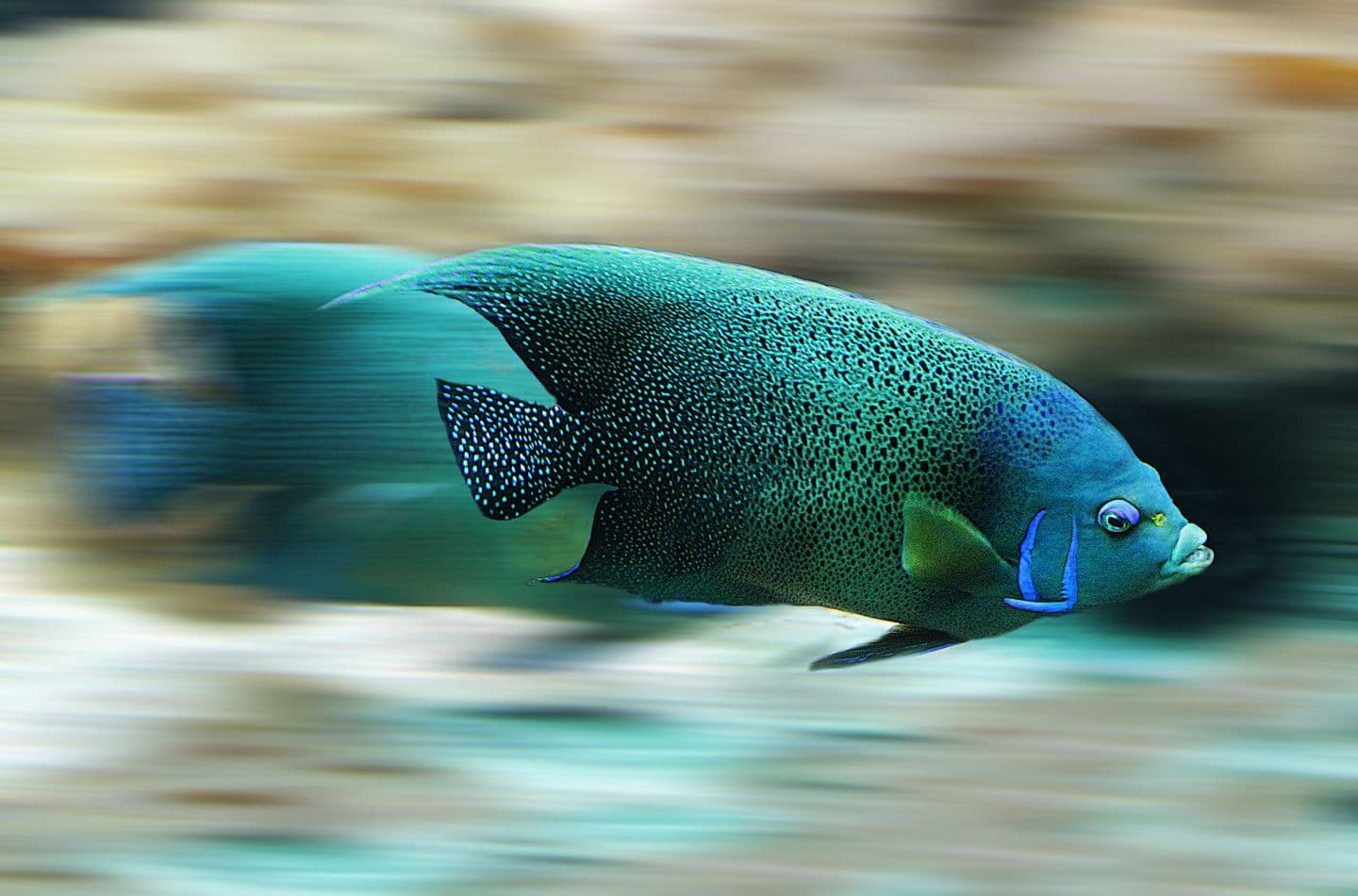
Koran Angel (Pomacanthus semicirculatus)
Adult size: up to 15 inches
Minimum tank size: 135 gallons as a young adult, 225 to 275 gallons at full size
Diet: omnivore, sponges, algae, mysis and marine angelfish preparations
Reef compatibility: not reef safe, picks at LPS coral and anemones
Care level: moderate, one of the more forgiving large angels once established
Sold as a juvenile with markings similar enough to a baby Emperor Angel that the two are frequently confused in shops, the Koran Angel develops into a large, hardy fish with a yellowish green body deepening toward the tail and bright blue outlining on the fins. It is often recommended as one of the better first large angels for a keeper ready to commit to a genuinely big tank, since it acclimatises and feeds more readily than fussier relatives such as the Regal Angel. It will however become the dominant, territorial personality in a fish only system as it matures, so plan tankmates with that in mind.
The scissortail rasbora, Rasbora trilineata, gets its name from the black-and-white banded tail fin, which opens and closes in a scissoring motion as the fish swims, a genuinely visible behaviour rath
Flushing a fish, whether dead or simply unwanted, down the toilet is a habit many Indian households have inherited without questioning it, and it carries real risks that are worth understanding.
A cover might seem like an afterthought compared to filtration or lighting, but for a saltwater tank it does real, unglamorous work: cutting evaporation, which matters a great deal given how salinity