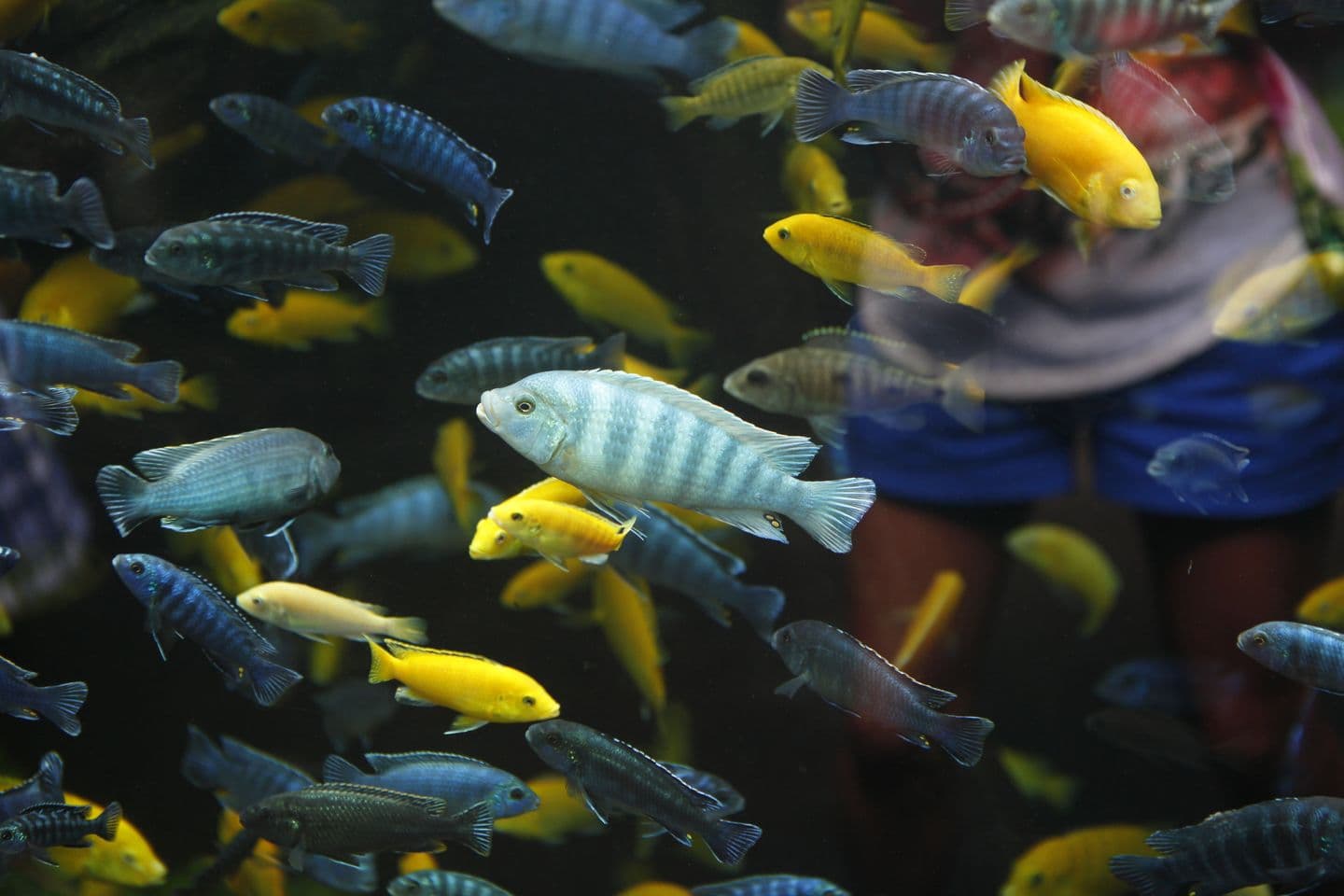
Convict Cichlid: A Beginner Cichlid With a Serious Breeding Streak
The convict cichlid gets its name from the bold black and grey-white vertical bands across its body, resembling a prisoner's stripes. It comes from Central America and reaches around twelve to fifteen
The convict cichlid gets its name from the bold black and grey-white vertical bands across its body, resembling a prisoner's stripes. It comes from Central America and reaches around twelve to fifteen centimetres, making it one of the more manageably sized cichlids commonly kept.
It is widely regarded as one of the easiest cichlids for a first-time cichlid keeper to succeed with, both for its hardiness and for how readily and reliably it breeds in home aquariums, often becoming a keeper's first experience of genuine cichlid parental care.
Tank and water requirements
A pair does well in a tank of eighty litres or more, with caves and flat rocks for spawning sites. It is highly tolerant of a wide range of water conditions, including typical Indian tap water, and does not require particularly soft or specialised water chemistry.
A secure, well-decorated tank with clear territorial boundaries helps manage the aggression that reliably appears once a pair begins breeding.
Diet and a breeding warning
An omnivorous diet of good-quality cichlid pellets, supplemented with occasional live or frozen food, suits it well. It is not a fussy eater and adapts readily to whatever is offered.
The single most important thing to know before buying convict cichlids is how aggressively protective a breeding pair becomes. Once paired and spawning, convicts will fiercely defend eggs and fry against anything else in the tank, including much larger fish, and a community tank is rarely a suitable long-term home once breeding starts.
Buying tips
Among the cheapest cichlids available in India, often thirty to eighty rupees per fish
A genuinely good first cichlid for a keeper wanting to observe real parental and breeding behaviour
Plan for a species-only or carefully chosen tank once a pair begins breeding, given how aggressively territorial they become
The scissortail rasbora, Rasbora trilineata, gets its name from the black-and-white banded tail fin, which opens and closes in a scissoring motion as the fish swims, a genuinely visible behaviour rath
Flushing a fish, whether dead or simply unwanted, down the toilet is a habit many Indian households have inherited without questioning it, and it carries real risks that are worth understanding.
A cover might seem like an afterthought compared to filtration or lighting, but for a saltwater tank it does real, unglamorous work: cutting evaporation, which matters a great deal given how salinity