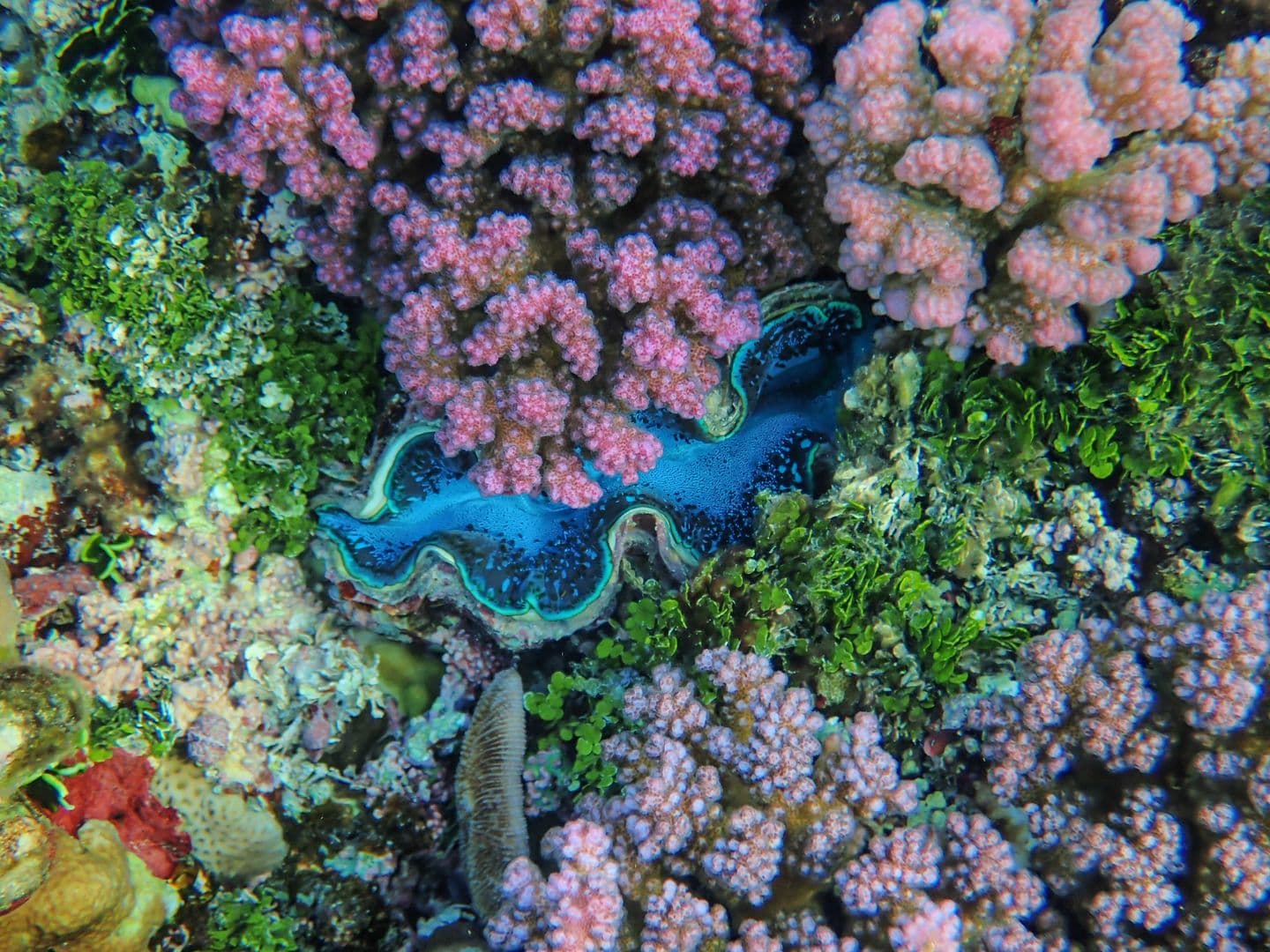
Giant Clams: A Breed-by-Breed Care Guide for Indian Reef Tanks
Giant clams, genus Tridacna, are large marine bivalves that host colourful zooxanthellae within their mantle tissue and depend on that relationship for most of their energy, in much the same way a pho
Giant clams, genus Tridacna, are large marine bivalves that host colourful zooxanthellae within their mantle tissue and depend on that relationship for most of their energy, in much the same way a photosynthetic coral does. They also filter particulate matter from the water column as they feed, which gives them a genuine secondary role as natural water polishers in a reef tank rather than being purely ornamental. Three species make up almost all of the giant clam trade worldwide: Maxima, Crocea and Derasa, each with a distinct look and a slightly different care profile.
This is the one category in this whole series where India's own waters are directly relevant, and it deserves to be said plainly: Tridacna maxima, along with Tridacna squamosa, occurs naturally on reefs in Lakshadweep and the Andaman and Nicobar Islands, and giant clams are listed under Schedule I of India's Wildlife (Protection) Act, 1972, the same highest protection tier given to species such as the tiger. This makes both wild collection and domestic trade of giant clams illegal in India. Unlike the corals covered earlier in this series, this is not a case of India simply lacking reefs of its own; it is a deliberate protection of a species that lives in Indian waters. Any giant clam that does turn up in the Indian aquarium hobby has, in effect, gone around that protection, and this is worth treating as a serious consideration rather than a minor technicality before buying one.
Across all three species, a few care principles hold true. The mantle needs to face directly upward toward the light source, since that is where the zooxanthellae capture most of the clam's energy; a clam wedged into a crevice that blocks part of its mantle will slowly starve even if the rest of the tank is fine. Checking periodically that a clam has not tipped onto its side matters too, since a fallen clam should be righted immediately rather than left to reposition itself. Calcium, magnesium and alkalinity all need to sit in the same stable ranges required by LPS and SPS corals, since clams build a genuinely large shell over their lifetime. Specimens under about 7 to 8 cm benefit from occasional supplemental phytoplankton, since young clams have not yet built up enough zooxanthellae to be fully self-sufficient.
1. Maxima Clam (Tridacna maxima)
Often called the small giant clam, since the true giant clam is the much larger Tridacna gigas, the Maxima is prized for some of the most vivid mantle colouration in the genus, appearing in blues, greens, gold and turquoise with intricate, almost painted patterns. Its shell is somewhat elongated compared to the stockier Crocea. Maxima needs some of the highest light intensity of any commonly kept clam and should be placed in rockwork rather than sand, since it attaches itself firmly using byssal threads.
Lighting: high, roughly 150 to 350+ PAR; among the most light-hungry clams in the trade
Flow: moderate; avoid strong direct current that flaps or stresses the mantle
Placement: hard substrate or rockwork, not sand, so the byssal foot can anchor properly
Water chemistry: calcium 400 to 450 ppm, magnesium 1250 to 1380 ppm, alkalinity 8 to 10 dKH, strontium 6 to 10 ppm
Tankmates: avoid hermit crabs and mantle-nipping fish such as some dwarf and large angelfish
India note: this is the species with genuine native populations in Lakshadweep and the Andaman and Nicobar Islands, and is Schedule I protected as a result
2. Crocea Clam (Tridacna crocea)
Crocea is the smallest Tridacna species commonly kept, typically maxing out around 15 cm, and is sometimes called the boring clam because of its habit of dissolving a shallow cavity into rock or coral substrate using a mild acid at its base, eventually leaving only the colourful mantle visible above the surface. Despite the small size, Crocea often shows some of the most saturated colours of any clam species, in golds, blues, greens, oranges and purples with distinctive patterning.
Lighting: high, similar to Maxima; among the more light-demanding clam species
Flow: low to moderate
Placement: hard rockwork only, ideally the middle to upper tank; Crocea is never found on sand even in the wild
Hardiness: generally considered one of the more resilient Tridacna species once properly acclimated
Buying tip: healthy specimens close firmly and quickly in response to a passing shadow; a clam that does not react this way is likely stressed
3. Derasa Clam (Tridacna derasa)
Derasa is widely regarded as the hardiest and easiest Tridacna species to keep, which makes it a sensible starting point for a reef keeper trying giant clams for the first time. It tends to show less intense colouration than Maxima or Crocea, but its lighting requirements are more moderate and it tolerates minor fluctuations in water quality noticeably better. Unlike Maxima and Crocea, Derasa does not attach itself firmly to hard rock in the same way and is generally kept resting on the sandbed instead.
Lighting: moderate to high; more tolerant of slightly lower light than Maxima or Crocea
Flow: moderate
Placement: sandbed rather than rockwork
Suitability: the recommended first clam species for a reef keeper new to tridacnids
Size: grows larger over time than Crocea, among the bigger commonly kept Tridacna species
The scissortail rasbora, Rasbora trilineata, gets its name from the black-and-white banded tail fin, which opens and closes in a scissoring motion as the fish swims, a genuinely visible behaviour rath
Flushing a fish, whether dead or simply unwanted, down the toilet is a habit many Indian households have inherited without questioning it, and it carries real risks that are worth understanding.
A cover might seem like an afterthought compared to filtration or lighting, but for a saltwater tank it does real, unglamorous work: cutting evaporation, which matters a great deal given how salinity