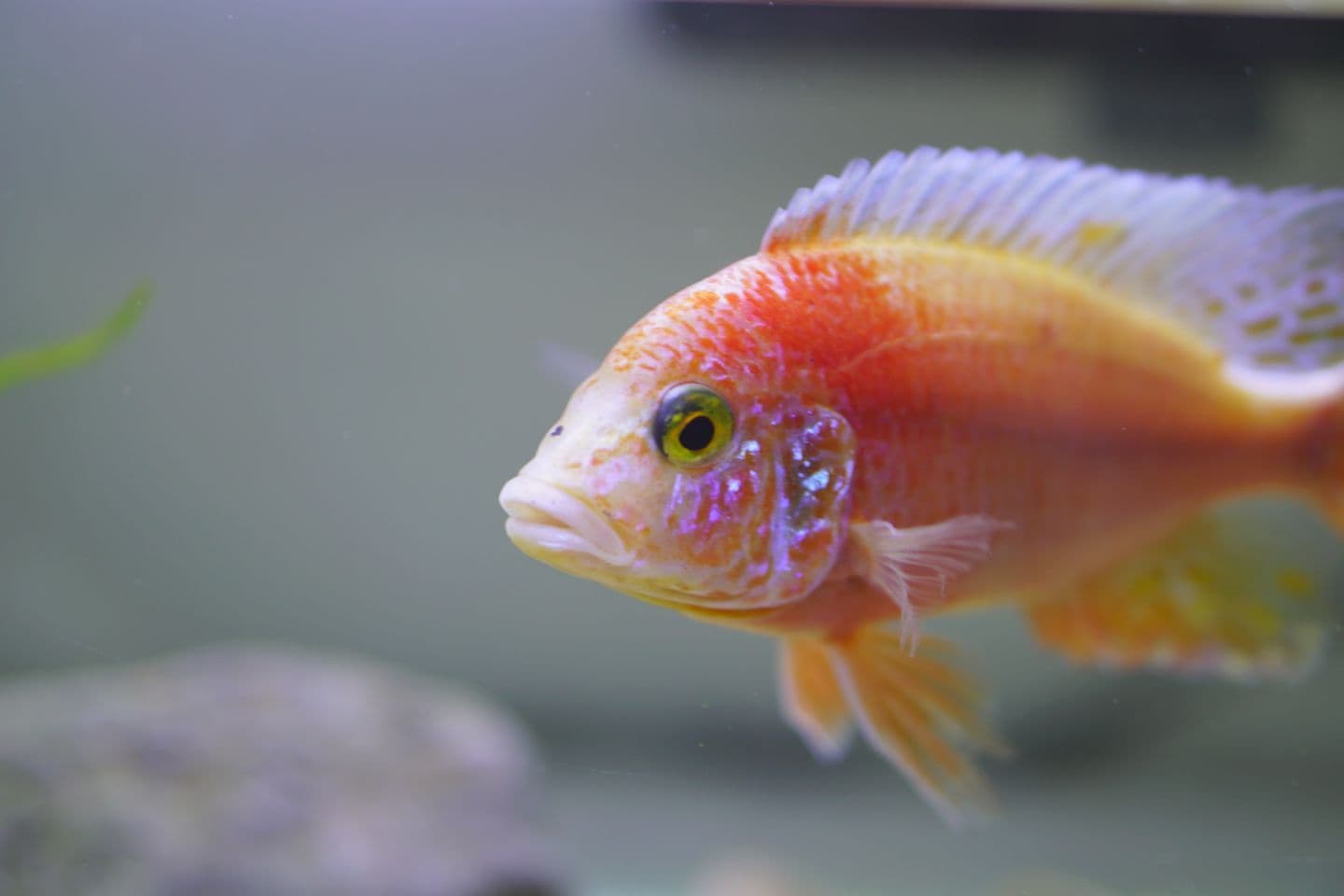
Kribensis: An Easy-Breeding Cichlid From West Africa
The kribensis carries a soft olive-brown body with a striking magenta-pink belly, most vivid in breeding females, and a dark horizontal stripe running the length of the body. It comes from Nigeria and
The kribensis carries a soft olive-brown body with a striking magenta-pink belly, most vivid in breeding females, and a dark horizontal stripe running the length of the body. It comes from Nigeria and Cameroon in West Africa, with males growing to around ten centimetres and noticeably smaller, rounder females typically staying closer to seven or eight, a useful size difference for telling the sexes apart alongside the female's brighter belly colour.
It is one of the easiest cichlids in the entire hobby to breed successfully, forming stable pairs that show attentive, genuinely interesting parental care, making it a popular choice for a keeper wanting to witness cichlid breeding behaviour without excessive aggression or a large tank.
Tank and water requirements
A pair does well in a tank of sixty litres or more, with caves, flowerpots or PVC pipe sections offering the enclosed breeding sites this species favours. It tolerates a reasonable range of water conditions, including typical Indian tap water.
A tank with a mix of open swimming space and defensible cave territory suits its natural behaviour and reduces unnecessary conflict with tankmates.
Diet and a colour note
An omnivorous diet of good-quality cichlid pellets, supplemented with occasional live or frozen food, suits it well. It is not a fussy eater and adapts readily to whatever is offered.
Its belly colour genuinely intensifies with water quality, diet and breeding condition, so a dull-coloured kribensis in a shop tank often colours up considerably once settled into a stable, well-kept home aquarium.
Buying tips
Priced around fifty to one hundred twenty rupees per fish in most Indian shops
A genuinely good choice for observing real cichlid breeding and parental care without a large, specialised tank
Provide caves or enclosed spaces specifically to encourage this species' natural breeding behaviour
The scissortail rasbora, Rasbora trilineata, gets its name from the black-and-white banded tail fin, which opens and closes in a scissoring motion as the fish swims, a genuinely visible behaviour rath
Flushing a fish, whether dead or simply unwanted, down the toilet is a habit many Indian households have inherited without questioning it, and it carries real risks that are worth understanding.
A cover might seem like an afterthought compared to filtration or lighting, but for a saltwater tank it does real, unglamorous work: cutting evaporation, which matters a great deal given how salinity