LPS (Large Polyp Stony) Corals: A Breed-by-Breed Care Guide for Indian Reef Tanks
LPS corals are stony corals with a hard calcium carbonate skeleton wrapped in a thick, fleshy layer of tissue, which is where the group gets its name: Large Polyp Stony. They sit between soft corals a
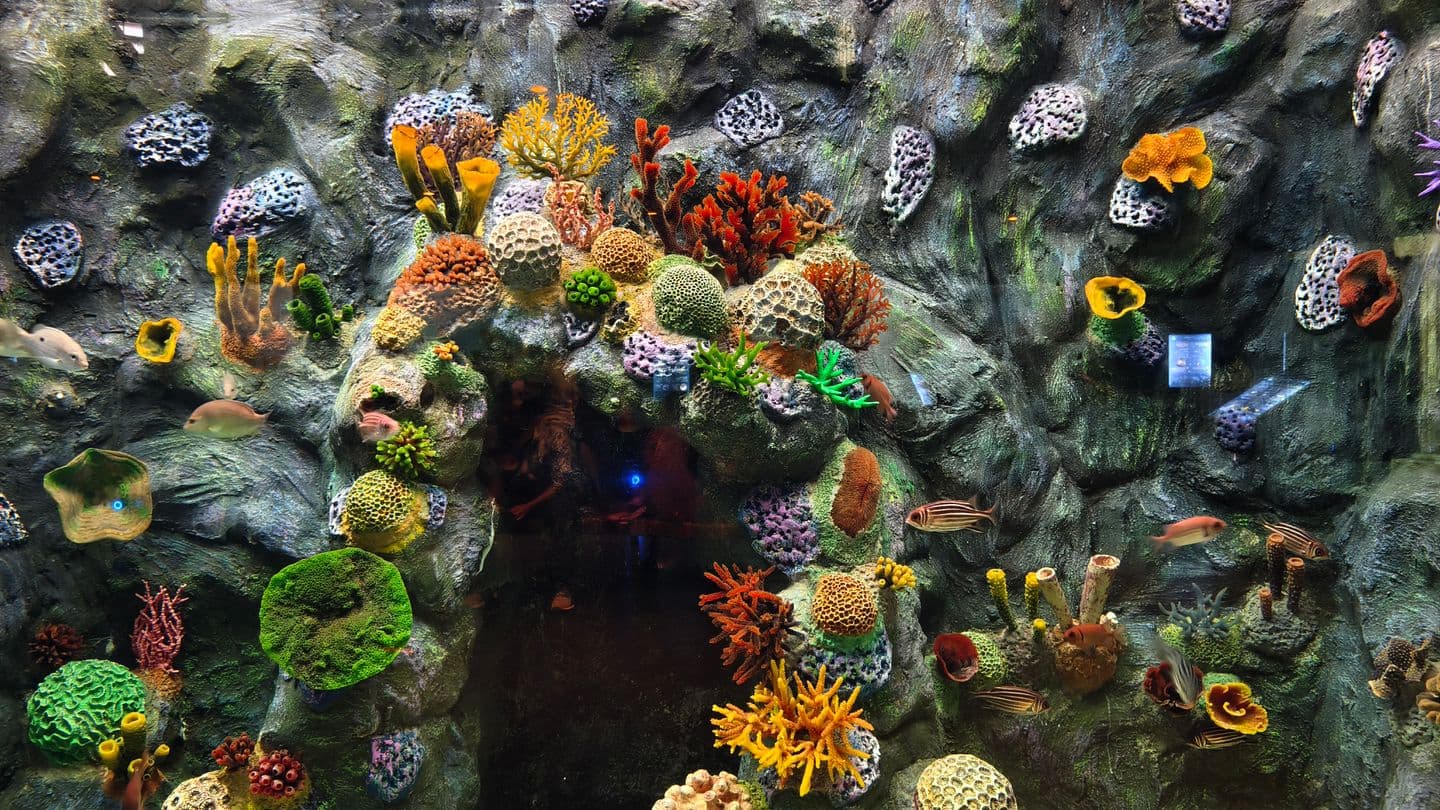
LPS corals are stony corals with a hard calcium carbonate skeleton wrapped in a thick, fleshy layer of tissue, which is where the group gets its name: Large Polyp Stony. They sit between soft corals and SPS corals in terms of demand. Most are forgiving enough for a reef keeper whose saltwater tank has been stable for six months to a year, yet striking enough to build an entire display around. As a group, LPS corals tend to prefer low to moderate lighting, roughly 50 to 150 PAR, and gentle to moderate indirect flow, which makes them a natural next step after fish, invertebrates and easier soft corals rather than a first purchase.
A legal reality worth knowing before buying: every stony coral in this article, along with the SPS corals and giant clams covered later in this series, falls under Schedule I of India's Wildlife (Protection) Act, 1972. A notification dated 11 July 2001 added all reef-building (Scleractinian) coral to this schedule, the same tier of protection given to species such as the tiger, which places a complete ban on trading, keeping or possessing them within India. This is not a theoretical risk: in May 2022, two aquarium hobbyists in Kolkata were arrested and held in judicial custody for a week for keeping live coral in their home fish tanks. In practice, the Indian marine aquarium hobby still sources LPS coral, largely through informal or personal-import routes rather than transparent retail, but anyone buying it should go in aware that this sits in a legal grey zone with real enforcement precedent, rather than assume it works the same way as ordering a clownfish or a cleaner shrimp.
Beyond that legal context, most LPS corals share a similar care routine. Target feeding once or twice a week with meaty foods such as mysis shrimp, chopped seafood or a coral pellet helps polyp fullness and colour, though a few genera barely need it. Stable water chemistry matters more than any single parameter: calcium around 400 to 450 ppm, alkalinity between 8 and 11 dKH, magnesium around 1250 to 1350 ppm, and a steady temperature of 24 to 27°C (75 to 80°F). Many LPS corals also grow long sweeper tentacles that extend at night to sting neighbouring corals, so spacing between colonies matters as much as lighting or flow. The nine corals below cover the shapes, colours and care levels most commonly sold under the LPS banner.
1. Hammer Coral (Euphyllia ancora / Euphyllia paradivisa)
Hammer coral gets its name from the anchor or hammer-shaped tips on its tentacles, which sway gently in the current and give the colony a soft, almost underwater-garden look. It comes in two growth forms: branching, where individual heads sit on separate stalks, and wall, where heads grow in a tighter row. Branching hammer is generally the more forgiving of the two and better suited to a first attempt at Euphyllia.
Lighting: low to moderate, roughly 75 to 150 PAR
Flow: gentle to moderate, indirect rather than direct current
Feeding: benefits from mysis or reef pellets once or twice a week, though it is not an aggressive feeder
Aggression: moderately aggressive with long sweeper tentacles; leave at least 15 cm from neighbouring corals
Placement: middle to lower reef, away from direct flow that could tear the fleshy tissue
2. Torch Coral (Euphyllia glabrescens)
Torch coral is the most dramatic of the commonly kept Euphyllia species, with long extended tentacles tipped in bulbous, often two-toned colour that seems to glow under blue lighting. It is also the most aggressive of the three, with a sting strong enough to damage almost any non-Euphyllia coral it touches, so it needs generous clearance from its neighbours. The fleshy tissue tears easily if the coral is lifted out of water or handled roughly, which can lead to tissue necrosis, so it is best moved gently and kept submerged during any tank maintenance.
Lighting: low to moderate; avoid very high-intensity fixtures
Flow: moderate, indirect, enough to keep the tentacles swaying without folding them over
Feeding: accepts small meaty foods, though feeding response is often weaker than hammer or frogspawn
Aggression: high; keep well clear of soft corals and non-Euphyllia LPS
Placement: lower half of the tank works well given its height and reach
3. Frogspawn Coral (Euphyllia divisa)
Frogspawn coral takes its name from tentacles with multiple rounded tips clustered together, giving a bushier, egg-cluster appearance compared to the single hammer-shaped tips of hammer coral or the longer, single-tipped tentacles of torch coral. Within the Euphyllia group it is often considered the more approachable option, though it still carries a sting and should not be assumed safe to place against any neighbouring coral without watching how both respond over the following days.
Lighting: low to moderate; upper to middle tank placement generally suits it well
Flow: moderate, indirect
Feeding: similar routine to hammer coral, small meaty foods once or twice weekly
Aggression: moderate; leave 8 to 15 cm from other corals as a starting point
4. Duncan Coral (Duncanopsammia axifuga)
Duncan coral is one of the easiest and fastest-growing corals in the LPS category, which makes it a common recommendation for a first stony coral. Its tentacles are short and largely lack sweeper reach, making it one of the more peaceful corals on this list; it is more likely to be stung by an aggressive neighbour than to sting one itself, so keep it 8 to 10 cm clear of hammer, torch, frogspawn or other long-tentacled corals. Duncan feeds eagerly and reliably, and colonies that are fed two to three times a week with mysis shrimp or a reef roid-style food have been reported to grow from a single head to ten or more within five to six months.
Lighting: moderate
Flow: moderate, enough to keep debris from settling on the polyps
Feeding: strong feeding response; two to three times a week accelerates head production noticeably
Aggression: low; the main risk is damage from neighbours rather than damage it causes
5. Candy Cane Coral (Caulastrea)
Candy cane coral gets its common name from the striped appearance of its stalks, which fan out into columnar polyps in shades of green, neon, blue or purple. It adapts to a wide range of lighting and flow conditions and tolerates minor water quality lapses better than many LPS corals, which makes it a genuinely easy beginner choice. It is also an aggressive and reliable feeder, and consistent feeding two to three times a week with mysis, krill or a liquid coral food can take a colony from one polyp to twenty or more within a year. Fragging is straightforward: the polyps sit on elongated stalks that can be separated cleanly with a coral cutter and reattached to a new plug.
Lighting: adaptable, low to moderate works well
Flow: adaptable, moderate is ideal
Feeding: aggressive feeder; two to three times a week for fastest growth
Aggression: moderate, with short sweeper tentacles; give it modest breathing room from neighbours
Sometimes sold as pineapple coral, Blastomussa forms tight clusters of rounded, fleshy polyps in jewel-toned colours and is one of the least demanding corals in this list when it comes to lighting and flow. It is a peaceful coral with limited aggression, which is an advantage in a mixed reef but also means it can lose out to more territorial neighbours if crowded, so give it a calmer spot rather than placing it next to fast-growing or aggressive corals. It draws most of its energy from its zooxanthellae and largely takes care of itself, though offering fine foods such as phytoplankton from time to time can support growth.
Lighting: low to moderate
Flow: low to moderate
Feeding: not essential but appreciates occasional fine foods
Aggression: low; place away from territorial or fast-spreading corals
7. Acan Coral (Acanthastrea, now largely reclassified as Micromussa lordhowensis)
Acan coral, often called Acan Lords in the trade, is prized for an unusually wide colour range that includes neon greens, fiery oranges and rare rainbow or 'designer' patterns on fleshy, encrusting polyps that inflate dramatically when feeding. In 2016 taxonomists reclassified most trade Acans from the genus Acanthastrea to Micromussa lordhowensis, though the common name Acan has stuck in the hobby regardless. Unlike many LPS corals, Acan is somewhat sensitive to excess light and can bleach under fixtures that suit other LPS well, so it is worth erring on the lower side of its range and watching how it responds.
Lighting: low to moderate, roughly 50 to 150 PAR, with 75 to 125 PAR often reported as the sweet spot
Flow: moderate, indirect; strong enough to prevent debris settling on the fleshy polyps without blasting them
Feeding: responds well to target feeding with small meaty foods
Aggression: semi-aggressive; extends sweeper tentacles 2 to 5 cm at night, so allow 10 to 15 cm of spacing
Water chemistry: alkalinity 8 to 11 dKH and calcium 400 to 450 ppm support steady growth
Brain coral is a broad trade name covering two quite different growth forms, and it is worth knowing which one you are buying. Open brain corals, mainly Trachyphyllia, are free-living rather than attached to rock; they rest directly on the sandbed and inflate dramatically during the day, sometimes to two or three times the size of the skeleton underneath, hiding it almost completely. Each Trachyphyllia is solitary, with a single mouth per skeleton. Closed brain corals, including Favia, Favites and Lobophyllia, attach permanently to rockwork and are colonial, with several polyps separated by visible ridges or grooves rather than one continuous fleshy mass. Of the two, closed brains are generally the hardier and more forgiving choice, with Lobophyllia usually considered the easiest to start with.
Lighting: low to moderate for both types, roughly 50 to 150 PAR
Flow: gentle and indirect for open brain corals, since strong flow folds the inflated tissue and prevents proper expansion; closed brains tolerate slightly more movement
Placement: open brain corals must sit on soft sand, never on rock, since sharp surfaces can damage the underside; closed brains attach to rock like most other LPS
Feeding: two to three times a week with mysis or chopped seafood, ideally at night once sweeper tentacles extend
Aggression: both types extend sweeper tentacles 5 to 15 cm at night; keep at least 10 cm of clearance from all neighbours
Warning sign: a brain coral that stays deflated for more than three to five days is under stress, usually from too much flow, too much light, recent acclimation, or a sting from a nearby coral
9. Plate Coral (Fungia)
Plate coral is a free-living, disc-shaped LPS coral that rests directly on the sandbed rather than attaching to rock, and healthy specimens can inflate, shift position slightly and extend long tentacles that give the coral a flowing, almost animated look. Because it is not anchored, placement takes some care: Fungia should never be set on rockwork, since sharp edges can damage its soft underside, and it needs open sand with enough clearance to expand without brushing against neighbouring corals.
Lighting: moderate, roughly 50 to 120 PAR, acclimated gradually if the coral has come from lower light
Flow: low to moderate, gentle and indirect; too much flow can prevent the coral from inflating properly or even flip it
Feeding: strong feeding response; small portions once or twice a week support noticeable growth and expansion
Aggression: moderately aggressive; its tentacles can sting corals placed too close, so give it dedicated open space
Growth: slow to moderate, expanding in size over time rather than dividing rapidly into new heads
The scissortail rasbora, Rasbora trilineata, gets its name from the black-and-white banded tail fin, which opens and closes in a scissoring motion as the fish swims, a genuinely visible behaviour rath
Flushing a fish, whether dead or simply unwanted, down the toilet is a habit many Indian households have inherited without questioning it, and it carries real risks that are worth understanding.
A cover might seem like an afterthought compared to filtration or lighting, but for a saltwater tank it does real, unglamorous work: cutting evaporation, which matters a great deal given how salinity