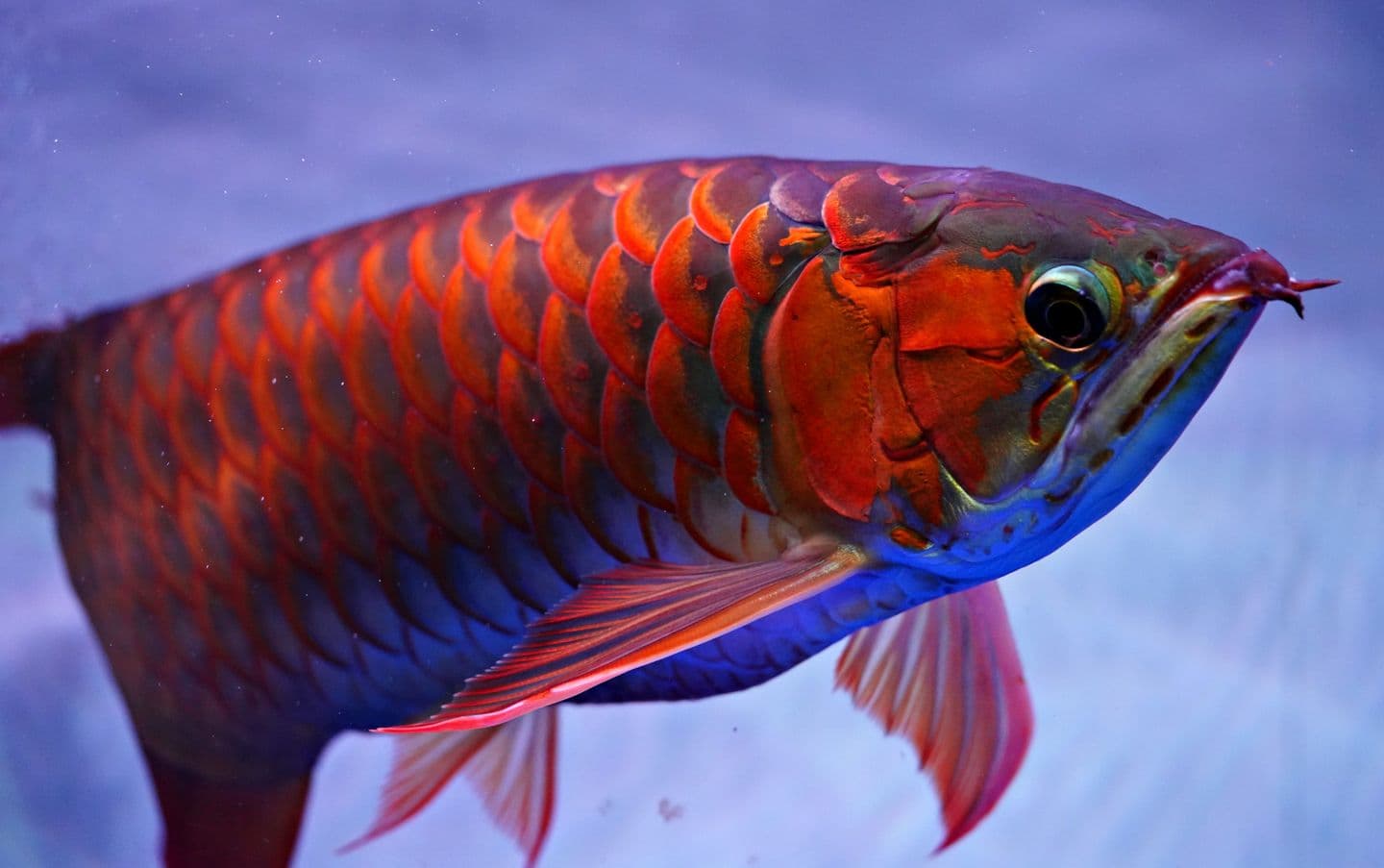
The Silver Arowana is one of the most striking freshwater fish available in the hobby, and also one of the most demanding, a genuine commitment rather than an impulse purchase, regardless of how small
The Silver Arowana is one of the most striking freshwater fish available in the hobby, and also one of the most demanding, a genuine commitment rather than an impulse purchase, regardless of how small and manageable the juveniles look in a shop tank.
At a glance
Scientific name: Osteoglossum bicirrhosum
Origin: Amazon basin, South America, inhabiting slow-moving rivers and flooded forest waterways
Adult size: commonly 80 to 100 centimetres in captivity, with wild specimens sometimes exceeding a metre
Lifespan: 10 to 20 years with proper care
Temperament: can be territorial and aggressive, particularly toward smaller fish it can fit in its mouth
Recognising a Silver Arowana
The species is immediately distinctive: an elongated, metallic silver body, a large upward-angled mouth built for surface hunting, and two long barbels extending from the lower jaw that give the fish its alternate nickname of dragon fish. It swims close to the surface for most of its life, using its upturned mouth to snatch insects, small fish and other prey from at or just above the waterline, and it is a genuinely powerful jumper capable of leaping well clear of the water to catch food.
Tank requirements: the real barrier to keeping this species
A juvenile can be kept temporarily in a tank of 250 to 300 litres, but this is only ever a starting point. A full grown adult needs a minimum of roughly 1,000 litres, with considerably more, sometimes cited at 250 to 300 US gallons (950 to 1,135 litres) or beyond, genuinely recommended for long term comfort, and length matters more than depth, since this is a surface-dwelling fish that swims continuously along the top of the water column rather than using the full water column vertically. A tight, secure lid is not optional given how readily this species jumps.
Water parameters and setup
Temperature: 24 to 28 degrees Celsius
pH: 6.0 to 7.5, and the species is genuinely tolerant of a range of water hardness once established
Filtration: a strong external canister filter, sized well above the tank's stated capacity given how much waste a fish this large produces
Decor: sparse, prioritising open swimming space over dense planting, since the fish's natural behaviour is to cruise long, open stretches near the surface
Diet
Silver Arowanas are carnivorous surface feeders. In the aquarium they take shrimp, mussels, fish fillets, crickets and other insects, and can be trained onto high quality carnivore pellets over time, which is worth doing since a diet of feeder fish alone carries a real risk of introducing parasites and provides less balanced nutrition. Juveniles often prefer live food initially but generally accept frozen or prepared alternatives with patience.
Tank mates and a realistic word of caution
Suitable companions are limited to similarly large, robust species that will not fit in the arowana's mouth and can hold their own if challenged, large catfish, bichirs, and similarly sized cichlids among the more commonly cited options. This is not a community fish, and it is not a species suited to the vast majority of home aquariums in India or anywhere else; it belongs firmly in the realm of dedicated large-fish keepers with the space, filtration budget, and long term commitment such a tank demands.
A note on trade status
Unlike the Asian Arowana, which is CITES Appendix I listed and tightly regulated, the Silver Arowana is freely traded internationally and carries no CITES restriction, making it considerably more accessible through the aquarium trade. Availability and legality can still vary by state and dealer in India, so it is worth confirming the specific requirements with a specialised supplier before committing to this species.
The scissortail rasbora, Rasbora trilineata, gets its name from the black-and-white banded tail fin, which opens and closes in a scissoring motion as the fish swims, a genuinely visible behaviour rath
Flushing a fish, whether dead or simply unwanted, down the toilet is a habit many Indian households have inherited without questioning it, and it carries real risks that are worth understanding.
A cover might seem like an afterthought compared to filtration or lighting, but for a saltwater tank it does real, unglamorous work: cutting evaporation, which matters a great deal given how salinity