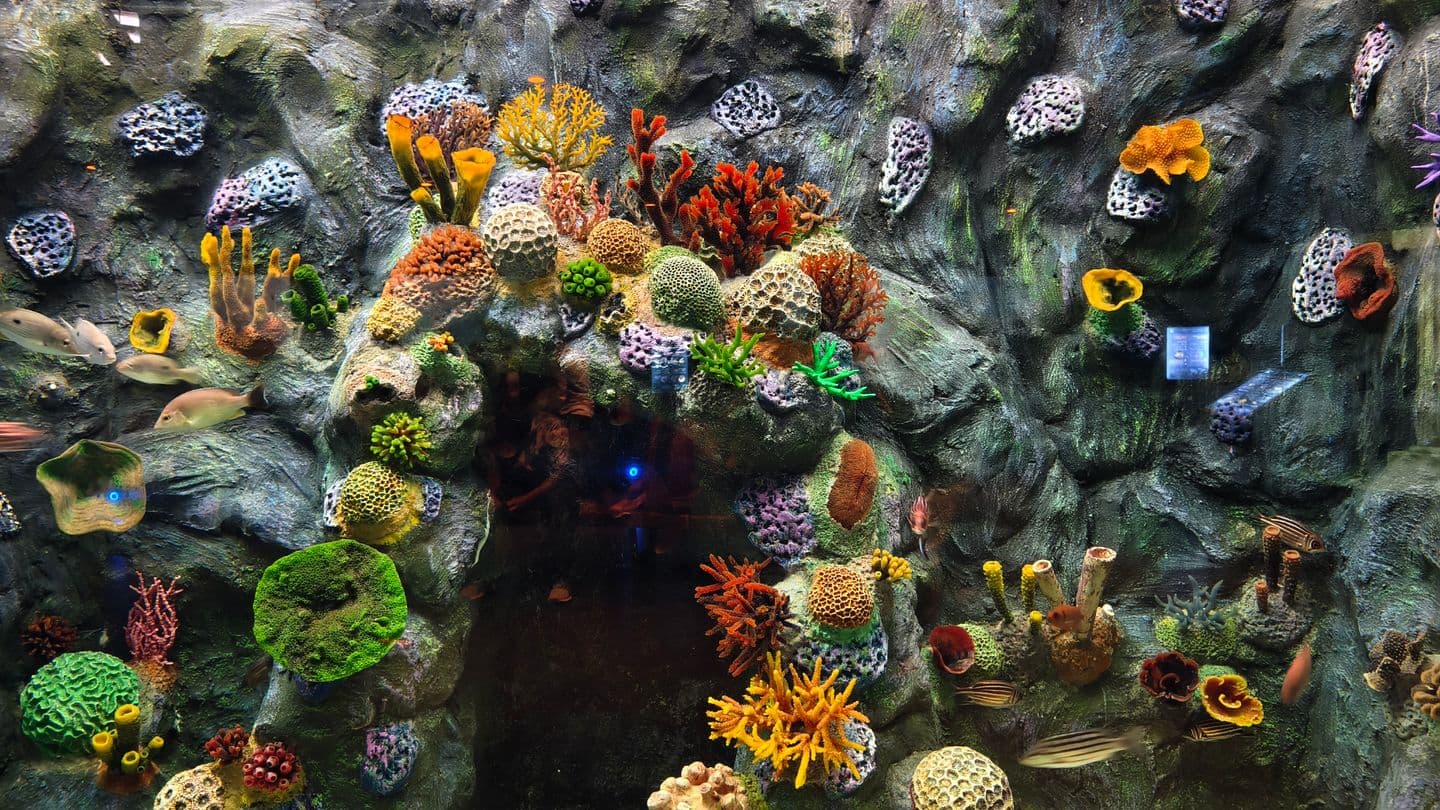
Soft corals are usually where new reef keepers start, and for good reason. Most tolerate a wider swing in water parameters than stony corals, many propagate themselves without much effort, and the mov
Soft corals are usually where new reef keepers start, and for good reason. Most tolerate a wider swing in water parameters than stony corals, many propagate themselves without much effort, and the movement they bring to a tank, swaying, pulsing, spreading, gives a display a sense of life that static rock cannot. But hardy is not the same as harmless, and this category includes both the single most useful beginner coral in the entire hobby and one that carries a real, documented human health warning. Both deserve equal attention below.
Zoanthids and Palythoa
Zoanthids, generally called zoas, and Palythoa, generally called palys, are colonial polyp corals sold in what feels like an endless range of colours and patterns, and they are genuinely among the hardiest, most tolerant corals available. Colonies grow by budding new polyps at the edge of the mat and can handle a wide range of lighting and flow, which is exactly why they are so often recommended to first-time coral keepers.
Tank size: any size, works well in nano reefs
Lighting: low to high, genuinely adaptable
Water flow: low to moderate
Feeding: not required but benefits from occasional target feeding of fine particulate food
Placement: give surrounding space, since colonies spread and will encroach on neighbouring corals over time
This is the one entry in the entire series that needs a genuinely serious safety warning, and it should not be softened for the sake of keeping the tone light. Palythoa, and to a lesser extent Zoanthus, can carry palytoxin, one of the most potent non-protein toxins known, with no available antidote. Documented poisonings among home aquarists exist, including cases where boiling water was poured over rock to remove unwanted zoanthids, releasing toxin into steam that was then inhaled by everyone in the room, and cases where whole families were hospitalised after routine tank cleaning released aerosolised toxin into a closed space. The practical rule for any Indian reef keeper is straightforward: always wear gloves when handling, cutting or fragging zoanthids or palys, never let a broken colony dry out or heat up, work in a ventilated space when propagating them, and never, under any circumstances, use boiling water to remove them from rock. Treat every specimen as though it could carry the toxin, since there is no reliable way to tell which colonies do from appearance alone.
Mushroom Corals
Mushroom corals, technically corallimorphs rather than true corals, are flat or gently folded discs with a central mouth and no hard skeleton, which is part of why they tolerate rough treatment so well. Several genera turn up in the Indian trade under this umbrella name, most commonly Discosoma and Rhodactis, distinguished mainly by texture, colour and how aggressively they spread.
Tank size: any, especially good for nano and beginner tanks
Lighting: low to moderate, 50 to 150 PAR; too much light can actually cause them to shrink and lose colour
Water flow: low, strong flow can prevent the disc from opening fully
Feeding: not required, though occasional feeding of small meaty foods can help colour and growth
Reproduction: spreads readily through pedal laceration and splitting, small pieces of foot left behind regrow into new individuals
Mushroom corals are widely considered the single most forgiving coral in the hobby and a genuinely sound first purchase for anyone starting a reef tank in India. The trade-off is that a happy colony spreads fast and can eventually dominate a rock, so plan an isolated placement from the start rather than trying to contain it later.
Ricordea
Ricordea is a corallimorph closely related to mushroom corals but visually distinct, with a bumpy, almost bubble-textured disc surface and intense colour, often orange, green, blue, pink or a mix. Two species appear in the trade. Ricordea florida, from the Caribbean, is compact, evenly coloured and genuinely beginner-friendly. Ricordea yuma, from the Indo-Pacific, tends to be larger, more delicate about water stability, and better suited to a keeper with some reef experience already.
Tank size: any, does well in nano and mixed reef setups
Lighting: low to moderate, does not need the intensity SPS corals demand
Water flow: gentle to moderate
Feeding: occasional small meaty foods encourage colour and growth, not essential
Species note: check whether a specimen is florida or yuma before buying if you are new to the hobby; florida is the more forgiving of the two
Ricordea reproduces the same way mushroom corals do, through pedal laceration and splitting, so a single healthy specimen can become a small colony over a year or two without any intervention.
Kenya Tree Coral
The Kenya Tree, genus Capnella, is a soft coral shaped like a small swaying tree, a central stalk supporting branches tipped with clusters of feeding polyps. It is genuinely one of the hardiest corals available and tolerates a wide range of conditions, which is exactly why it needs a clear warning attached rather than an unqualified recommendation.
Tank size: any, but plan for spread
Lighting: low to moderate
Water flow: moderate
Feeding: draws most nutrition from zooxanthellae, benefits from occasional target feeding
Placement: lower to mid tank, shaded from the most intense part of the light
Here is the part that deserves to be said plainly rather than buried in a footnote: Kenya Tree Coral drops small polyp buds that settle and grow wherever they land, and within a matter of months an untended colony can turn into dozens of small Kenya Trees scattered across the entire aquascape. Removing an established infestation is genuinely difficult, since missing even a few buds simply restarts the spread. Anyone adding this coral should commit to regular pruning from the start rather than waiting until it becomes a problem worth researching.
Green Star Polyps
Green Star Polyps, genus Briareum, form a purple to brown encrusting mat studded with small, bright green star-shaped polyps that give the coral its common name. It is fast growing, inexpensive, tolerant of low light and imperfect water quality, and genuinely one of the most popular first corals in the hobby, both in India and internationally.
Tank size: any
Lighting: low to moderate
Water flow: low to moderate
Feeding: not required, feeds mainly through zooxanthellae and absorbed nutrients
Placement: isolate on its own rock or frag plug, at least 15 centimetres from other corals
Like the Kenya Tree, this coral needs an honest warning rather than a cheerful sales pitch. Green Star Polyps encrust hard surfaces aggressively and will grow directly over slower corals, rockwork and even the sides of a glass tank if given the chance, and once established it is genuinely difficult to remove completely. The mat under the polyps is what regrows even after the visible polyps are scraped away, so isolating it from day one, on its own rock separated by open sand, is far easier than trying to contain it after it has taken hold.
Toadstool Leather Coral
Toadstool leathers, genus Sarcophyton, are named for their shape, a single stalk topped with a broad, mushroom-like cap from which polyps extend when open. As the coral matures the cap develops a folded, wavy edge rather than staying perfectly round. This is one of the most forgiving and widely recommended soft corals for a growing reef tank.
Tank size: any starting size, though large specimens eventually need real room, up to 30 centimetres across
Lighting: moderate to high
Water flow: moderate, both direct and indirect
Feeding: not required, feeds through zooxanthellae
Placement: give at least 15 centimetres from other corals; leathers release chemical compounds that can irritate neighbouring corals, particularly SPS
New keepers often panic the first time a Toadstool closes up, develops a waxy film and appears to be dying. This is normal shedding behaviour, the coral's way of clearing algae and debris off its surface, and it typically resolves within a week with the coral reopening larger and healthier than before. The only time to actually worry is if the coral does not reopen after a week or two, or if the tissue appears to be genuinely melting rather than simply shedding a film.
Finger Leather Coral
Finger leathers, genus Sinularia, are close relatives of the Toadstool but branch instead of forming a single capped stalk, producing clusters of thick, finger-like lobes that give the species its name. Care requirements track closely with the Toadstool above, with the same shedding behaviour and the same chemical caution around neighbouring corals.
Tank size: any, branches out over time so allow room
Lighting: moderate to high
Water flow: moderate
Feeding: not required
Placement: keep clear of SPS corals particularly, since Sinularia is one of the more chemically active leather genera
Finger leathers are just as tolerant of fluctuating parameters as Toadstools and shed the same waxy film periodically as part of normal housekeeping. The branching growth form makes them a useful textural contrast next to the single-capped Toadstool if a keeper wants both in the same soft coral display.
Xenia
Xenia is instantly recognisable by its constant motion, feathery polyps that open and close in a rhythmic pulsing action, most visible under moderate rather than strong flow. It is fast growing, colourful in tan, cream, pink or brown tones, and is often the coral that makes a new tank feel genuinely alive.
Tank size: any, but isolate given its growth rate
Lighting: moderate to high
Water flow: gentle to moderate; too much flow stops the pulsing motion from being visible
Feeding: not required, absorbs dissolved nutrients directly from the water column
Placement: isolate on its own rock, as it spreads quickly and can overtake neighbours
Xenia earns two separate, frank warnings rather than one. First, it is genuinely invasive in a happy tank and can smother slower corals within months if left unchecked, so plan isolation from day one the same way as with Kenya Tree and Green Star Polyps. Second, and this is worth being upfront about rather than hiding behind a beginner-friendly label, Xenia is notorious across the hobby for what keepers call a crash: a colony that has grown well for months or years can suddenly shrivel, close up and die within days, sometimes with no clear trigger despite normal test results. Experienced reefers link this to alkalinity swings, iodine depletion or falling nutrient levels in an otherwise very clean tank, but there is no fully agreed explanation, and it can happen even in stable, well-run systems. Treating Xenia as reliably hardy in the way a Green Star Polyp or Kenya Tree is would be misleading; it grows fast and easily, but it is genuinely less predictable long term than its reputation suggests.
Clove Polyps
Clove Polyps, genus Clavularia and sometimes called Daisy Polyps, are often mistaken for Xenia because of their similar flower-like polyps on a spreading mat, but they lack the rhythmic pulsing motion and are considerably easier to control. Colours range from green and purple to pink, orange and metallic tones, spreading across rock via a network of stolons rather than a central stalk.
Tank size: any, from nano upward
Lighting: low to moderate, around 100 PAR is a reasonable target
Water flow: moderate
Feeding: not required
Placement: spreads across any hard surface it touches, including rocks already occupied by other corals, so plan boundaries early
The genuinely good news with Clove Polyps compared to Xenia and Green Star Polyps is that overgrowth is far easier to reverse. Because the colony spreads as a mat with connected stolons rather than a deeply encrusting base, an unwanted patch can usually be peeled away from the rock in one piece, which is simply not possible once Green Star Polyps have properly encrusted a surface.
The scissortail rasbora, Rasbora trilineata, gets its name from the black-and-white banded tail fin, which opens and closes in a scissoring motion as the fish swims, a genuinely visible behaviour rath
Flushing a fish, whether dead or simply unwanted, down the toilet is a habit many Indian households have inherited without questioning it, and it carries real risks that are worth understanding.
A cover might seem like an afterthought compared to filtration or lighting, but for a saltwater tank it does real, unglamorous work: cutting evaporation, which matters a great deal given how salinity