Surgeonfish get their common name from the razor sharp, scalpel like spines set into either side of their tail base, which they can flick out in defence or in disputes with other tangs. In the aquariu
Surgeonfish get their common name from the razor sharp, scalpel like spines set into either side of their tail base, which they can flick out in defence or in disputes with other tangs. In the aquarium trade they are usually called by their genus based common name, tang, and they are among the most popular fish in Indian marine set ups because of their bold colours and their appetite for nuisance algae. Almost every tang sold in India arrives as wild caught stock, imported by air through Chennai or Mumbai from source countries such as Indonesia, Sri Lanka and the Philippines, so a proper quarantine period is not optional, it is the single biggest factor in whether the fish survives its first month in your tank.
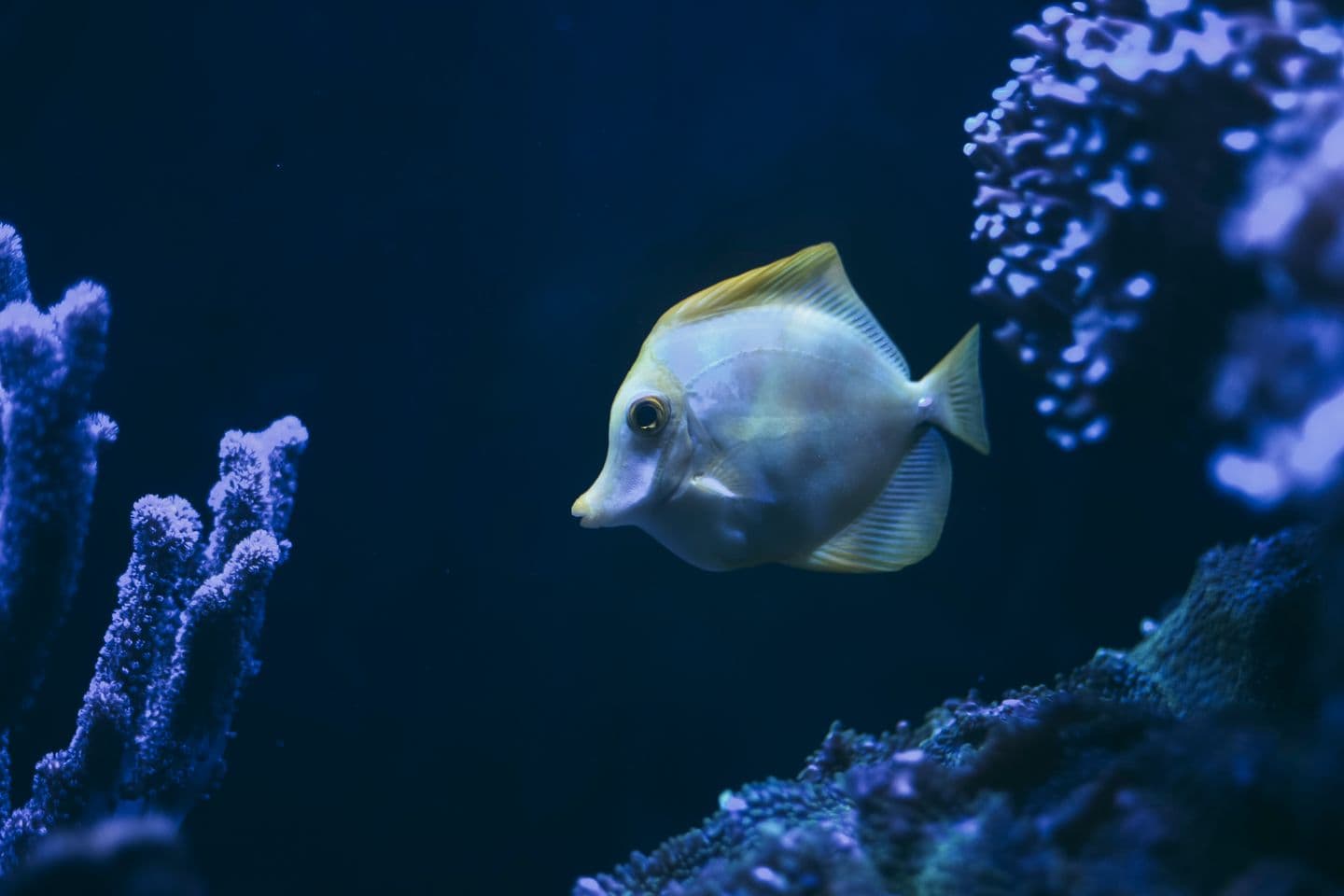
Yellow Tang (Zebrasoma flavescens)
Scientific name: Zebrasoma flavescens
Adult size: up to 8 inches
Minimum tank size: 100 gallons, longer rather than taller
Diet: herbivore, needs daily dried seaweed or nori plus algae grazing on live rock
Reef compatibility: reef safe, may occasionally nip at soft or LPS coral if underfed
Care level: easy to moderate, a good first tang for a beginner with a mature tank
The Yellow Tang is the fish most people picture when they think of a tang, an oval, bright canary yellow body that glows under reef lighting. It is an active swimmer that needs open horizontal space more than it needs tank height, and it can turn territorial toward its own kind or toward similarly shaped yellow fish if the tank is undersized. Feed it a mix of nori clipped to the glass, spirulina based flake or pellet, and let it graze naturally on algae growing on rock. Since Hawaii tightened its collection rules a few years ago, most Yellow Tangs reaching Indian retailers now come from Indonesia and the Philippines instead, and prices have risen accordingly, so budget for a genuine outlay rather than an impulse buy.
Blue Hippo Tang (Paracanthurus hepatus)
Scientific name: Paracanthurus hepatus, also called Regal Tang or Palette Surgeonfish
Adult size: up to 12 inches, more commonly 9 to 10 inches in captivity
Minimum tank size: 150 to 180 gallons for a full grown adult
Diet: omnivore, wild fish take zooplankton as well as algae, so offer both marine protein and vegetable matter
Reef compatibility: reef safe, ignores corals and invertebrates
Care level: moderate, hardy once settled but needs real swimming room
This is the fish every Indian aquarist recognises from animated films long before they recognise its actual name, a royal blue body with a black palette shaped pattern and a yellow tail. Its native range runs from East Africa and the western Indian Ocean, including waters off Sri Lanka, across to the Great Barrier Reef, so specimens reaching Chennai and Mumbai are often shipped a shorter distance than many other tangs, which can mean a somewhat easier acclimatisation if you buy from a dealer who holds stock properly. Hippo Tangs are fast, nervous swimmers when new to a tank and are prone to marine ich if stressed, so a secure lid and a calm introduction matter as much as diet. They do best with plenty of open swimming lane and rockwork they can retreat into at night.
Powder Blue Tang (Acanthurus leucosternon)
Scientific name: Acanthurus leucosternon
Adult size: up to 9 inches
Minimum tank size: 125 gallons or larger
Diet: herbivore, needs daily nori and algae based pellets
Reef compatibility: reef safe
Care level: difficult, recommended for experienced keepers only
The Powder Blue Tang is native to the Indian Ocean, with populations off Sri Lanka, Bali and the coast of East Africa, which puts Indian hobbyists geographically close to its natural range even though almost every specimen sold here is still wild caught and imported. That closeness does not make the fish easier to keep. Powder Blue Tangs have a well earned reputation as one of the most ich prone fish in the hobby, largely because they arrive stressed from collection and transport and their immune systems are already compromised by the time they reach a shop tank. A strict four week quarantine with copper or a tank transfer protocol is close to mandatory, not a nicety, and this fish should be the last addition to an already mature, stable system rather than an early purchase.
Powder Brown Tang (Acanthurus japonicus)
Scientific name: Acanthurus japonicus, also sold as the Gold Rim Tang
Adult size: up to 9 inches
Minimum tank size: 125 gallons
Diet: omnivore, grazes algae heavily but also accepts meaty frozen food
Reef compatibility: reef safe
Care level: difficult, similar disease sensitivity to the Powder Blue Tang
Closely related to the Powder Blue and often confused with it in Indian retail listings, the Powder Brown Tang has a bluish brown body, a white cheek patch and yellow striping along the flanks. It shares the same weakness for marine ich as its blue cousin and the same need for a long, careful quarantine before it goes anywhere near a display tank. Once properly settled it is a genuinely hardy, long lived fish, with keepers reporting healthy specimens well past eight years old, so the effort at the start pays off if you are patient with the acclimatisation phase. It can be territorial with other tangs but generally leaves non tang tankmates alone once it has settled its pecking order.
Kole Tang (Ctenochaetus strigosus)
Scientific name: Ctenochaetus strigosus, also called the Yellow Eye Tang or Bristletooth Tang
Adult size: around 6 to 7 inches
Minimum tank size: 80 gallons
Diet: herbivore, grazes film algae and diatoms off rock using comb like teeth
Reef compatibility: reef safe
Care level: easy, one of the best starter tangs for a first marine system
The Kole Tang belongs to the bristletooth group, fish that use fine, comb shaped teeth to sweep biofilm and diatoms off live rock rather than tearing at leafy algae the way a Yellow or Sailfin Tang does. That feeding style makes it an outstanding tank cleaner in a system with some natural algae growth, and its calmer, less flighty temperament makes it a sensible choice as a first tang for someone new to the group. It stays smaller than most of its relatives, which is kind to Indian aquarists working with the compact tank sizes common in city apartments, and it tolerates a reasonably wide range of tank mates without much fuss.
Sailfin Tang (Zebrasoma veliferum)
Scientific name: Zebrasoma veliferum, the Pacific Sailfin Tang
Adult size: up to 15 inches
Minimum tank size: 180 gallons for a full grown adult
Diet: herbivore, heavy nori and algae feeder
Reef compatibility: reef safe
Care level: easy to moderate, hardy but needs serious long term space
Named for its oversized dorsal and anal fins, which it fans out dramatically when displaying or feeling threatened, the Sailfin Tang is one of the more forgiving large tangs in terms of disease resistance and general hardiness. The catch is size. A juvenile bought at three inches will comfortably reach well over a foot within a few years, so this fish only belongs in a tank that can accommodate that adult footprint from the outset. A closely related cousin, the Red Sea or Desjardini Sailfin Tang, grows even larger and needs an even bigger home, so confirm exactly which species you are being sold before committing tank space to it.
Tomini Tang (Ctenochaetus tominiensis)
Scientific name: Ctenochaetus tominiensis, also called the Flame Fin Tang
Adult size: up to 6 inches, one of the smallest tangs kept in the hobby
Minimum tank size: 70 to 90 gallons
Diet: herbivore, grazes film algae and biofilm, supplement with nori sheets
Reef compatibility: reef safe
Care level: easy, well suited to mid sized reef tanks
The Tomini Tang is the smaller cousin of the Kole Tang within the bristletooth group, and its modest adult size makes it one of the few tangs genuinely appropriate for a 70 to 90 gallon reef, a size range far more common in Indian homes than the 150 gallon plus systems many other tangs demand. Juveniles are a plain olive brown that develops an amber gold wash on the tail and dorsal fin edges as the fish matures, earning it the flame fin nickname. It is peaceful with most tankmates but fiercely territorial toward its own kind and toward other bristletooth tangs such as the Kole, so keep only one per tank unless the system is very large.
Convict Tang (Acanthurus triostegus)
Scientific name: Acanthurus triostegus, also called the Convict Surgeonfish
Adult size: up to 8 inches
Minimum tank size: 90 to 125 gallons, scale up with the fish as it grows
Diet: herbivore, grazes algae readily and accepts nori and pellets
Reef compatibility: reef safe
Care level: easy to moderate, hardy and a strong algae grazer
Named for the bold black vertical bars running down its silver body, the Convict Tang has a slim, compressed shape that lets it slip through tighter rockwork than its body length would suggest. Its wild range stretches from East Africa across to Sri Lanka and on through the Indo-Pacific, so this is another tang with a genuine Indian Ocean connection even though shop stock is still sourced from established exporters such as Indonesia and Fiji. In the wild it is often seen in loose schools grazing over reef flats, and in a sufficiently large aquarium a small group can be kept together if introduced at the same time, though a single specimen is the safer choice for most home systems. It is a reliable, unfussy algae eater and one of the hardier options among the mid sized tangs, adjusting well to captive diets once past the first couple of weeks. A juvenile can start out in a somewhat smaller tank, but plan for at least 90 to 125 gallons as it reaches adult size.
The scissortail rasbora, Rasbora trilineata, gets its name from the black-and-white banded tail fin, which opens and closes in a scissoring motion as the fish swims, a genuinely visible behaviour rath
Flushing a fish, whether dead or simply unwanted, down the toilet is a habit many Indian households have inherited without questioning it, and it carries real risks that are worth understanding.
A cover might seem like an afterthought compared to filtration or lighting, but for a saltwater tank it does real, unglamorous work: cutting evaporation, which matters a great deal given how salinity