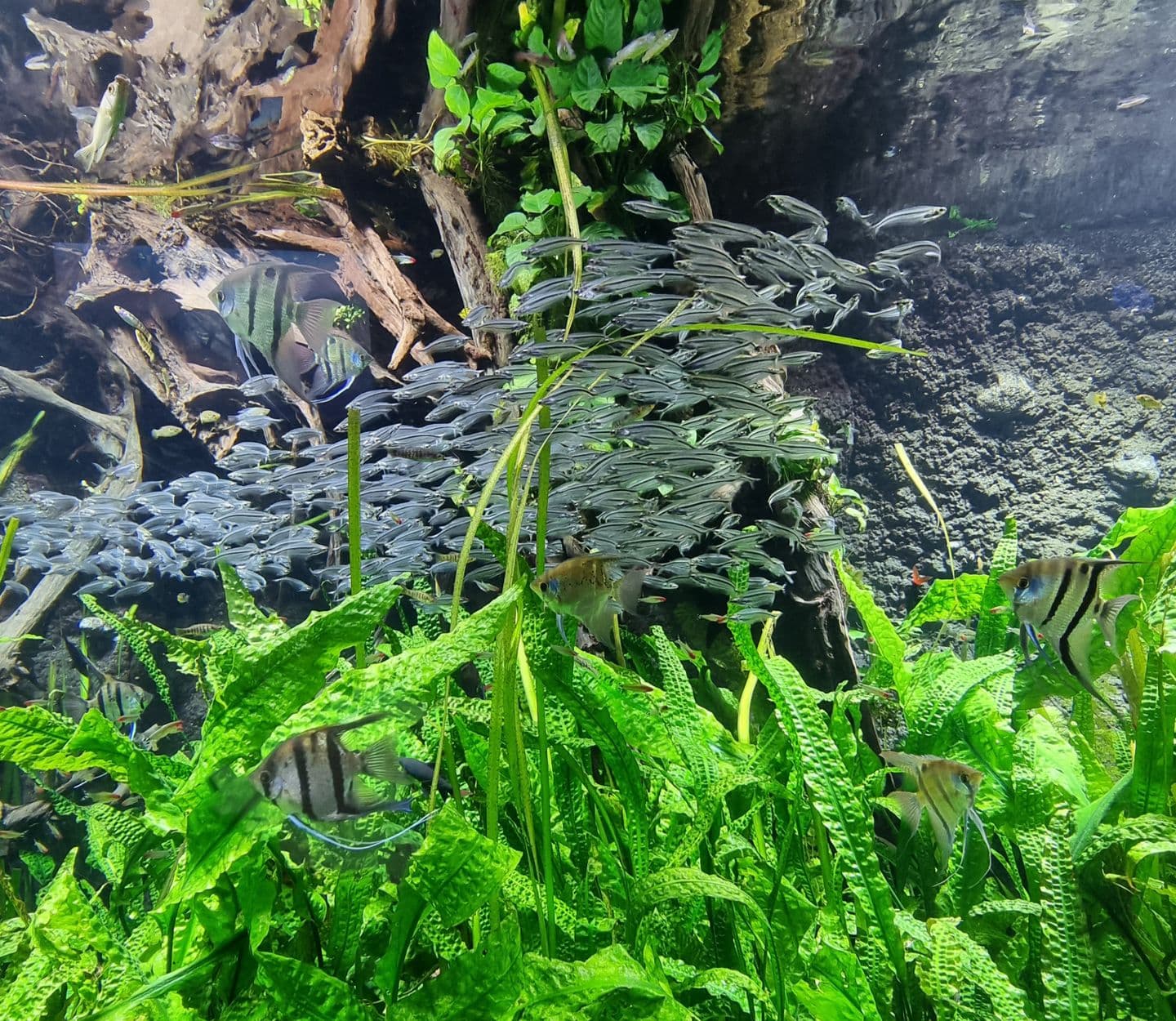
How to Add New Fish to an Established Aquarium Safely
Adding new fish to a tank that already has an established community is not simply a matter of releasing them in and hoping for the best. Done carelessly, it risks introducing disease, triggering terri
Adding new fish to a tank that already has an established community is not simply a matter of releasing them in and hoping for the best. Done carelessly, it risks introducing disease, triggering territorial aggression, or destabilising water chemistry that has taken weeks or months to settle.
Quarantine before anything else
New fish, regardless of how healthy they look or how reputable the seller, should spend two to three weeks in a separate quarantine tank before joining your main aquarium. This window is long enough for most common parasites and diseases to show visible symptoms, giving you a chance to treat the problem in isolation rather than exposing your entire established community.
Timing and lighting
Introduce new fish in the evening or when the tank lighting is dim, or dim it deliberately for the introduction, since lower light tends to reduce aggressive posturing and gives the new arrival a calmer window to find hiding spots before the tank is fully active again.
Reducing territorial aggression
Rearrange some decor or rockwork shortly before introducing new fish, which temporarily disrupts existing territorial boundaries and levels the playing field somewhat
Add new fish in a small group rather than a single individual where the species allows, since a lone newcomer draws more concentrated attention from established residents
Feed the established tank shortly before introducing new fish, since well-fed fish are generally less aggressively territorial than hungry ones
Watch closely for the first few hours, and be ready to separate a newcomer being seriously targeted rather than assuming things will settle on their own
Matching bioload to your filter
Every new fish adds to the tank's overall waste production, and a filter sized for the previous stocking level may need time, or an upgrade, to comfortably handle a larger community. Test ammonia and nitrite more frequently for a week or two after any significant addition, since even a well cycled tank can show a temporary mini-spike while the biological filter catches up to the new bioload.
The scissortail rasbora, Rasbora trilineata, gets its name from the black-and-white banded tail fin, which opens and closes in a scissoring motion as the fish swims, a genuinely visible behaviour rath
Flushing a fish, whether dead or simply unwanted, down the toilet is a habit many Indian households have inherited without questioning it, and it carries real risks that are worth understanding.
A cover might seem like an afterthought compared to filtration or lighting, but for a saltwater tank it does real, unglamorous work: cutting evaporation, which matters a great deal given how salinity