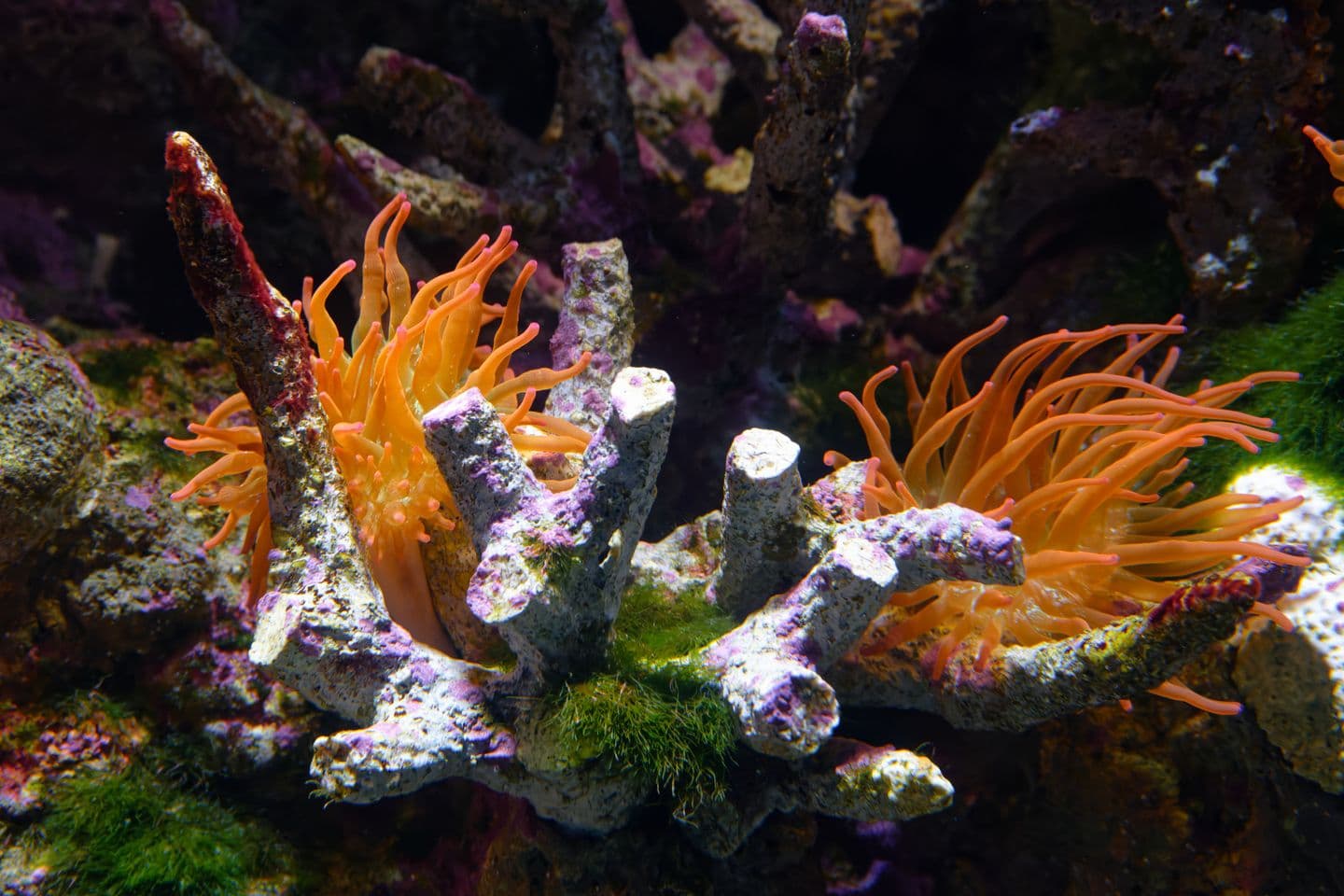
Lighting for Macroalgae and Corals in a Community Reef Tank
Freshwater aquarists talk about lighting requirements for live plants. Saltwater does not really have true aquatic plants in the display tank, corals and macroalgae are technically animals and algae,
Freshwater aquarists talk about lighting requirements for live plants. Saltwater does not really have true aquatic plants in the display tank, corals and macroalgae are technically animals and algae, but the underlying question is the same: how much light does the community in your tank actually need, and how do you avoid under or overlighting it.
Two Different Lighting Jobs
A reef tank usually needs to satisfy two separate lighting demands: photosynthetic corals in the display tank, which generally want strong, full spectrum light, and macroalgae, most commonly chaetomorpha, grown in a refugium or sump for nutrient export, which has its own, quite different, lighting needs.
Display Tank Coral Lighting
Requirements vary widely by coral type. Soft corals and large polyp stony corals generally do well under moderate intensity, roughly PAR 100 to 200 depending on placement, while small polyp stony corals typically want stronger light, often PAR 200 to 400 near the top of the tank. Full spectrum LED reef fixtures are now the standard choice, largely replacing older metal halide and T5 setups, and are increasingly available from Indian retailers alongside imported options.
Refugium and Macroalgae Lighting
Chaetomorpha, the most widely grown refugium macroalgae, wants moderate to high intensity light, roughly PAR 150 to 300, from a full spectrum or horticultural style LED, typically run for 12 to 16 hours a day. Many reefkeepers run the refugium light on a reverse schedule to the display tank, so it is lit while the display lights are off. This helps keep pH more stable overnight, since actively photosynthesising algae absorb carbon dioxide and raise pH during their lit period.
Getting the Balance Right
Underlit corals lose colour, extend less, and grow slowly or stop growing entirely
Overlit corals can bleach, just as they can in the wild during unusually intense light or heat events
Underlit chaetomorpha grows slowly and does little useful nutrient export
Overlit refugiums, or fixtures placed too close to the algae, can encourage nuisance algae elsewhere in the system
A Practical Starting Point for India
Ambient room light and window placement rarely provide anything close to what corals need, unlike some low light freshwater plants, so budget for a proper reef capable LED fixture rather than relying on general room lighting. If you are new to reef lighting, start on the lower end of the recommended intensity for your coral mix and increase gradually over several weeks, watching coral colour and polyp extension as your guide, rather than jumping straight to maximum output.
Reef LED fixtures also run warm, and in a closed room during an Indian summer, that heat adds directly to your tank's cooling load alongside ambient temperature. Mount fixtures with enough clearance above the water for airflow, and factor lighting heat output into your decision on whether you need a fan or chiller, not just the room's air conditioning. Wipe down fixtures regularly too, since salt spray reaching the housing or drivers over time can corrode contacts and shorten a light's working life well before its rated hours are up.
The scissortail rasbora, Rasbora trilineata, gets its name from the black-and-white banded tail fin, which opens and closes in a scissoring motion as the fish swims, a genuinely visible behaviour rath
Flushing a fish, whether dead or simply unwanted, down the toilet is a habit many Indian households have inherited without questioning it, and it carries real risks that are worth understanding.
A cover might seem like an afterthought compared to filtration or lighting, but for a saltwater tank it does real, unglamorous work: cutting evaporation, which matters a great deal given how salinity