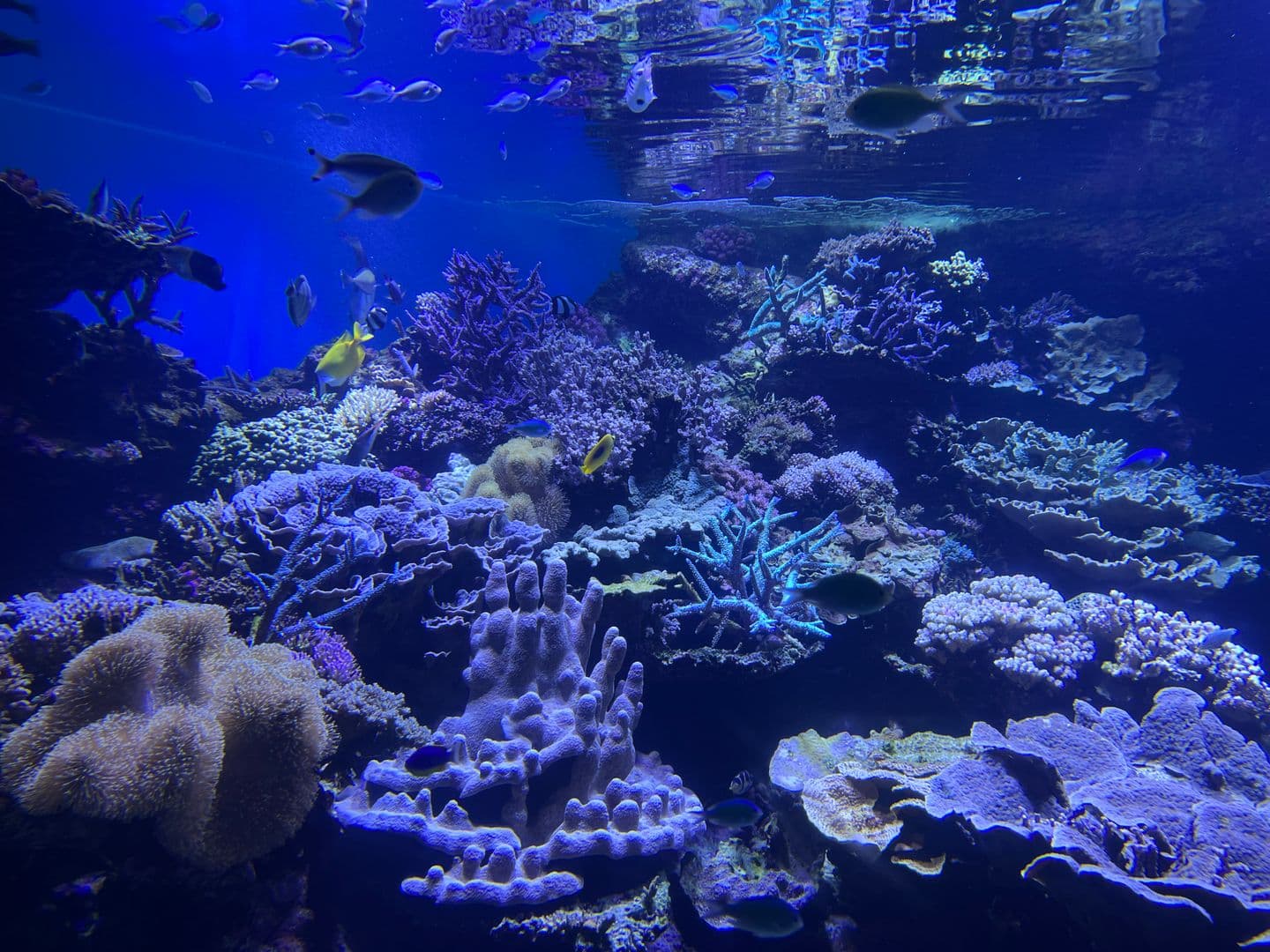
Reef Tank Water Testing: What to Check and How Often
Reef aquariums, home to fish, corals and invertebrates together, are considerably less forgiving of water chemistry drift than a freshwater fish-only tank, and testing is where most reef keeping mista
Reef aquariums, home to fish, corals and invertebrates together, are considerably less forgiving of water chemistry drift than a freshwater fish-only tank, and testing is where most reef keeping mistakes actually get caught before they become visible problems.
The core parameters and why each matters
Salinity: kept stable, ideally between 1.023 and 1.026 specific gravity, since sudden swings stress both fish and corals
pH: generally held between 8.1 and 8.4, since reef organisms evolved in a narrow, stable ocean pH range
Alkalinity, calcium and magnesium: the three building blocks corals use to build their skeletons, and the trio that most reef keepers end up dosing to maintain as the tank matures
Ammonia and nitrite: should read zero in an established tank, since any detectable reading signals a genuine problem
Nitrate and phosphate: kept low but not necessarily zero, since a small amount actually supports coral colour and health, while excess fuels algae
A realistic testing schedule
In a new or recently stocked reef tank, test ammonia, nitrite, and salinity two to three times a week until the tank clearly stabilises. Once established, weekly testing of alkalinity, calcium and magnesium, alongside nitrate and phosphate, is a reasonable baseline for most home reef keepers, increasing to two or three times a week for anyone dosing these elements manually to correct consumption by growing coral.
Testing in Indian conditions
Ambient room temperature swings in many parts of India make evaporation a real factor in salinity drift, since water evaporates but salt does not, concentrating the remaining water. Top up evaporated water with pure fresh water, ideally RO or RO-DI, rather than saltwater, and check salinity after any noticeably hot spell rather than assuming your last reading still holds.
Choosing a test kit
Liquid reagent test kits are generally more accurate than test strips for reef-critical parameters like alkalinity and calcium, and the small extra time they take is worth it given how much a coral-stocked tank can be affected by chemistry a strip might read only approximately.
The scissortail rasbora, Rasbora trilineata, gets its name from the black-and-white banded tail fin, which opens and closes in a scissoring motion as the fish swims, a genuinely visible behaviour rath
Flushing a fish, whether dead or simply unwanted, down the toilet is a habit many Indian households have inherited without questioning it, and it carries real risks that are worth understanding.
A cover might seem like an afterthought compared to filtration or lighting, but for a saltwater tank it does real, unglamorous work: cutting evaporation, which matters a great deal given how salinity