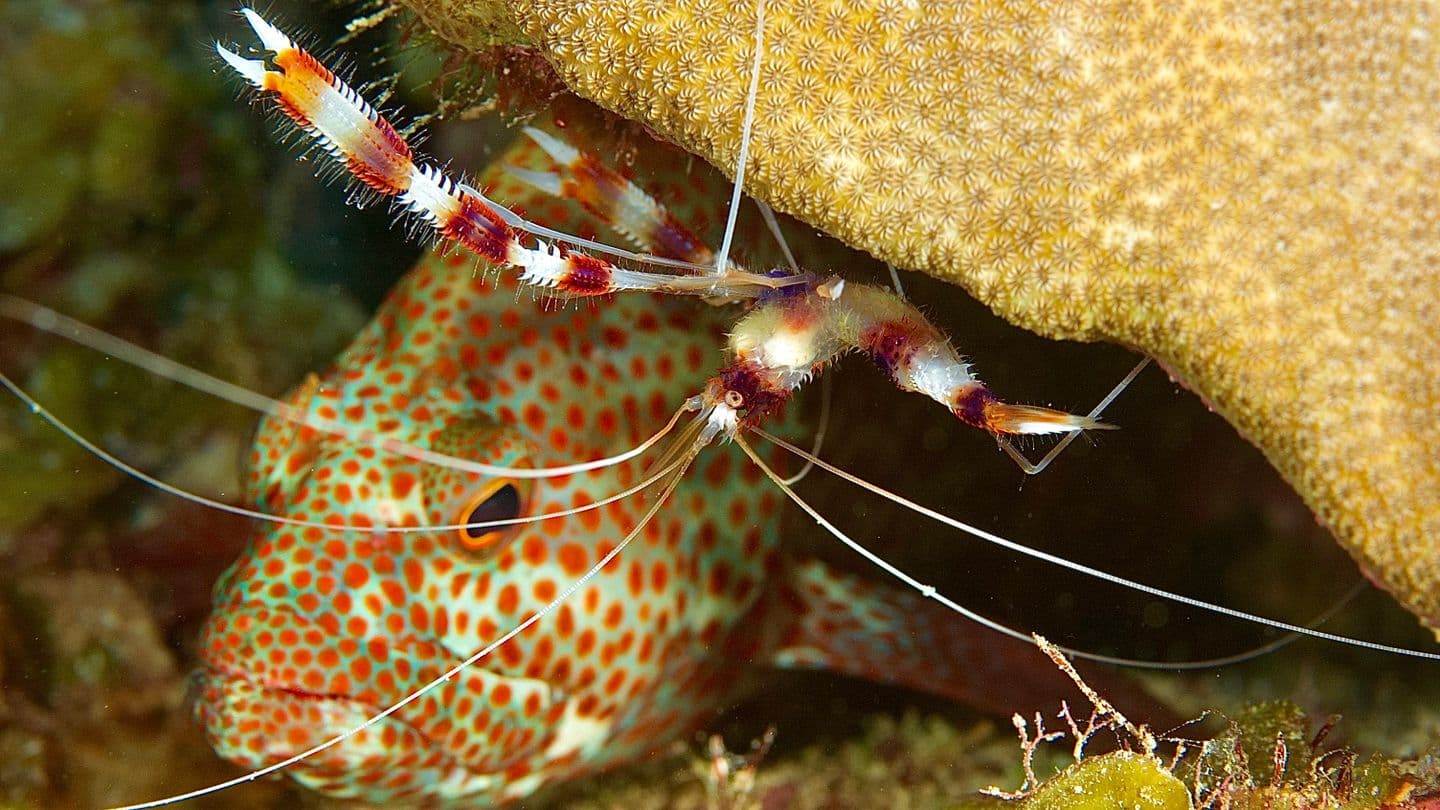
Fish going missing one by one, a faint clicking sound after the lights go out, and the occasional cracked snail shell scattered on the sand are the classic warning signs of a mantis shrimp hitchhiker.
Fish going missing one by one, a faint clicking sound after the lights go out, and the occasional cracked snail shell scattered on the sand are the classic warning signs of a mantis shrimp hitchhiker. Despite the name, it is not a true shrimp at all, but a stomatopod, a group of crustaceans known for having some of the fastest and most powerful strikes in the animal kingdom.
How it gets into a tank
Mantis shrimp almost always arrive as an unnoticed hitchhiker in a hole or crevice in a piece of live rock, and can go undetected for months, growing steadily while snacking on hermit crabs, snails, and eventually smaller fish.
Spearers and smashers
Mantis shrimp fall broadly into two types. Spearers use barbed, spear like appendages to impale soft bodied prey, while smashers deliver an explosively fast strike with club like appendages that can crack snail shells, hermit crab armour, and in rare cases even chip aquarium glass. A smasher species is also capable of breaking human skin if handled carelessly, so treat any suspected mantis shrimp with real caution.
Confirming you actually have one
A distinct clicking or popping sound, often heard more at night, is one of the most reliable signs.
Missing snails, hermit crabs or small fish, along with cracked or empty shells left behind, point strongly to a mantis rather than a more passive hitchhiker.
A small burrow or tunnel in a piece of rock, sometimes with debris or shell fragments piled at the entrance, is often the mantis shrimp's den.
Getting it out
Bait a small trap, such as a bottle trap or a purpose made mantis trap, with a piece of shrimp or fish near the suspected burrow.
If you can identify the exact rock it is living in, remove that rock and place it in a bucket of tank water. The mantis will usually vacate the rock once it is out of the display.
Flushing the burrow with fresh water or very hot water is a more drastic option that will force the animal out, though it should be a last resort given the stress it causes.
Not always a villain
A number of hobbyists do keep mantis shrimp deliberately in dedicated species only tanks, drawn to their striking colours and intelligence. In a mixed reef tank, though, an unplanned mantis is a genuine threat to your other livestock and is worth removing promptly rather than hoping it settles down.
An India note
Since imported live rock is a common route for saltwater stock into Indian tanks, inspecting new rock closely under bright light before it goes into the display, and running it through a short observation period in a bucket or quarantine container, is the easiest way to catch a mantis shrimp hitchhiker before it ever reaches your main tank.
The scissortail rasbora, Rasbora trilineata, gets its name from the black-and-white banded tail fin, which opens and closes in a scissoring motion as the fish swims, a genuinely visible behaviour rath
Flushing a fish, whether dead or simply unwanted, down the toilet is a habit many Indian households have inherited without questioning it, and it carries real risks that are worth understanding.
A cover might seem like an afterthought compared to filtration or lighting, but for a saltwater tank it does real, unglamorous work: cutting evaporation, which matters a great deal given how salinity