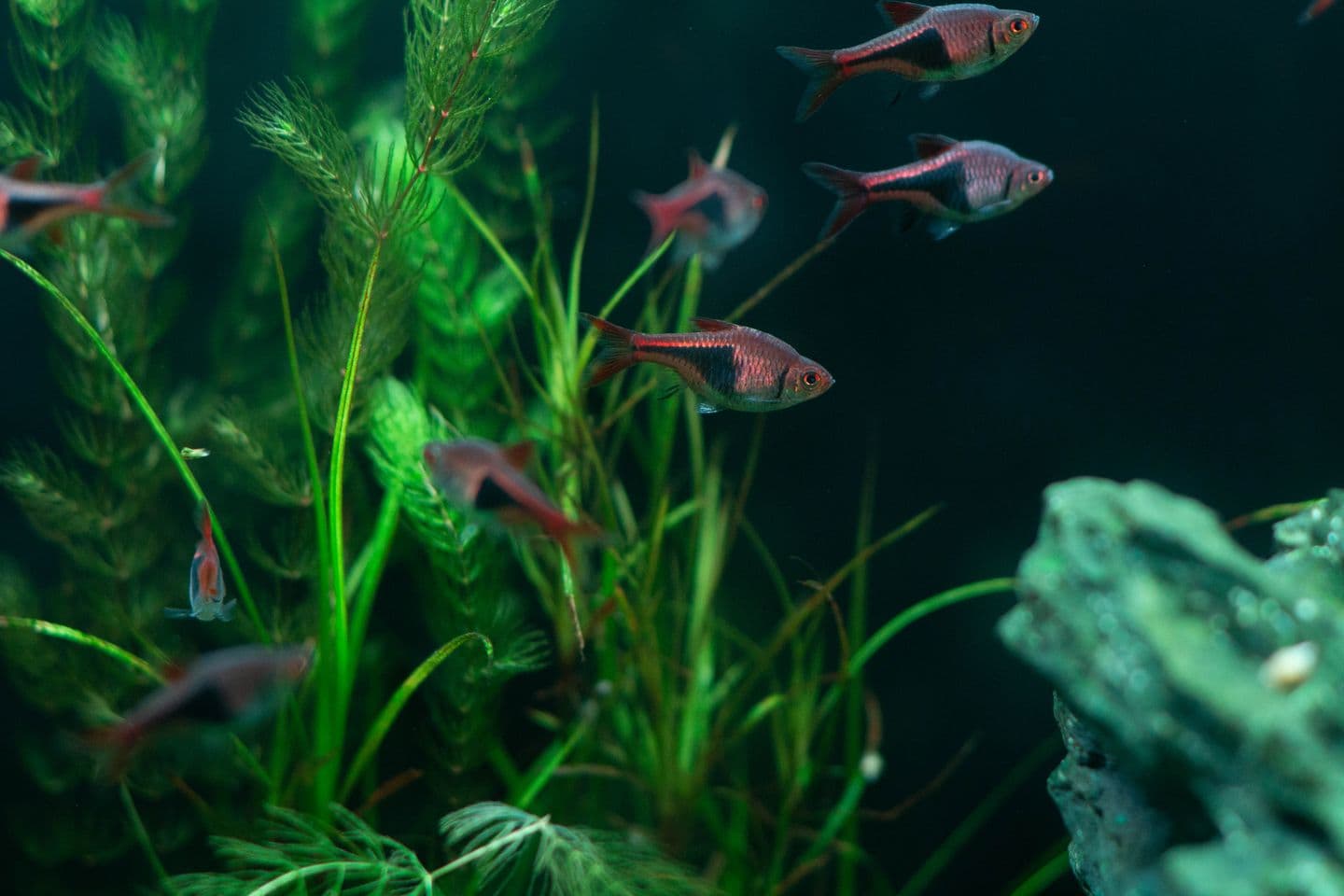
Aquarium Plants - What Is Best: Real or Artificial?
Anyone setting up a new tank eventually faces this choice, and there genuinely is no single right answer. The better question is which option suits your particular tank, your fish, and how much time y
Anyone setting up a new tank eventually faces this choice, and there genuinely is no single right answer. The better question is which option suits your particular tank, your fish, and how much time you actually want to spend on maintenance.
What live plants bring to the table
Live plants absorb ammonia, nitrite and nitrate directly, genuinely improving water quality rather than simply decorating the tank. They produce oxygen during the day, offer natural, ever changing texture and colour, and tend to reduce algae growth over time by competing for the same light and nutrients. The trade-off is real maintenance: trimming, occasional fertilising, replacing plants that melt or die back, and a slightly steeper learning curve for anyone new to the hobby.
What artificial plants bring instead
Artificial plants, whether plastic or the more realistic silk versions now widely available, need essentially no care beyond an occasional wipe or rinse to remove algae film. They never die, never need trimming, and their appearance stays exactly the same for years, which suits keepers who want a tank that always looks the same without ongoing effort. What they cannot do is contribute anything to water quality, since they offer fish visual cover and hiding spaces but no biological benefit at all.
Fish that make the decision for you
Some fish are genuinely hard on live plants. Goldfish and larger cichlids in particular have a well earned reputation for uprooting, nibbling and generally demolishing a planted layout, and in a tank stocked with these species, artificial plants are often the more practical choice regardless of any other preference. Conversely, a tank of small, peaceful community fish or shrimp benefits noticeably from the water quality support live plants provide, since these species tend to leave a planted layout largely undisturbed.
A reasonable middle path
Many experienced keepers land on a mix: a few genuinely easy, hardy live plants such as Java fern or Anubias for the water quality and biological benefit, combined with artificial pieces for structure, colour or a look that live plants alone would not achieve, or simply to fill space while a live plant collection is still establishing itself. There is no hobbyist rule that says a tank must be entirely one or the other, and a sensible mix often ends up being the most practical choice of all.
A practical note for Indian conditions
Artificial plants are widely and cheaply available in Indian aquarium shops and hold up well to the harder, sometimes higher pH tap water found in many Indian cities, since they are entirely unaffected by water chemistry. Live plants, by contrast, may need a little more troubleshooting in areas with notably hard water, since some species prefer a softer, slightly acidic environment than local tap water naturally provides.
The scissortail rasbora, Rasbora trilineata, gets its name from the black-and-white banded tail fin, which opens and closes in a scissoring motion as the fish swims, a genuinely visible behaviour rath
Flushing a fish, whether dead or simply unwanted, down the toilet is a habit many Indian households have inherited without questioning it, and it carries real risks that are worth understanding.
A cover might seem like an afterthought compared to filtration or lighting, but for a saltwater tank it does real, unglamorous work: cutting evaporation, which matters a great deal given how salinity