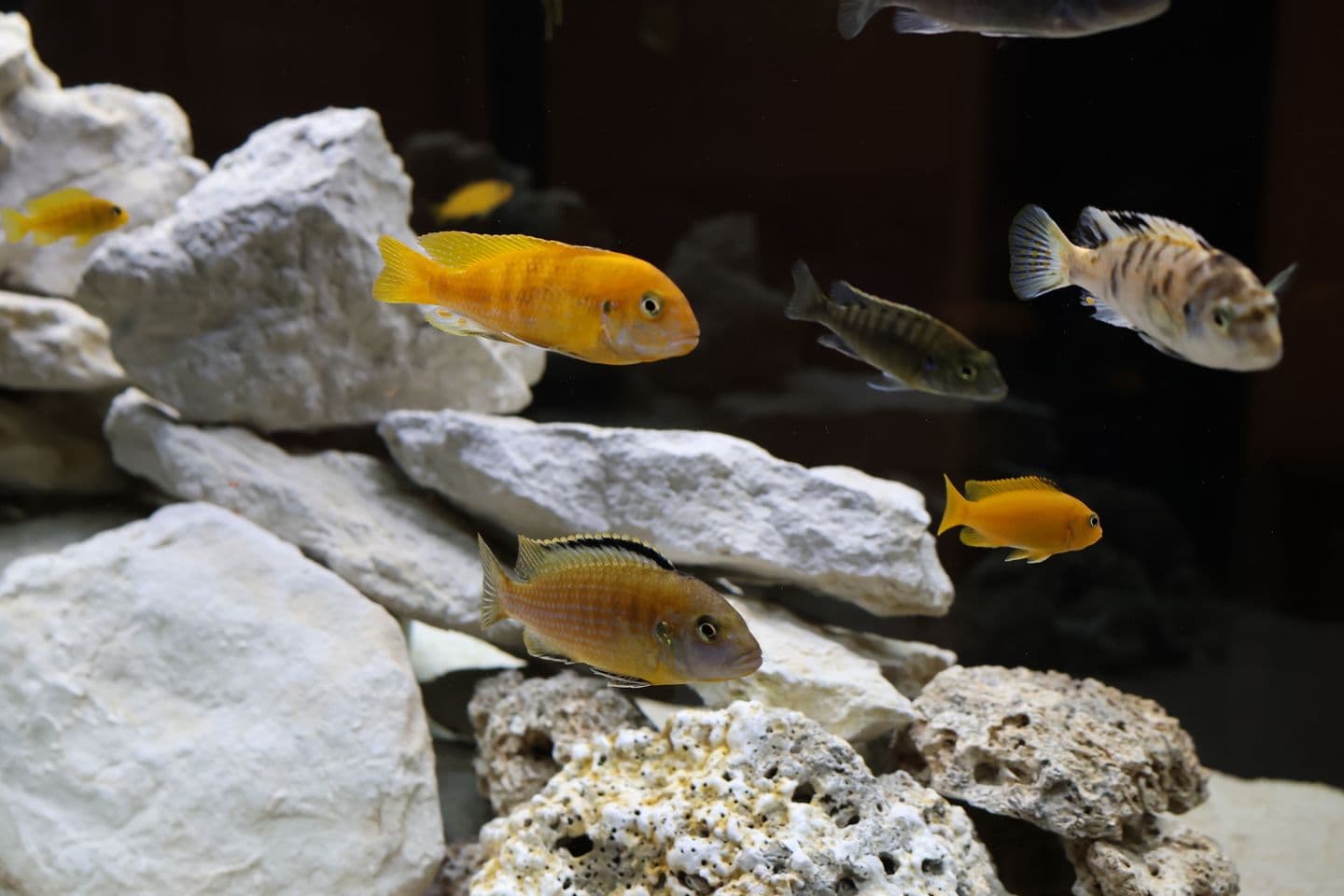
Blood Parrot Cichlid: A Hybrid That Divides Opinion
The blood parrot cichlid is a man-made hybrid, not a naturally occurring species, created by crossing several different Central American cichlid species. Its most distinctive and controversial feature
The blood parrot cichlid is a man-made hybrid, not a naturally occurring species, created by crossing several different Central American cichlid species. Its most distinctive and controversial feature is a small, rounded, permanently open mouth that leaves it physically unable to fully close its jaws, a genuine anatomical consequence of the cross rather than a cosmetic trait.
It reaches around twenty centimetres and is usually seen in a vivid orange-red colour, sometimes further altered through dye injection or forced colouring in the trade, a practice worth being aware of and avoiding when buying.
Tank requirements
A single blood parrot or a small group does well in a tank of a hundred and fifty litres or more, with caves and rockwork for territory, along with strong filtration given how much waste a cichlid this size produces.
Because its mouth shape makes catching and eating some foods physically difficult, feeding should account for this rather than assuming it can eat exactly as a normal cichlid would.
Diet and a buying note
A diet of good-quality cichlid pellets small enough for its limited mouth opening, supplemented with occasional soft live or frozen food, suits it best. Larger, harder foods can be genuinely difficult for this fish to eat given its anatomy.
When buying, avoid any fish showing artificially dyed or injected colour, sometimes marketed as a jellybean or parrot fish in unnaturally bright pink, purple or blue, since this process is harmful and unnecessary, and the natural orange-red colouring is attractive on its own.
Buying tips
Priced around one hundred to three hundred rupees per fish for naturally coloured stock
Avoid dyed or injected colour forms entirely, choosing only naturally pigmented fish
Feed appropriately sized soft foods given this fish's limited ability to fully close its mouth
The scissortail rasbora, Rasbora trilineata, gets its name from the black-and-white banded tail fin, which opens and closes in a scissoring motion as the fish swims, a genuinely visible behaviour rath
Flushing a fish, whether dead or simply unwanted, down the toilet is a habit many Indian households have inherited without questioning it, and it carries real risks that are worth understanding.
A cover might seem like an afterthought compared to filtration or lighting, but for a saltwater tank it does real, unglamorous work: cutting evaporation, which matters a great deal given how salinity