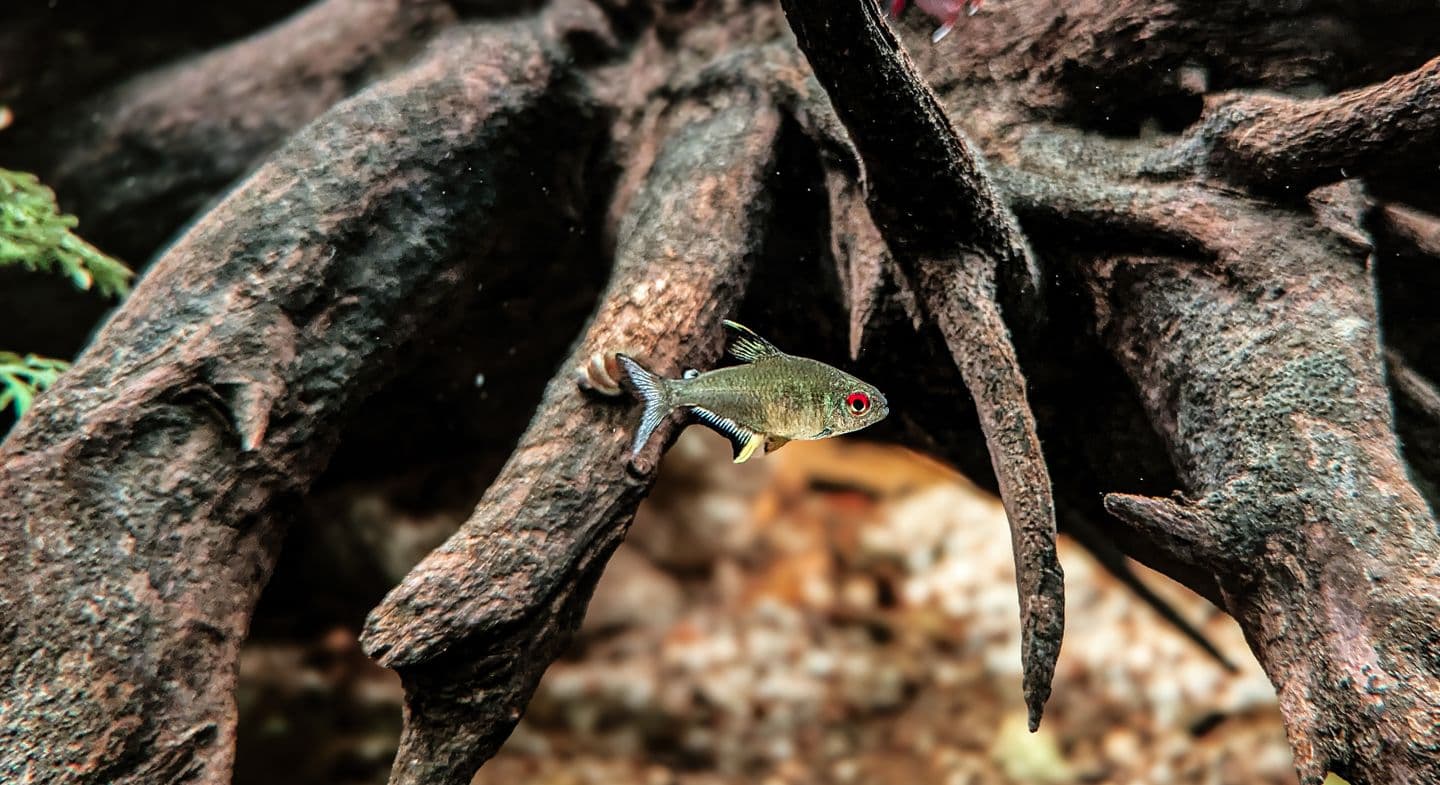
Congo Tetra: Africa's Answer to South America's Tetras
The Congo tetra, Phenacogrammus interruptus, stands apart from most popular tetras by hailing from the Congo River basin in Africa rather than South America. It is also considerably larger than the ne
The Congo tetra, Phenacogrammus interruptus, stands apart from most popular tetras by hailing from the Congo River basin in Africa rather than South America. It is also considerably larger than the neon or cardinal, reaching eight to nine centimetres, with males developing long, flowing fins and an iridescent blue, green and gold sheen that shifts with the light.
Because of its size and shimmering colour, it works well as a centrepiece shoal in a larger community tank rather than blending into the background the way smaller tetras do.
Tank and water requirements
Given their adult size, Congo tetras need a longer tank, at least ninety centimetres, and a group of six or more for the shoal to settle and show its best colour. A tank of a hundred litres or more suits a proper group.
They prefer softer, slightly acidic water similar to cardinal tetras, though they are somewhat more adaptable, and do best with subdued lighting and a dark substrate that makes their colours stand out rather than washing them out.
Diet and behaviour
An omnivorous diet of good-quality flakes or pellets, supplemented with live or frozen bloodworm and brine shrimp, supports their size and colour development. They are not fussy eaters once established.
Congo tetras are peaceful but can be nervous jumpers if startled, so a well-fitted lid is worth having, and they do best with similarly sized, calm tankmates rather than small fish they might see as food or boisterous fish that could nip their long fins.
Buying tips
Priced higher than most common tetras in India, often eighty to two hundred rupees per fish given their size and the flowing fins of mature males
Less commonly stocked than South American tetras, so may require checking with specialist importers or larger city aquarium shops
Buy juveniles where possible, since their signature colour and finnage develop more fully over their first year in a stable, well-kept tank
The scissortail rasbora, Rasbora trilineata, gets its name from the black-and-white banded tail fin, which opens and closes in a scissoring motion as the fish swims, a genuinely visible behaviour rath
Flushing a fish, whether dead or simply unwanted, down the toilet is a habit many Indian households have inherited without questioning it, and it carries real risks that are worth understanding.
A cover might seem like an afterthought compared to filtration or lighting, but for a saltwater tank it does real, unglamorous work: cutting evaporation, which matters a great deal given how salinity