Walking into the coral section of an aquarium shop for the first time is genuinely overwhelming, dozens of colours, shapes and price points with wildly different care demands hiding behind similar loo
Walking into the coral section of an aquarium shop for the first time is genuinely overwhelming, dozens of colours, shapes and price points with wildly different care demands hiding behind similar looking price tags. Starting with a handful of proven, forgiving species gives a new reef keeper the best odds of early success, and success early on matters, since a few thriving corals build the confidence and experience needed before attempting anything more demanding.
Why soft corals are the right starting point
Soft corals lack the hard calcium carbonate skeleton that stony corals build, which generally makes them more tolerant of the lighting and water chemistry swings a newer tank inevitably has. They are also easier to frag, or divide into new colonies, if you later want to trade with other hobbyists, and most ask for little beyond stable water quality and moderate lighting to thrive.
Zoanthids
Widely considered one of the best true starter corals, zoanthids tolerate a broad range of lighting and water quality, come in an enormous range of colours, and spread readily once established. One genuine safety note: zoanthids can contain a toxin called palytoxin, so always wear gloves when handling or fragging them, avoid any contact with eyes or open cuts, and wash your hands thoroughly afterward.
Mushroom corals
Close to indestructible by reef standards, mushroom corals tolerate low to moderate lighting and a fairly wide range of water conditions, making them a genuinely forgiving choice for a tank still settling into stability. They come in a striking range of colours and textures and do best placed in the lower to middle sections of the tank, out of intense direct light.
Green star polyps
Fast growing and strikingly bright, green star polyps spread quickly across rock and can tolerate less than perfect conditions while a tank stabilises, which makes them a popular choice for covering bare rockwork early in a reef tank's life. Their fast spread is also worth planning for, since left unchecked they can overtake other corals nearby.
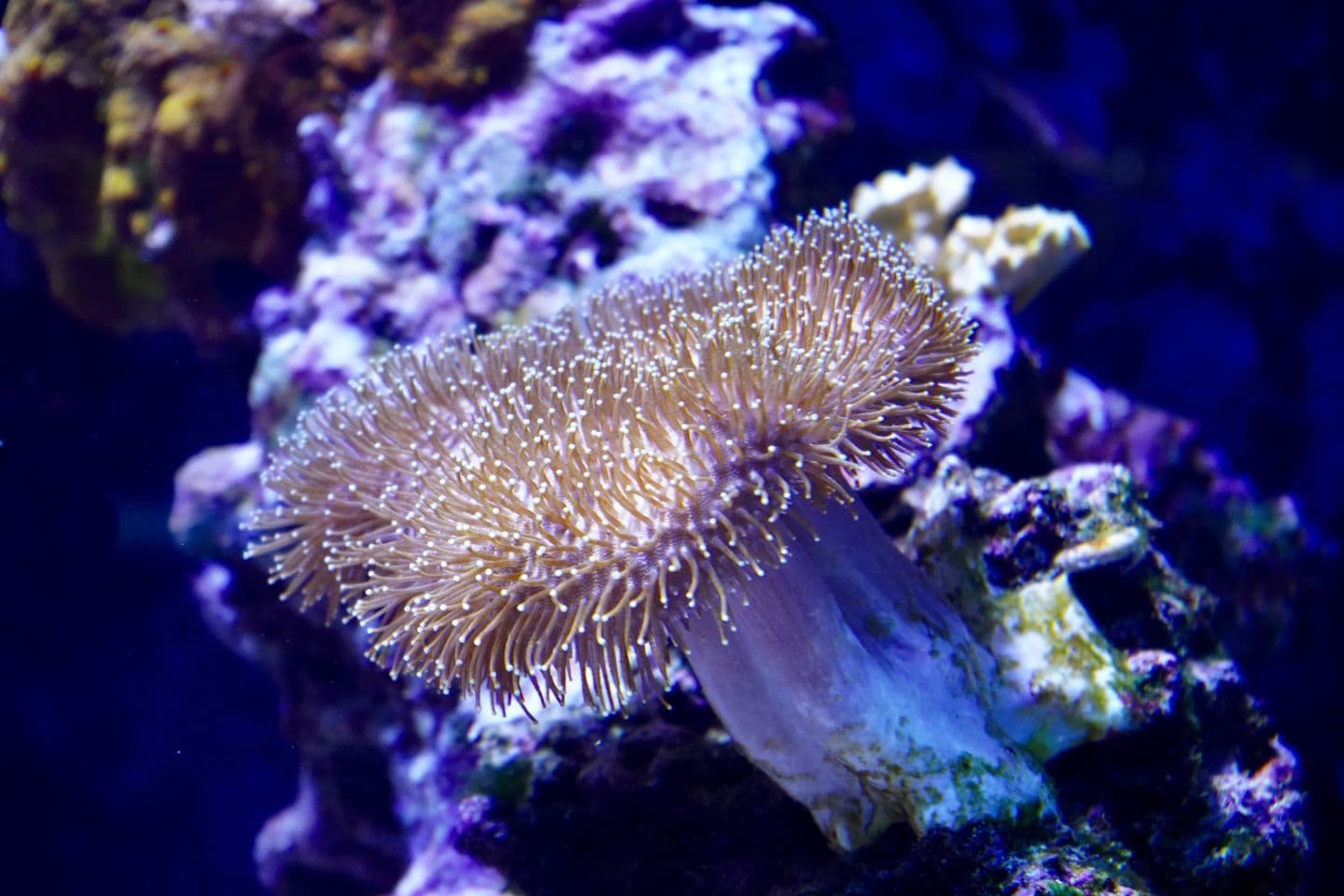
Toadstool leather corals
A hardy, adaptable soft coral that grows into a substantial centrepiece over time, tolerating a range of lighting and requiring minimal additional dosing beyond a consistent weekly water change routine. Toadstools periodically shed a thin mucus layer as part of their normal biology, which can look alarming to a new keeper the first time it happens but is a completely normal occurrence.
A word on progressing beyond soft corals
Once a tank has run stably for several months with soft corals thriving, moving on to large polyp stony, or LPS, corals is a reasonable next step, since these generally ask for more stable lighting and calcium and alkalinity dosing than soft corals do. Small polyp stony, or SPS, corals, the most demanding category, are best left until a reef keeper has genuine confidence in maintaining stable, precisely dosed water chemistry over an extended period, since SPS corals are considerably less forgiving of the small fluctuations a newer tank is still prone to.
Sourcing corals in India
Coral availability through Indian marine aquarium shops has grown steadily, though selection is still more limited and pricier than in markets with a larger established reefing community, and specialist online sellers or hobbyist frag swaps are often a better source of variety than a general pet shop. Buying a frag rather than a large colony, when the option exists, is both more affordable for a beginner and gives the coral an easier, less stressful transition into a new tank.
The scissortail rasbora, Rasbora trilineata, gets its name from the black-and-white banded tail fin, which opens and closes in a scissoring motion as the fish swims, a genuinely visible behaviour rath
Flushing a fish, whether dead or simply unwanted, down the toilet is a habit many Indian households have inherited without questioning it, and it carries real risks that are worth understanding.
A cover might seem like an afterthought compared to filtration or lighting, but for a saltwater tank it does real, unglamorous work: cutting evaporation, which matters a great deal given how salinity