Elephant Nose Fish: The Aquarium's Most Intelligent Resident
The elephant nose fish is named for its long, trunk-like extension of the chin, which is not actually a nose but a highly sensitive electrical sensing organ. It comes from West and Central Africa and
The elephant nose fish is named for its long, trunk-like extension of the chin, which is not actually a nose but a highly sensitive electrical sensing organ. It comes from West and Central Africa and reaches around twenty to twenty five centimetres, considerably larger than its delicate appearance suggests.
This is a genuinely remarkable animal from a neuroscience standpoint: it navigates and finds food using weak electric fields generated by its own body, and it has the largest brain-to-body oxygen consumption ratio of any known vertebrate, roughly three times that of a human, along with a brain-to-body size ratio that is itself slightly higher than a human's. Researchers have shown it can distinguish shapes and even the material of objects entirely through electrolocation in total darkness.
Tank and water requirements
A single fish does well in a tank of a hundred and fifty litres or more, with soft lighting, driftwood and hiding spots, since this is a naturally nocturnal, somewhat shy species. Stable, clean water matters more here than with many hardier fish, and sudden parameter swings are poorly tolerated.
Other electric fish or fish with reflective, metallic scales should be avoided as tankmates, since they can interfere with this species' electrical sensing and cause genuine stress.
Diet and a sourcing note
Live or frozen foods such as bloodworm and blackworm are strongly preferred, and this fish can be a reluctant, slow eater when first settling into a new tank, sometimes needing feeding after lights out to be coaxed into eating comfortably.
A genuinely important fact for any buyer: this species has never been successfully bred in captivity anywhere, and every elephant nose fish in the aquarium trade, including in India, is wild caught. This is worth factoring into a buying decision, and a keeper taking one on should be genuinely committed to giving it the stable, long-term home a wild-caught fish deserves.
Buying tips
Priced around one hundred fifty to four hundred rupees per fish, reflecting the cost of wild collection and import
Every specimen is wild caught rather than farmed, since captive breeding has never been achieved, worth weighing before buying
Feed after lights out with live or frozen food if a newly bought fish seems reluctant to eat during the day
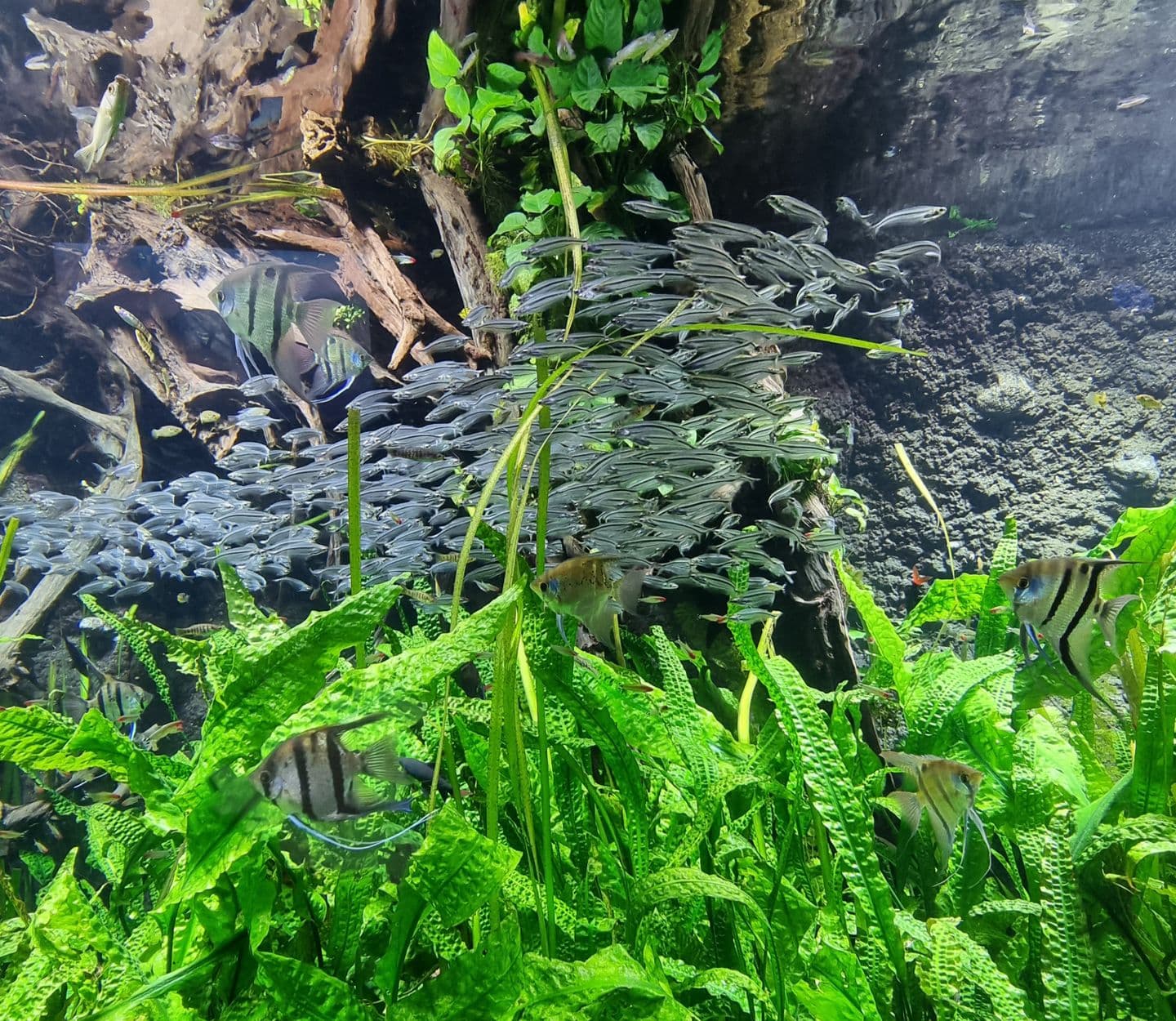
The scissortail rasbora, Rasbora trilineata, gets its name from the black-and-white banded tail fin, which opens and closes in a scissoring motion as the fish swims, a genuinely visible behaviour rath
Flushing a fish, whether dead or simply unwanted, down the toilet is a habit many Indian households have inherited without questioning it, and it carries real risks that are worth understanding.
A cover might seem like an afterthought compared to filtration or lighting, but for a saltwater tank it does real, unglamorous work: cutting evaporation, which matters a great deal given how salinity