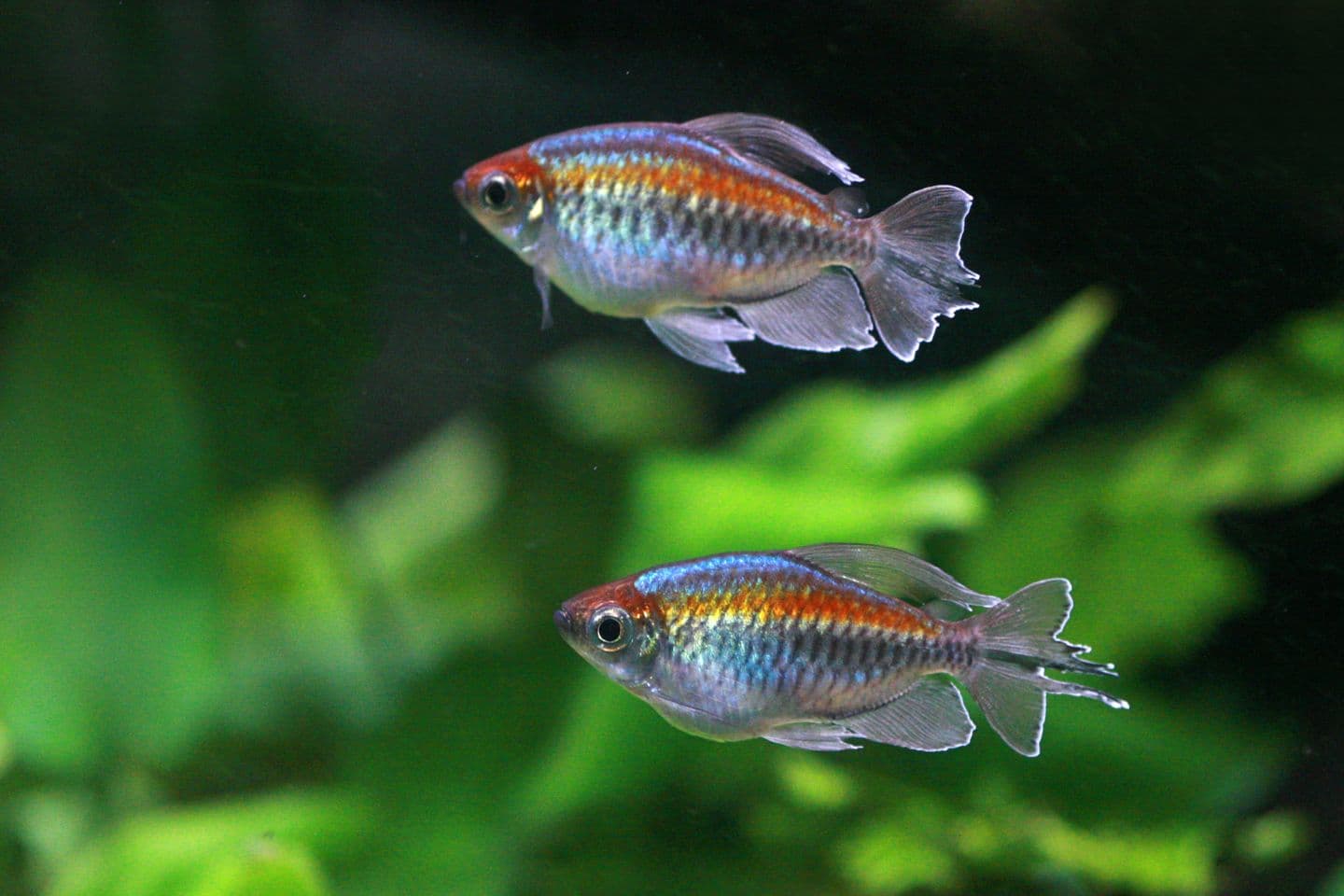
The ember tetra, Hyphessobrycon amandae, is one of the smallest commonly kept tetras, rarely exceeding two centimetres, with a warm orange-red body that glows under the right lighting. It comes from a
The ember tetra, Hyphessobrycon amandae, is one of the smallest commonly kept tetras, rarely exceeding two centimetres, with a warm orange-red body that glows under the right lighting. It comes from a small area of Brazil and has become popular for nano and planted tanks where larger tetras would overwhelm the scale of the aquascape.
Its small size and calm nature make it one of the few tetras genuinely suitable for a tank under sixty litres, provided the group size is not compromised to fit the smaller space.
Tank and water requirements
A group of eight to ten embers does well in a tank as small as forty litres, given how little space each individual fish needs. They tolerate a moderate range of water hardness better than cardinals do, though they still prefer softer, slightly acidic water where possible.
A well-planted tank with subdued lighting brings out their colour best, and dense planting also gives this naturally shy fish more confidence to stay out in open water.
Diet and behaviour
Ember tetras need very fine flake or micro pellet food given their small mouths, and appreciate the occasional feed of baby brine shrimp or micro worms, particularly if breeding is being attempted.
They are peaceful and unhurried, making them poor tankmates for boisterous or fast-feeding fish that will simply out-compete them at mealtimes.
Buying tips
Priced around thirty to sixty rupees per fish in most Indian aquarium shops that stock nano fish
A good choice for a small planted tank or nano aquascape rather than a large community setup
Less commonly stocked than neons or cardinals, so may need to be sourced from a specialist aquascaping shop rather than a general pet shop
The scissortail rasbora, Rasbora trilineata, gets its name from the black-and-white banded tail fin, which opens and closes in a scissoring motion as the fish swims, a genuinely visible behaviour rath
Flushing a fish, whether dead or simply unwanted, down the toilet is a habit many Indian households have inherited without questioning it, and it carries real risks that are worth understanding.
A cover might seem like an afterthought compared to filtration or lighting, but for a saltwater tank it does real, unglamorous work: cutting evaporation, which matters a great deal given how salinity