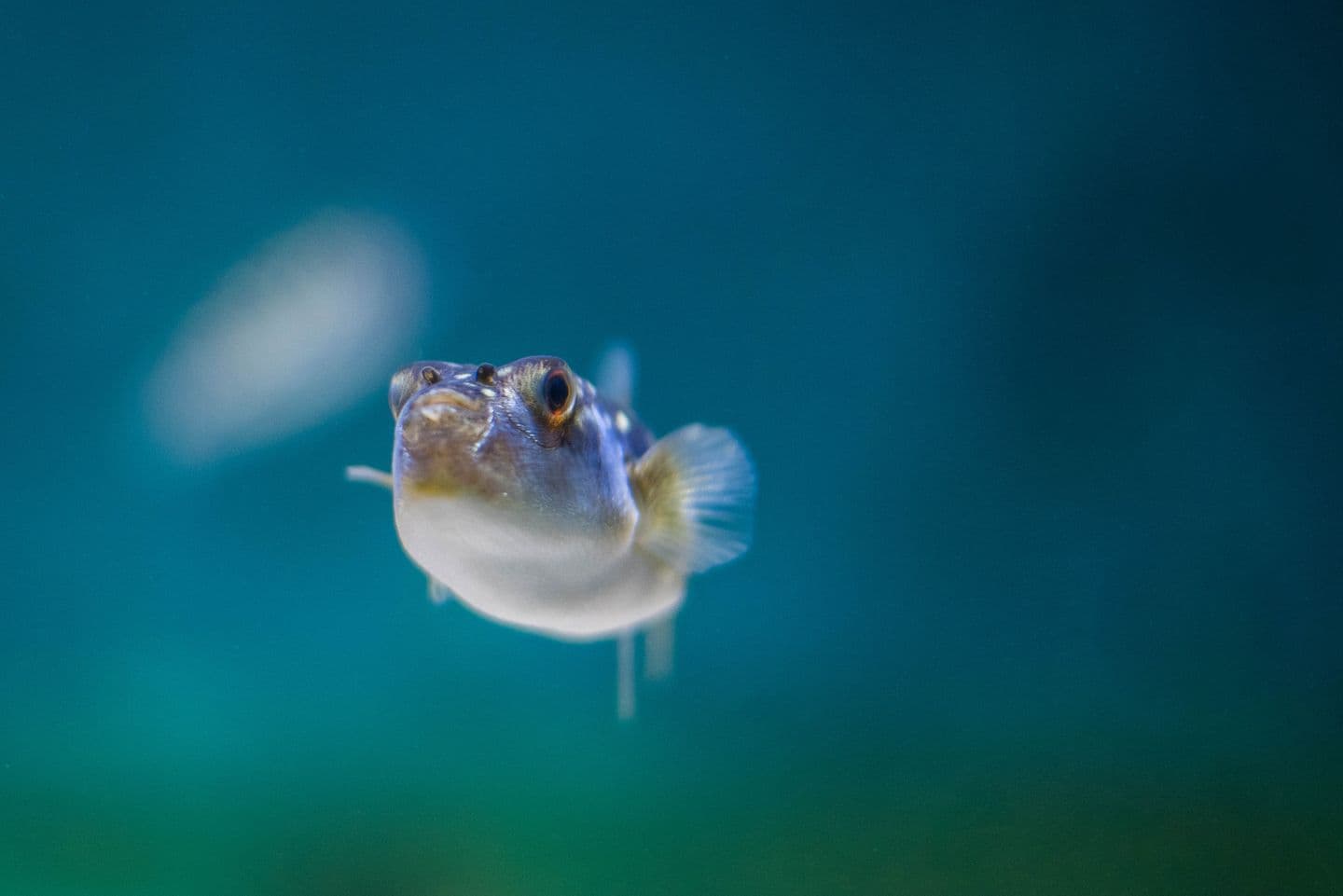
Figure Eight Puffer: A Freshwater Fish Only While Young
The figure eight puffer carries a yellow-green body marked with dark, looping patterns that resemble the number eight repeated across its back, a genuinely attractive and unusual pattern among aquariu
The figure eight puffer carries a yellow-green body marked with dark, looping patterns that resemble the number eight repeated across its back, a genuinely attractive and unusual pattern among aquarium fish. It comes from Southeast Asia and reaches around six to eight centimetres.
The most important thing to know about this fish is a genuine, commonly overlooked care detail: juveniles tolerate and are often sold in pure freshwater, but adults need increasingly brackish, salted water to stay healthy long term. A figure eight puffer kept in freshwater indefinitely as it matures will typically decline in health over time.
Tank and water requirements
A single fish does well in a tank of sixty litres or more. Young fish can start in freshwater, but aquarium salt should be gradually introduced and increased as the fish matures, working towards a genuinely brackish setup with a specific gravity of around 1.005 to 1.010 for a healthy adult.
This gradual transition needs planning from the point of purchase rather than being treated as an optional later upgrade, since it directly affects the fish's long-term health.
Diet and behaviour
Like the pea puffer, it needs hard-shelled prey such as snails to wear down its continuously growing teeth, alongside other live or frozen foods such as bloodworm and shrimp. It typically will not accept standard dry flake food.
It is territorial and can be nippy towards fin-bearing tankmates, and given its eventual need for brackish water, is generally best kept alone or with other brackish-tolerant species rather than in a standard freshwater community tank.
Buying tips
Priced around eighty to two hundred rupees per fish in most Indian shops that stock puffers
Ask specifically whether the shop's fish are being kept in freshwater or brackish water, and plan the same gradual transition at home
Plan for a live and frozen food supply, particularly snails, given this species' genuine dietary needs
Confirm the species carefully, since it is commonly confused in shops with the green spotted puffer, a related species that needs full marine water as an adult rather than just brackish
The scissortail rasbora, Rasbora trilineata, gets its name from the black-and-white banded tail fin, which opens and closes in a scissoring motion as the fish swims, a genuinely visible behaviour rath
Flushing a fish, whether dead or simply unwanted, down the toilet is a habit many Indian households have inherited without questioning it, and it carries real risks that are worth understanding.
A cover might seem like an afterthought compared to filtration or lighting, but for a saltwater tank it does real, unglamorous work: cutting evaporation, which matters a great deal given how salinity