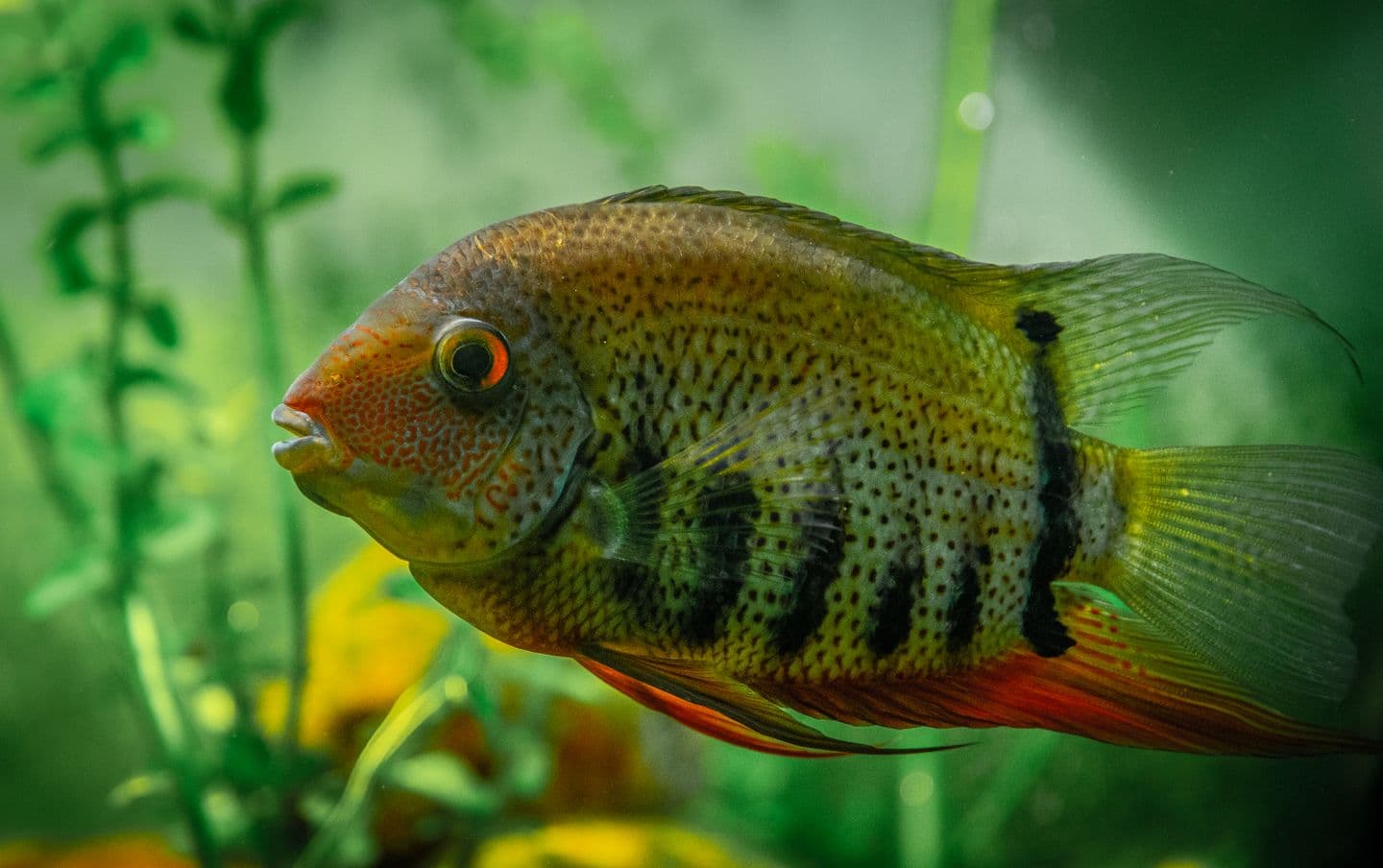
Firemouth Cichlid: A Warning Display You Have to See
The firemouth cichlid gets its name from the vivid red-orange colouring across its throat and lower body, which it flares dramatically during territorial or courtship displays by extending its gill co
The firemouth cichlid gets its name from the vivid red-orange colouring across its throat and lower body, which it flares dramatically during territorial or courtship displays by extending its gill covers outward, genuinely resembling a small fire flaring up. It comes from Central America and reaches around fifteen centimetres.
This flaring display is largely bluff rather than a prelude to real violence, and firemouths are considerably less aggressive than their dramatic posturing suggests, making them a good introduction to the more theatrical side of cichlid behaviour without the serious aggression of some other species on this list.
Tank and water requirements
A pair or small group does well in a tank of a hundred litres or more, with a sandy substrate that lets this fish express its natural sifting behaviour, along with caves and rockwork for territory. It tolerates a reasonable range of water conditions, including typical Indian tap water.
Firemouths appreciate a mix of open swimming space and defensible territory, and a tank that offers both tends to see the least unnecessary squabbling.
Diet and behaviour
An omnivorous diet of good-quality cichlid pellets, supplemented with occasional live or frozen food, suits it well. It sifts substrate for food particles as part of its natural feeding style, which can be entertaining to watch.
It is semi-aggressive rather than outright dangerous, and while the throat-flaring display looks alarming, actual physical fighting is relatively rare compared to more seriously aggressive cichlids like the jewel or breeding convict.
Buying tips
Priced around sixty to one hundred fifty rupees per fish in most Indian shops that stock Central American cichlids
A good introduction to cichlid personality and display behaviour without the serious aggression of some other species
Provide a sandy substrate specifically to let this fish express its natural sifting feeding behaviour
The scissortail rasbora, Rasbora trilineata, gets its name from the black-and-white banded tail fin, which opens and closes in a scissoring motion as the fish swims, a genuinely visible behaviour rath
Flushing a fish, whether dead or simply unwanted, down the toilet is a habit many Indian households have inherited without questioning it, and it carries real risks that are worth understanding.
A cover might seem like an afterthought compared to filtration or lighting, but for a saltwater tank it does real, unglamorous work: cutting evaporation, which matters a great deal given how salinity