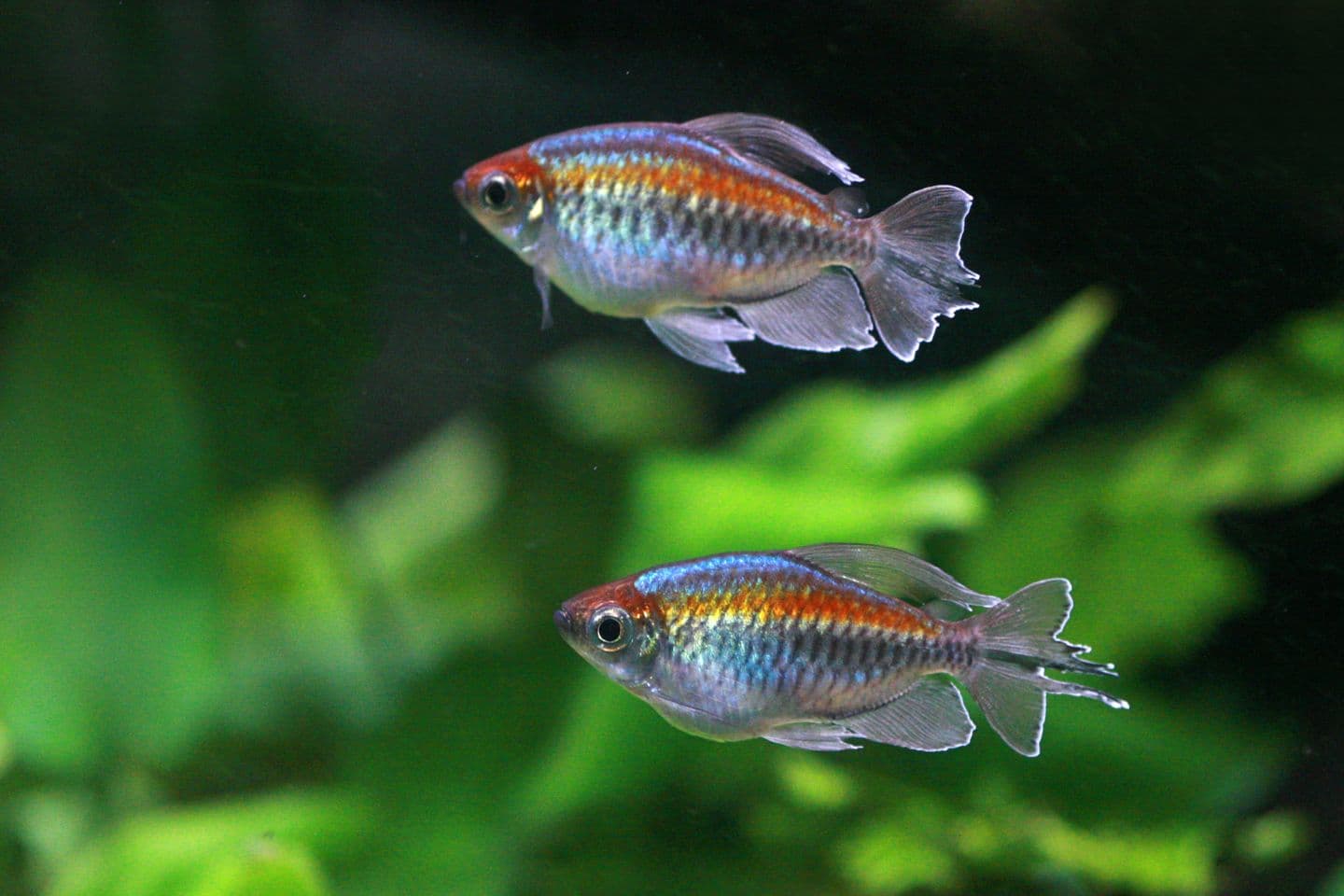
Glass Bloodfin Tetra: A See-Through Fish With a Fiery Tail
The glass bloodfin tetra has a translucent, almost invisible silver body set off by a vivid red tail fin, giving it a striking, minimal look distinct from the more solidly coloured tetras earlier in t
The glass bloodfin tetra has a translucent, almost invisible silver body set off by a vivid red tail fin, giving it a striking, minimal look distinct from the more solidly coloured tetras earlier in this series. It comes specifically from the Amazon basin, across Brazil, Peru, Ecuador, Colombia and Bolivia, and reaches around five to six centimetres.
It has one close look-alike relative worth knowing about: Prionobrama paraguayensis, from the Paraguay river system further south, shares the same transparent body but lacks the red in the tail fin, so the vivid red caudal colouring is actually the easiest way to confirm a fish is the true glass bloodfin rather than its plainer cousin.
It is a genuine shoaling fish, most striking when kept in a proper group where the contrast between the see-through bodies and the flashes of red tail becomes clearly visible as the shoal moves together.
Tank and water requirements
A group of eight or more does well in a tank of sixty litres or more, with open swimming space, since this is an active, mid-water shoaler that appreciates room to move. It tolerates a reasonable range of water conditions, including typical Indian tap water.
A darker substrate and background help the translucent body and red tail stand out most clearly, an easy, low-cost way to show this fish off at its best.
Diet and behaviour
A varied diet of small flakes, micro pellets and occasional live or frozen food such as daphnia and brine shrimp suits it well. It is peaceful and active, mixing well with other calm community fish of a similar size.
It can be a nervous jumper if startled, so a secure lid is worth having alongside the usual community tank setup.
Buying tips
Priced around thirty to seventy rupees per fish where stocked, somewhat less commonly available than the standard tetras earlier in this series
Buy in a full group of eight or more for the best shoaling display and to show off the translucent body effectively
A darker tank background makes a real visible difference to how striking this fish looks
The scissortail rasbora, Rasbora trilineata, gets its name from the black-and-white banded tail fin, which opens and closes in a scissoring motion as the fish swims, a genuinely visible behaviour rath
Flushing a fish, whether dead or simply unwanted, down the toilet is a habit many Indian households have inherited without questioning it, and it carries real risks that are worth understanding.
A cover might seem like an afterthought compared to filtration or lighting, but for a saltwater tank it does real, unglamorous work: cutting evaporation, which matters a great deal given how salinity