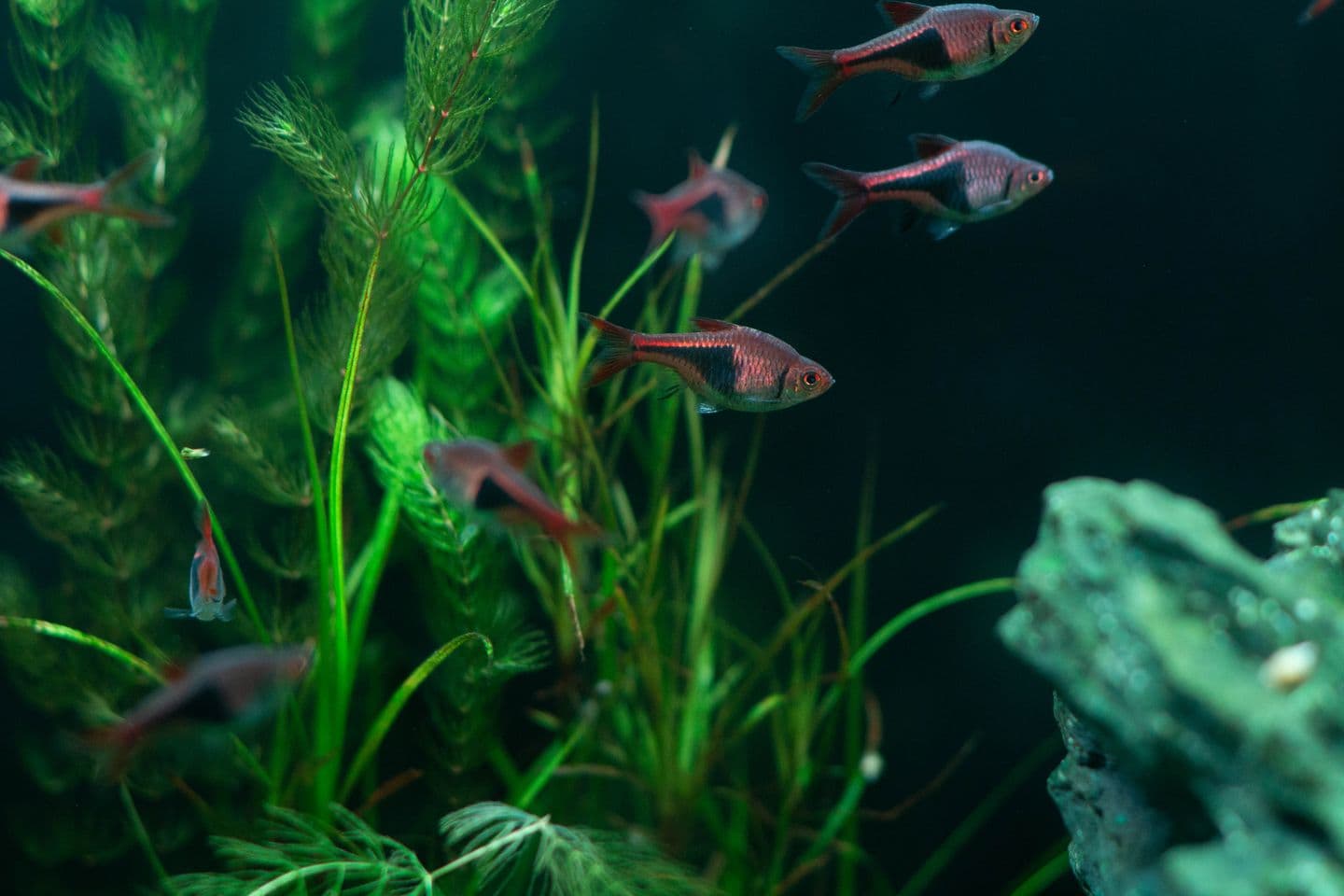
Guidelines for Stocking Your Aquarium the Right Way
Deciding how many fish to add, and which species to combine, is where most new aquarists either get lucky or get it badly wrong. The old rule of one inch of fish per gallon of water still gets repeate
Deciding how many fish to add, and which species to combine, is where most new aquarists either get lucky or get it badly wrong. The old rule of one inch of fish per gallon of water still gets repeated in Indian pet shops, but it is genuinely outdated and can lead to a badly overstocked tank. Stocking well means thinking about waste, behaviour and adult size, not just how many fish will visually fit.
Why the inch per gallon rule falls apart
The rule assumes every fish produces roughly the same amount of waste for its length, which is simply not true. A slim, small bodied tetra and a thick bodied goldfish of the same length produce very different amounts of waste, and a goldfish will also keep growing well past the size at which the rule stops making sense. Body shape, activity level and adult size all matter more than a straight line measurement.
A more realistic way to think about stocking
A more workable starting framework for a well filtered, planted community tank looks roughly like this:
Small, slim community fish 1 to 2 inches such as neon tetras or guppies: about one fish per 7 to 8 litres of water
Medium community fish 2 to 4 inches such as gouramis or barbs: about one fish per 15 to 19 litres
Larger fish 4 to 8 inches: considerably more space each, often 35 to 40 litres or more per fish
Goldfish and other heavy waste producers: 75 to 110 litres for the first fish alone, with more added per additional fish
Quarantine new arrivals before adding them
Stocking well is not only about numbers, it is also about how new fish join the tank. Keep a small separate tank, even a simple 10 to 15 litre setup with a sponge filter, to hold new fish for two to three weeks before moving them into the main aquarium. This gives you time to spot illness, such as ich or fungal infections, before it reaches fish that are already settled. It feels like an extra step for a hobby that already has enough steps, but it is the single most effective habit for keeping a stable, disease-free community tank over the long run.
Always plan for adult size, not shop size
Many fish sold in Indian aquarium shops are juveniles, often a fraction of their eventual adult length. A tinfoil barb or a common pleco, for instance, looks perfectly modest at two inches in a shop tank and can outgrow a small home aquarium within a year. Research the adult size of any fish before buying, and stock for the tank you will have in a year, not the tank you have on day one.
Compatibility matters as much as numbers
Schooling species need to be kept in groups, usually five or six at minimum, or they become stressed and skittish. Territorial fish need enough space and visual breaks, such as plants or rockwork, to establish boundaries without constant conflict. Mixing fast, boisterous fish with slow, long finned species like bettas or fancy guppies often ends in torn fins. A little research into temperament before combining species prevents most of the stress related illness seen in overcrowded or badly mixed community tanks.
Add fish gradually
Even within a sensible stocking plan, add fish in small batches over several weeks rather than all at once. This gives your filter's bacteria colony time to grow to match the increased bioload, protecting both the new arrivals and the fish already settled in.
The scissortail rasbora, Rasbora trilineata, gets its name from the black-and-white banded tail fin, which opens and closes in a scissoring motion as the fish swims, a genuinely visible behaviour rath
Flushing a fish, whether dead or simply unwanted, down the toilet is a habit many Indian households have inherited without questioning it, and it carries real risks that are worth understanding.
A cover might seem like an afterthought compared to filtration or lighting, but for a saltwater tank it does real, unglamorous work: cutting evaporation, which matters a great deal given how salinity