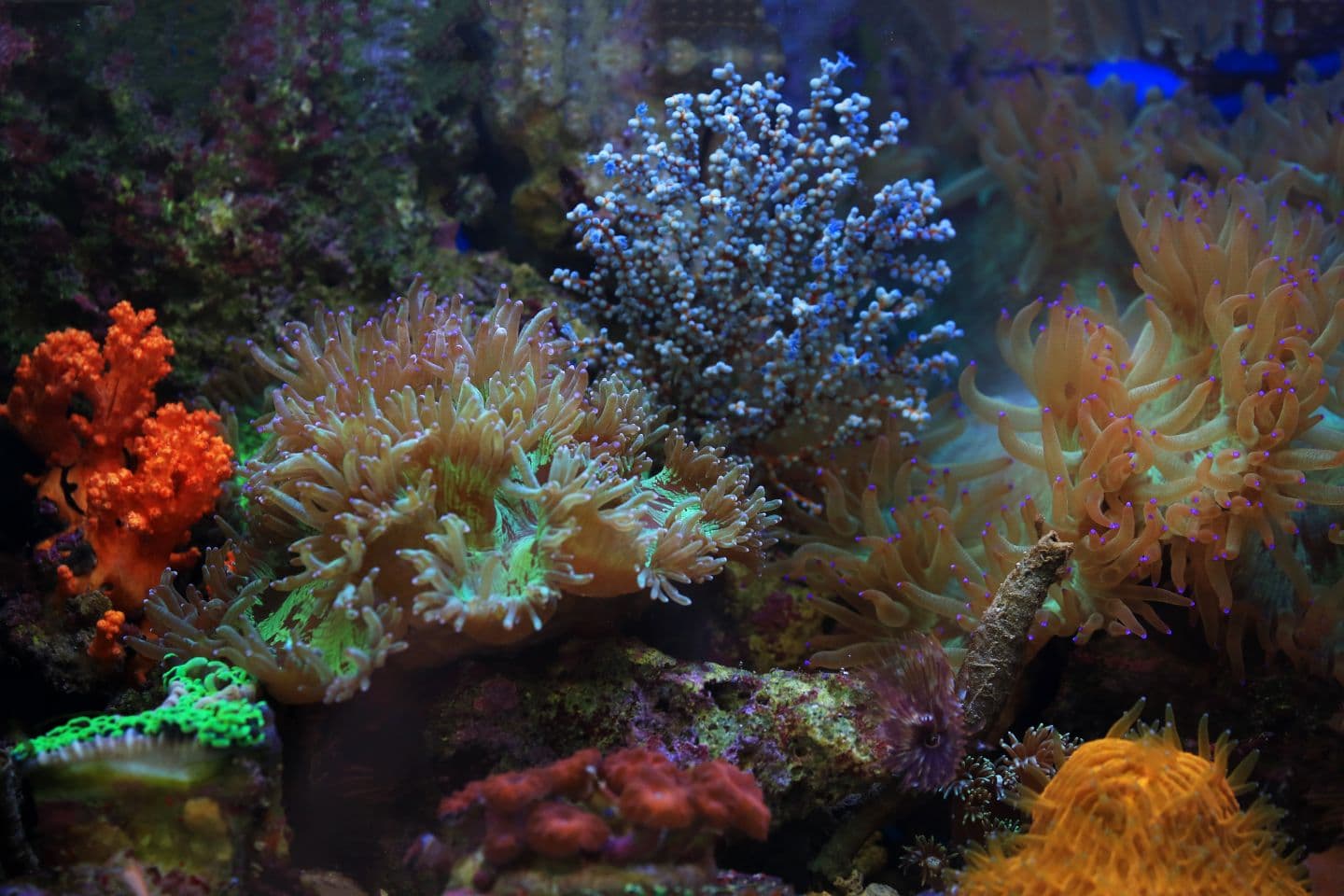
How to Care for Saltwater Fish: What Changes From Freshwater
Saltwater fishkeeping has a reputation for being difficult, and that reputation is only partly deserved. The biology is less forgiving than a freshwater community tank, but the core discipline is the
Saltwater fishkeeping has a reputation for being difficult, and that reputation is only partly deserved. The biology is less forgiving than a freshwater community tank, but the core discipline is the same: stable water, patient stocking, and not rushing the process. What genuinely changes is the equipment list, the cost, and the margin for error, all of which are worth understanding honestly before you commit to a marine tank in India.
Why saltwater fish are less forgiving
Marine fish evolved in the ocean, an environment where water chemistry barely changes from one day to the next. A home aquarium cannot replicate that volume of stability, so even small swings in salinity, temperature or pH hit marine fish harder than they hit freshwater species. This is why saltwater setups lean more heavily on precise equipment: a reliable protein skimmer, a hydrometer or refractometer to measure salinity accurately, and a heater with a dependable thermostat.
Getting the salt mix right
Saltwater fish need water mixed to a specific gravity, generally between 1.020 and 1.025 for a fish only tank, measured with a hydrometer or the more accurate refractometer. Use reverse osmosis or RO water as your base rather than ordinary tap water, since tap water in most Indian cities carries dissolved minerals and phosphates that throw off marine water chemistry and encourage nuisance algae. Mix the salt in a separate container, let it circulate for a few hours, and check the specific gravity before adding it to the tank, never straight from the bag.
Cycling a marine tank takes longer
Where a freshwater tank can cycle in four to six weeks, a saltwater tank often takes six to eight weeks or longer, because the bacteria that process ammonia in a marine environment grow more slowly than their freshwater counterparts. Using live rock or a quality bacterial starter can shorten this window, but patience here saves fish lives later. Test ammonia, nitrite and nitrate through the cycling period, and only add your first hardy fish, such as a clownfish or damselfish, once ammonia and nitrite both read zero consistently.
Feeding and everyday care
Most marine fish do well on a mix of quality marine flake or pellet food along with frozen options like mysis shrimp or brine shrimp for variety and better colour. Feed small amounts, since overfeeding fouls marine water just as quickly as freshwater, and marine systems generally have less biological buffer to absorb the mistake.
Weekly maintenance mirrors freshwater care in spirit but with marine specific checks added: monitor salinity after every top off, since evaporation removes only water and leaves salt behind, gradually raising salinity if you top off with plain water instead of fresh RO water.
Why quarantine matters even more in a marine tank
Marine fish are considerably more prone to certain parasites, particularly marine ich, than most freshwater community species, and treatment options that are safe for fish are often not safe for the corals and invertebrates in a display tank. A dedicated quarantine tank, even a simple bare bottom setup with a sponge filter and a heater, held for two to four weeks before any new fish joins the main display, is treated as close to essential by experienced marine keepers rather than an optional precaution.
The scissortail rasbora, Rasbora trilineata, gets its name from the black-and-white banded tail fin, which opens and closes in a scissoring motion as the fish swims, a genuinely visible behaviour rath
Flushing a fish, whether dead or simply unwanted, down the toilet is a habit many Indian households have inherited without questioning it, and it carries real risks that are worth understanding.
A cover might seem like an afterthought compared to filtration or lighting, but for a saltwater tank it does real, unglamorous work: cutting evaporation, which matters a great deal given how salinity