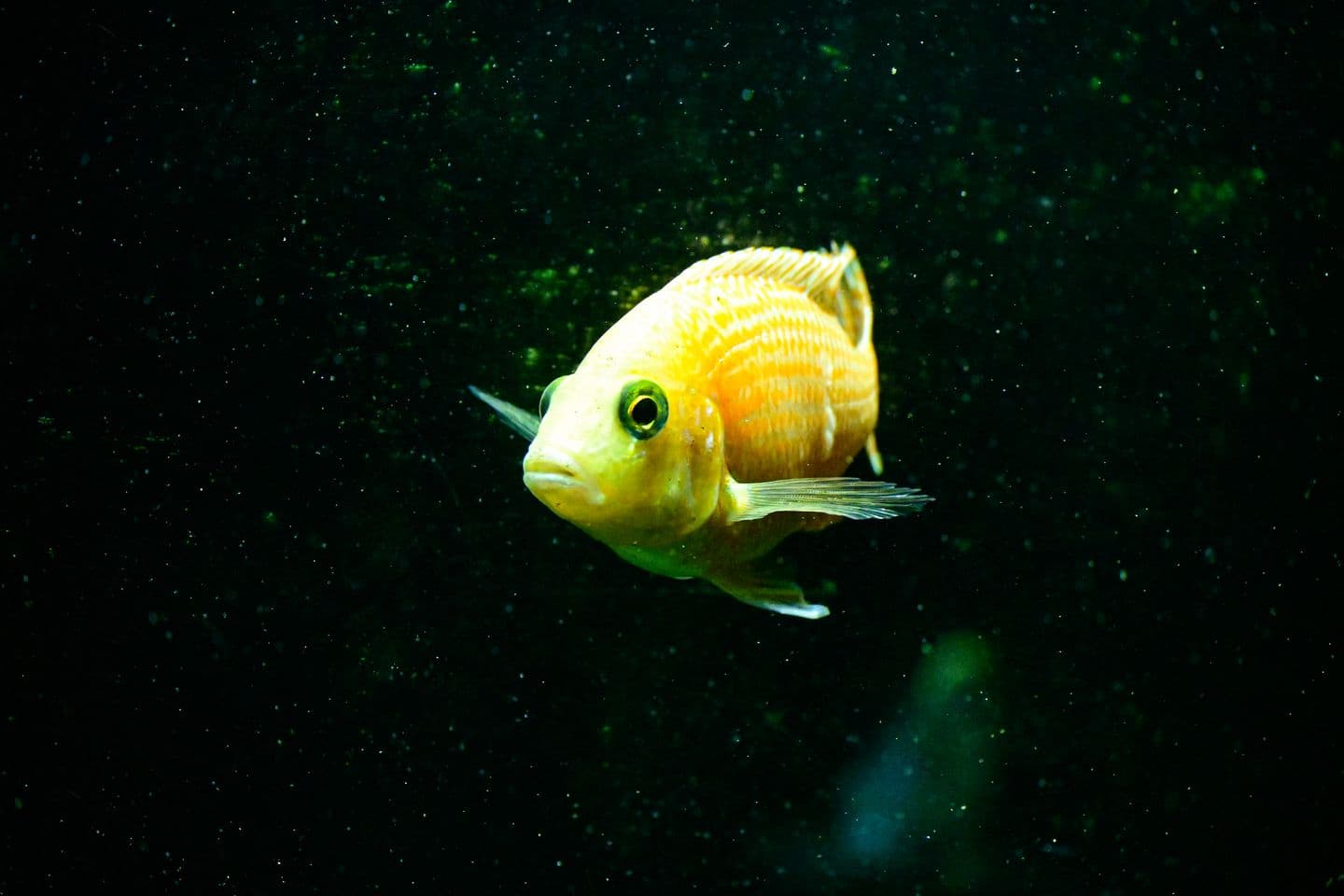
The jewel cichlid carries a base colour that can range from olive to deep red, scattered with brilliant iridescent blue-green spots that genuinely resemble scattered jewels, especially in a breeding m
The jewel cichlid carries a base colour that can range from olive to deep red, scattered with brilliant iridescent blue-green spots that genuinely resemble scattered jewels, especially in a breeding male at his most colourful. It comes from West Africa and reaches around fifteen centimetres.
This is a fish where the warning needs to come before the compliment: jewel cichlids are among the more seriously aggressive fish covered in this entire series, particularly once paired and breeding, and this should weigh heavily in any decision to buy one.
Tank and water requirements
A single fish or a bonded pair needs a tank of a hundred litres or more, ideally a species-only setup rather than a mixed community tank, given how aggressively territorial this fish becomes. It tolerates a wide range of water conditions, including typical Indian tap water.
Robust, well-anchored decor and clear territorial boundaries help, though ultimately the safest approach with this species is simply not mixing it with fish that cannot defend themselves or escape a determined attack.
Diet and a serious warning
An omnivorous diet of good-quality cichlid pellets, supplemented with occasional live or frozen food, suits it well. It is not a fussy eater.
Once paired and breeding, jewel cichlids will attack and can seriously injure or kill almost any other fish sharing the tank, including fish considerably larger than themselves. This is not an exaggeration common to cichlid marketing but a genuine, well-documented trait, and this fish is best suited to an experienced keeper willing to commit to a species-only tank.
Buying tips
Priced around sixty to one hundred fifty rupees per fish in most Indian shops that stock African cichlids
Best kept in a species-only tank given the genuine severity of its aggression once breeding
Not a suitable choice for a mixed community tank or for a first-time cichlid keeper
The scissortail rasbora, Rasbora trilineata, gets its name from the black-and-white banded tail fin, which opens and closes in a scissoring motion as the fish swims, a genuinely visible behaviour rath
Flushing a fish, whether dead or simply unwanted, down the toilet is a habit many Indian households have inherited without questioning it, and it carries real risks that are worth understanding.
A cover might seem like an afterthought compared to filtration or lighting, but for a saltwater tank it does real, unglamorous work: cutting evaporation, which matters a great deal given how salinity