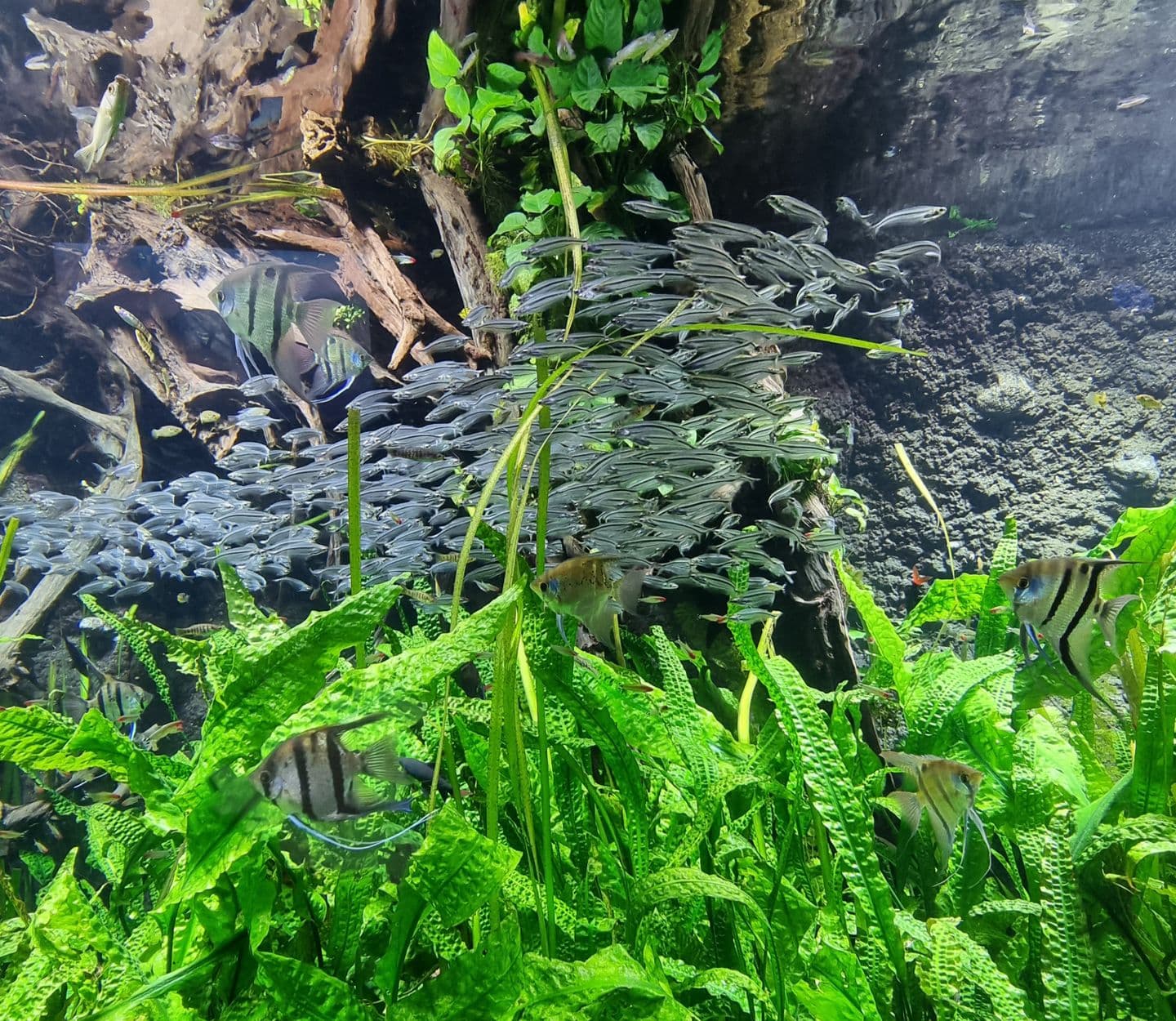
The true julii cory carries fine, distinct black spots scattered across a pale body, similar in general effect to the panda cory's markings but spread more evenly, and comes specifically from Peru. It
The true julii cory carries fine, distinct black spots scattered across a pale body, similar in general effect to the panda cory's markings but spread more evenly, and comes specifically from Peru. It reaches around five centimetres.
Here is the detail worth knowing before buying: the vast majority of corys sold as julii cory in the aquarium trade worldwide, including in India, are actually a different, closely related species, the three-lined or false julii cory, which carries more solid, reticulated stripe-like markings rather than true julii's fine spotting. The two are so consistently confused in the trade that even experienced shop staff often cannot tell them apart, and true wild julii cory is genuinely uncommon outside specialist collections.
Tank and water requirements
Whichever of the two species is actually in the tank, care is nearly identical: a group of six or more does well in a tank of fifty to sixty litres, with a soft substrate to protect delicate barbels. Both are tolerant of a reasonable range of water conditions, including typical Indian tap water.
Good filtration and regular substrate maintenance suit this bottom-dwelling group as a whole.
Diet and behaviour
Sinking pellets or wafers, supplemented with occasional live or frozen food, suit both species equally well. They are peaceful, active shoalers that spend most of their time foraging at the substrate.
Given how visually similar and behaviourally identical the two species are, the practical difference for a home aquarist is minimal, though a buyer specifically seeking the true species for breeding or collection purposes should ask detailed questions rather than trust the label alone.
Buying tips
Priced around forty to ninety rupees per fish, whichever of the two similar species is actually being sold
Do not assume a fish labelled julii cory is genuinely that species, since mislabelling with the three-lined cory is the norm rather than the exception in the trade
For most home aquarists the distinction makes no practical difference to care, only to accuracy of labelling
The scissortail rasbora, Rasbora trilineata, gets its name from the black-and-white banded tail fin, which opens and closes in a scissoring motion as the fish swims, a genuinely visible behaviour rath
Flushing a fish, whether dead or simply unwanted, down the toilet is a habit many Indian households have inherited without questioning it, and it carries real risks that are worth understanding.
A cover might seem like an afterthought compared to filtration or lighting, but for a saltwater tank it does real, unglamorous work: cutting evaporation, which matters a great deal given how salinity