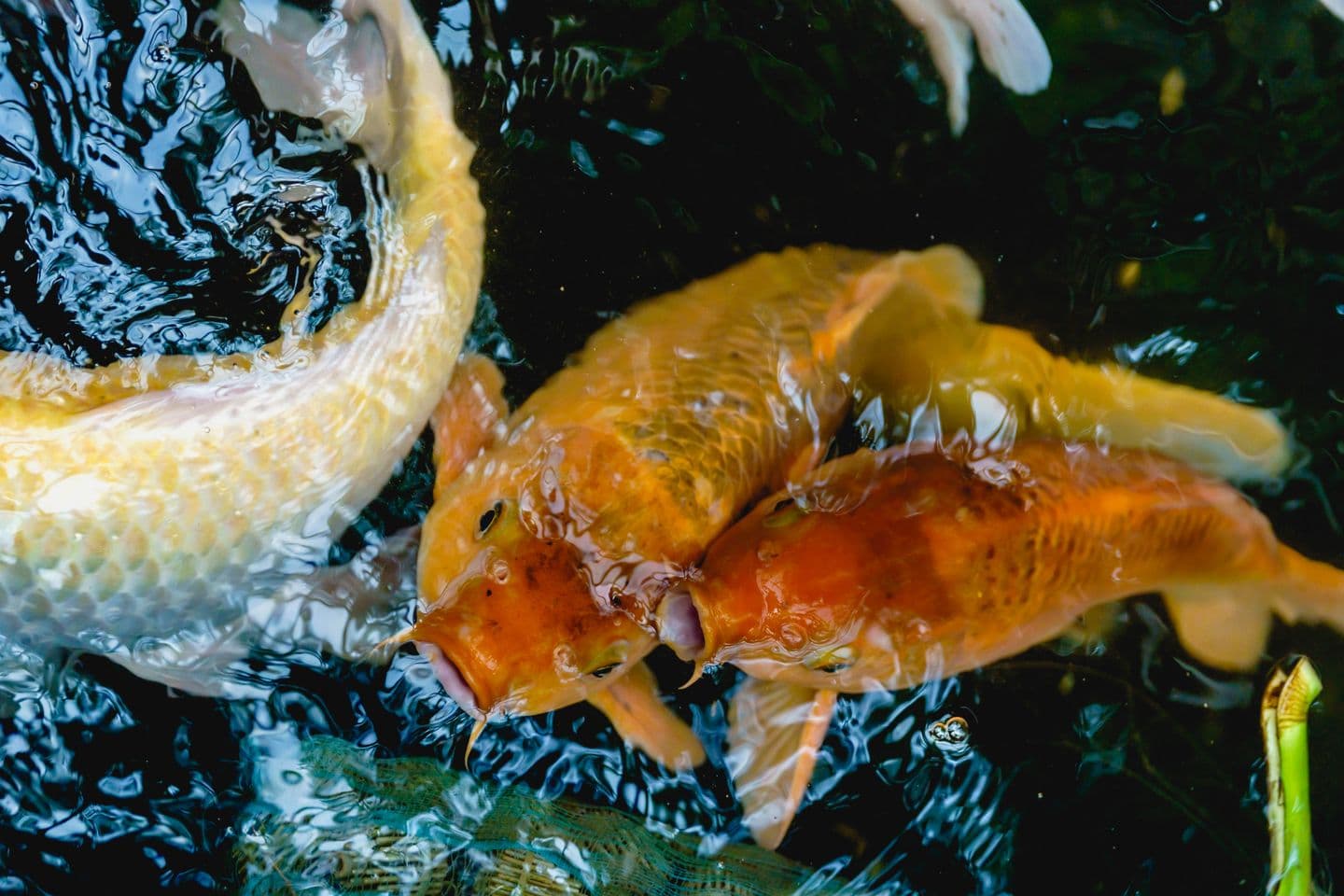
Koi, Cyprinus rubrofuscus, are ornamental colour varieties of the common carp, developed in Japan from food fish originally kept in rice paddies. Unlike goldfish, koi are unmistakably large-bodied fis
Koi, Cyprinus rubrofuscus, are ornamental colour varieties of the common carp, developed in Japan from food fish originally kept in rice paddies. Unlike goldfish, koi are unmistakably large-bodied fish, capable of reaching sixty to ninety centimetres in a spacious pond and living for decades, with some well-documented individuals living well past fifty years.
They are freely traded worldwide and, unlike the Asian arowana, carry no CITES trade restriction, which is worth knowing given how often the two get lumped together as expensive ornamental fish.
Pond requirements
Koi are pond fish, not aquarium fish, and need at least a thousand litres of water even for a small group of juveniles, with mature koi needing considerably more space and depth to grow to their full size and colour potential. A depth of at least a metre helps protect them from predatory birds, a real concern in many Indian gardens.
Strong filtration and aeration are essential given how much waste large koi produce, and a pond biofilter is generally considered non-negotiable by serious keepers.
Diet and care
Koi eat a wide floating pellet diet formulated for their size, along with the algae, insects and plant matter they will forage from a well-established pond. Feeding drops off naturally as water temperature falls, and overfeeding in cool water is a common and serious mistake.
In much of India's climate, koi feed and grow year-round rather than going through the pronounced winter dormancy seen in temperate countries, which keepers should factor into feeding schedules.
Buying tips
Young koi are inexpensive, often two hundred to five hundred rupees, but prices rise sharply for larger, well-patterned show-quality fish, which can run into tens of thousands of rupees
Buy from a dealer who can show the parent stock's colour and pattern, since young koi change dramatically as they mature
Factor in the eventual pond size and depth before buying, since koi bought for a small tank are one of the most common causes of overcrowding and early death in Indian ornamental fishkeeping
The scissortail rasbora, Rasbora trilineata, gets its name from the black-and-white banded tail fin, which opens and closes in a scissoring motion as the fish swims, a genuinely visible behaviour rath
Flushing a fish, whether dead or simply unwanted, down the toilet is a habit many Indian households have inherited without questioning it, and it carries real risks that are worth understanding.
A cover might seem like an afterthought compared to filtration or lighting, but for a saltwater tank it does real, unglamorous work: cutting evaporation, which matters a great deal given how salinity