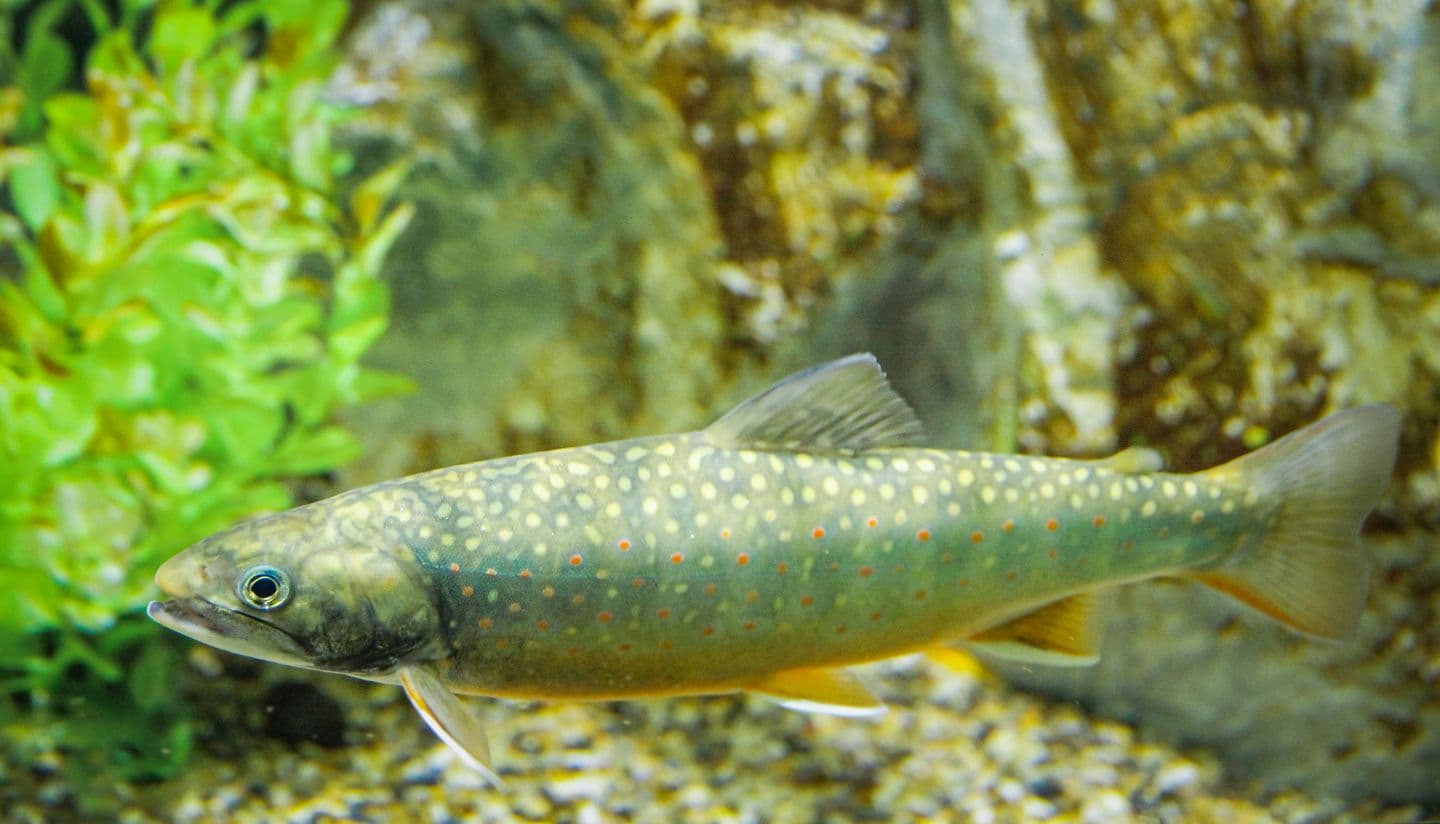
The kuhli loach has a long, slender, eel-like body banded in orange-brown and black, and spends most of its time burrowing through substrate or hiding in cover rather than swimming in open water. It c
The kuhli loach has a long, slender, eel-like body banded in orange-brown and black, and spends most of its time burrowing through substrate or hiding in cover rather than swimming in open water. It comes from Southeast Asia and reaches around eight to eleven centimetres.
Its secretive, nocturnal nature means many owners rarely see their kuhli loaches during the day, which can make a new keeper wonder if the fish is even still alive, when in fact it is simply doing exactly what this species does naturally.
Tank and water requirements
A group of six or more does well in a tank of sixty litres or more, with a soft, fine substrate that lets them burrow without injury, along with plenty of hiding spots such as caves, plants or driftwood. A secure lid matters more with this species than with almost any other on this list, since kuhli loaches are notorious escape artists capable of squeezing through remarkably small gaps.
They tolerate a range of water conditions, including typical Indian tap water, and appreciate dim lighting that better matches their naturally nocturnal habits.
Diet and behaviour
Sinking pellets, wafers and occasional live or frozen food suit their bottom-feeding, scavenging habits well. They are entirely peaceful, and their shy, burrowing nature means they rarely interact much with other tankmates beyond their own kind.
Feeding after lights out, or using a feeding tube to get food directly to the substrate, helps ensure this naturally hidden fish is actually getting enough to eat in a busy community tank.
Buying tips
Priced around thirty to seventy rupees per fish in most Indian shops
Check the tank lid and any filter intake gaps carefully before buying, since kuhli loaches are genuinely skilled escape artists
Keep in a proper group rather than alone, since they are more confident and visible when kept socially
The scissortail rasbora, Rasbora trilineata, gets its name from the black-and-white banded tail fin, which opens and closes in a scissoring motion as the fish swims, a genuinely visible behaviour rath
Flushing a fish, whether dead or simply unwanted, down the toilet is a habit many Indian households have inherited without questioning it, and it carries real risks that are worth understanding.
A cover might seem like an afterthought compared to filtration or lighting, but for a saltwater tank it does real, unglamorous work: cutting evaporation, which matters a great deal given how salinity