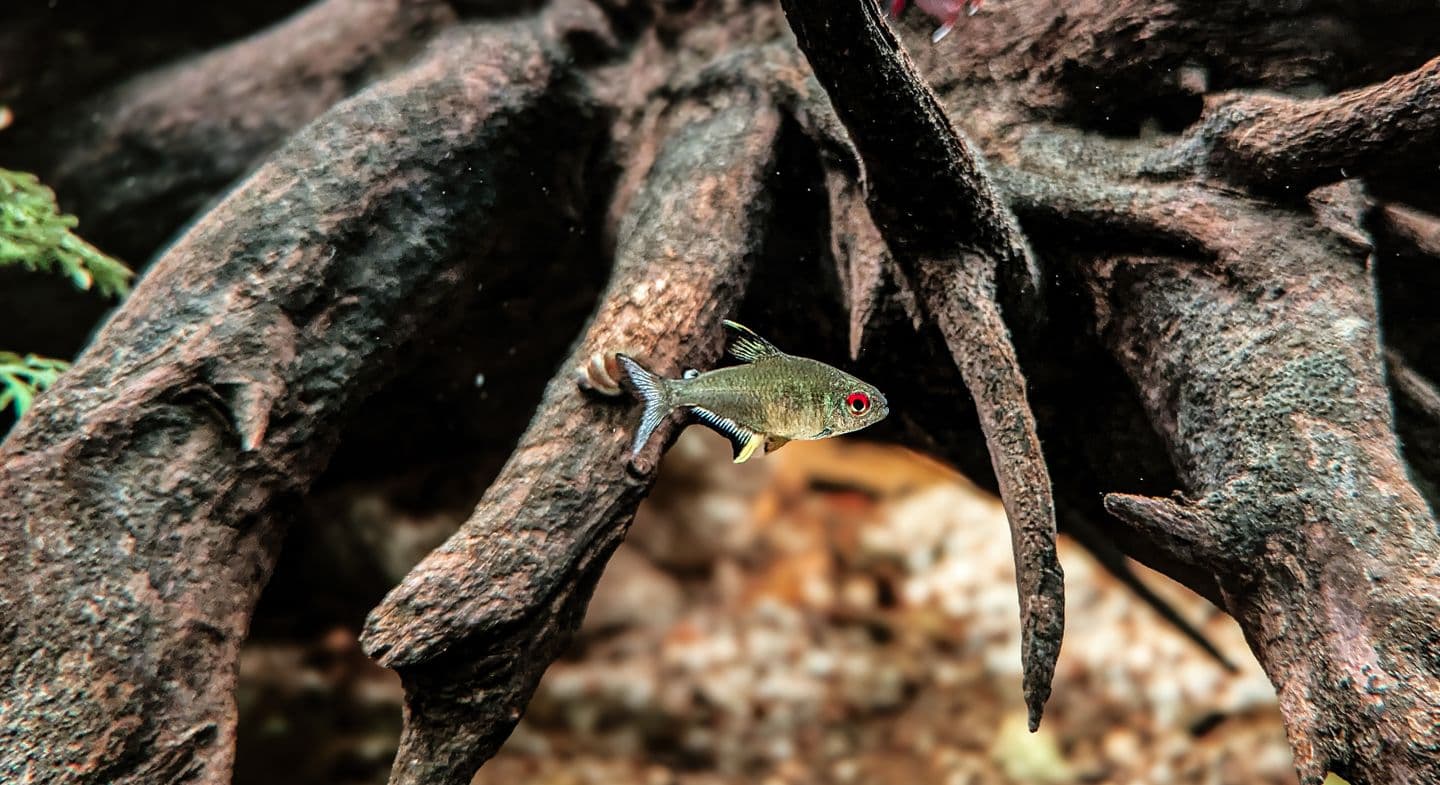
The lemon tetra, Hyphessobrycon pulchripinnis, carries a pale lemon-yellow wash across its body and fins, most vivid along the front edge of the dorsal and anal fins, paired with a striking red upper
The lemon tetra, Hyphessobrycon pulchripinnis, carries a pale lemon-yellow wash across its body and fins, most vivid along the front edge of the dorsal and anal fins, paired with a striking red upper iris that gives the fish a surprisingly expressive look. It comes from the Amazon basin and grows to around four to five centimetres.
Its colour is famously dependent on mood, tank conditions and diet, appearing washed out and pale in a stressed or poorly kept tank and considerably richer in a calm, well-maintained one.
Tank and water requirements
A group of six or more does well in a tank of sixty litres upwards, since lemon tetras are a touch more active and appreciate more swimming room than smaller tetras like embers. They adapt reasonably well to Indian tap water once settled.
A well-planted tank with some open swimming space and gentle filtration flow suits them, and they tend to colour up best in a tank that has been running steadily for a while rather than a newly set up one.
Diet and behaviour
A varied diet including quality flakes, micro pellets and occasional live or frozen food such as daphnia helps bring out their best colour. They are peaceful but can show mild fin-nipping tendencies if kept in too small a group or an understocked tank, so keeping a proper shoal size matters more here than with some other tetras.
They mix well with similarly sized, calm community fish and do best avoiding very slow-moving, long-finned tankmates that could tempt occasional nipping.
Buying tips
Priced around twenty five to sixty rupees per fish in most Indian shops
Look for fish with a strong red eye and visible yellow wash rather than pale, washed-out individuals, a sign of a well-kept shop tank
Keep in a group of at least six to reduce any tendency towards fin nipping
The scissortail rasbora, Rasbora trilineata, gets its name from the black-and-white banded tail fin, which opens and closes in a scissoring motion as the fish swims, a genuinely visible behaviour rath
Flushing a fish, whether dead or simply unwanted, down the toilet is a habit many Indian households have inherited without questioning it, and it carries real risks that are worth understanding.
A cover might seem like an afterthought compared to filtration or lighting, but for a saltwater tank it does real, unglamorous work: cutting evaporation, which matters a great deal given how salinity