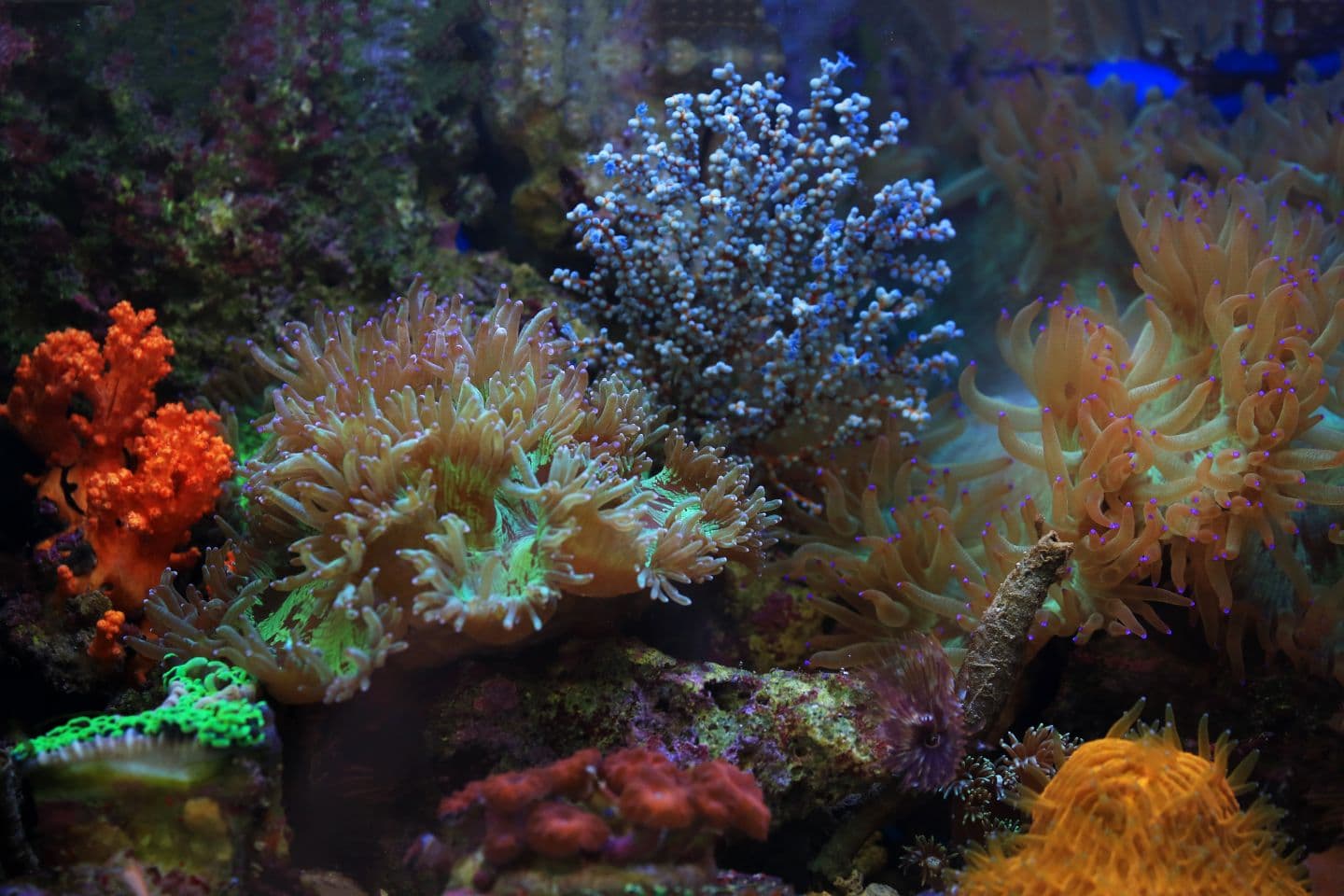
Lighting needs in a saltwater tank depend heavily on what you plan to keep. A fish only tank has very different requirements from a coral filled reef, and choosing the wrong type of light either waste
Lighting needs in a saltwater tank depend heavily on what you plan to keep. A fish only tank has very different requirements from a coral filled reef, and choosing the wrong type of light either wastes money on unnecessary intensity or leaves corals starved of what they need to thrive.
Fish only and FOWLR tanks
If the tank holds fish and live rock but no corals, lighting is mostly about visibility and aesthetics rather than biology. A standard aquarium LED fixture, without the high intensity or specific spectrum a reef light provides, is generally sufficient, and lower intensity lighting also helps keep nuisance algae growth in check.
Reef tanks
Corals need light intense enough, and in the right spectrum, to drive photosynthesis in their symbiotic algae. This is where the bulk of lighting decisions and cost genuinely matter.
The main lighting technologies
LED: the most common modern choice, energy efficient, low heat output, and often programmable for spectrum, intensity and photoperiod through an app or controller. The main downside is a narrower light spread per fixture compared to older technologies, so multiple units are often needed to cover a larger tank evenly.
T5 fluorescent: still popular for its even coverage and reduced shadowing across the tank, particularly favoured for mixed reef and SPS setups. Bulbs need periodic replacement, typically every six to twelve months, since their output drops well before they visibly fail.
A heat note worth factoring in
All aquarium lighting adds some heat to a room, and in India's warmer climate this can push a poorly ventilated tank a degree or two above target temperature during the hottest months, on top of whatever the room itself is already running at. LEDs add the least heat of the common options, but even they warrant a small clip on fan or open canopy in a room without air conditioning, since a light adding heat on top of an already warm room is a common, easily overlooked contributor to summer temperature spikes.
Metal halide: closest to natural sunlight in intensity and produces an attractive shimmer effect, but runs hot and uses significantly more electricity, making it the least popular choice for new setups today.
Hybrid fixtures: combine LED with T5 or halide, aiming to capture LED's efficiency and control alongside the shimmer or even spread of the older technologies.
Understanding PAR and spectrum
PAR, or photosynthetically active radiation, measures how much of the light reaching a point in the tank is actually usable for photosynthesis. Soft corals generally need lower PAR than LPS corals, and SPS corals need the most. Rather than chasing a single ideal number, most reefers use rockwork to create low, medium and high light zones within the same tank, placing corals accordingly.
A practical starting point for India
Given import costs, many Indian reef keepers start with a single mid range LED fixture capable of running a soft coral and LPS dominated tank well, then add a second fixture or upgrade only if they move into SPS corals later. Since most reef lighting sold in India is imported, factor in genuine after sales support and spare part availability when comparing brands, not just the upfront price.
Photoperiod basics
Most reef tanks run a total photoperiod of eight to ten hours, with intensity ramping up and down gradually rather than switching on and off abruptly.
A brief blue only actinic period at the start and end of the day, mimicking dawn and dusk, is common and also brings out coral fluorescence attractively for evening viewing.
Consistency matters more than exact timing. Sudden, irregular changes to the light schedule are more disruptive to coral health than a schedule that is simply an hour longer or shorter than ideal.
The scissortail rasbora, Rasbora trilineata, gets its name from the black-and-white banded tail fin, which opens and closes in a scissoring motion as the fish swims, a genuinely visible behaviour rath
Flushing a fish, whether dead or simply unwanted, down the toilet is a habit many Indian households have inherited without questioning it, and it carries real risks that are worth understanding.
A cover might seem like an afterthought compared to filtration or lighting, but for a saltwater tank it does real, unglamorous work: cutting evaporation, which matters a great deal given how salinity