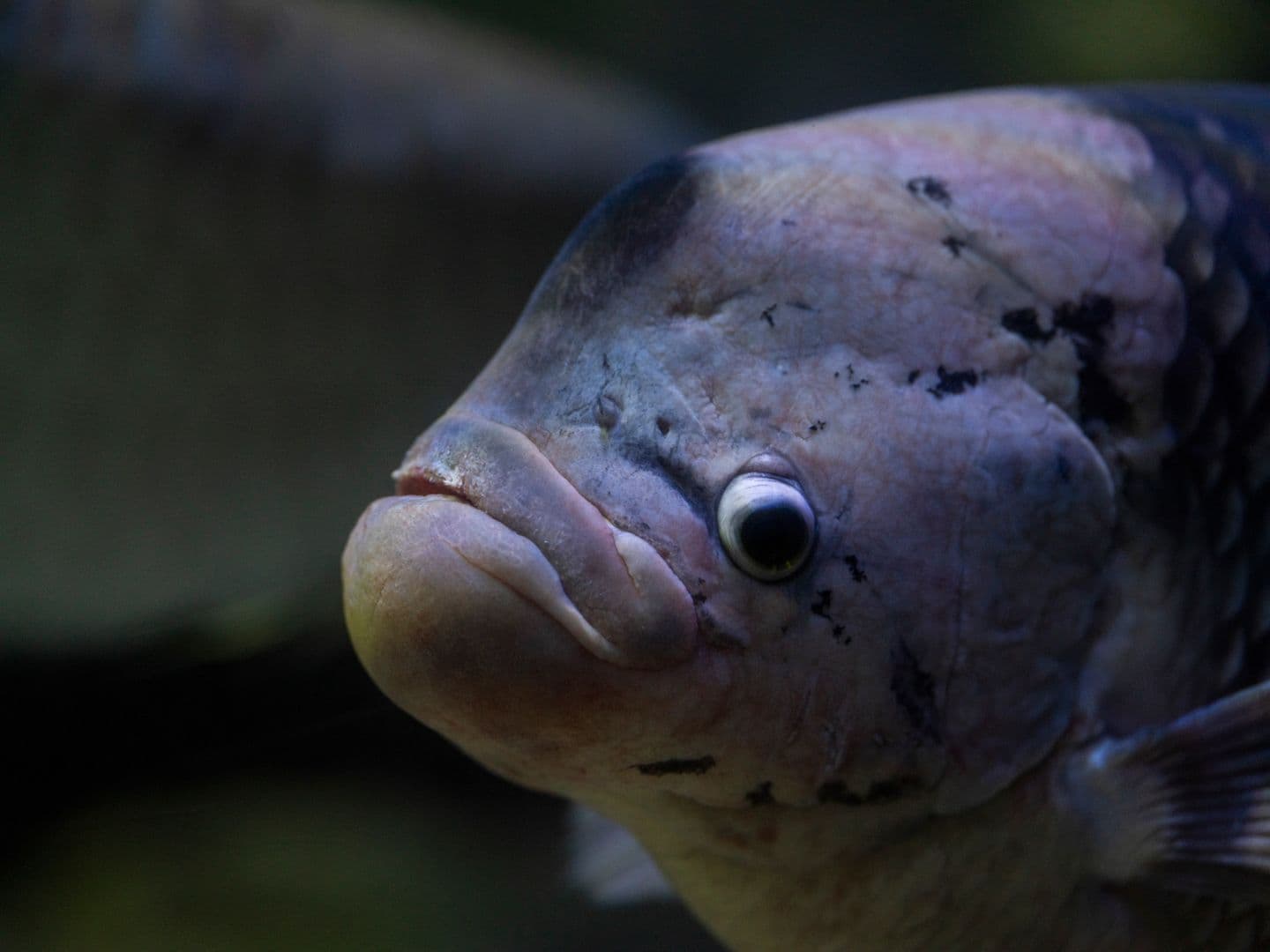
The moonlight gourami carries a plain, pale silvery green to blue-green body with an understated, almost luminous sheen, and lacks the bold patterning seen in the pearl or three spot gourami. It reach
The moonlight gourami carries a plain, pale silvery green to blue-green body with an understated, almost luminous sheen, and lacks the bold patterning seen in the pearl or three spot gourami. It reaches around twelve to fifteen centimetres and is prized more for its calm, elegant presence than for flashy colour.
Its threadlike, elongated ventral fins, used to feel out its surroundings, are a distinctive feature shared with several other gourami species and are worth watching for, since a gourami using these fins to explore is a sign of a settled, comfortable fish rather than an anxious one.
Tank and water requirements
Given its adult size, a single moonlight gourami or a calm pair needs a tank of at least a hundred litres, with floating plants and open swimming space. It adapts well to typical Indian tap water and is generally an easy-going fish from a water chemistry standpoint.
A lid with an air gap above the water suits its labyrinth breathing, as with the other gouramis on this list.
Diet and behaviour
A varied diet of good-quality flakes or pellets, supplemented with occasional live or frozen food, suits it well. It is one of the calmer, less territorial larger gouramis, making it a good fit for a peaceful community tank alongside similarly sized fish.
Its subtle colouring shows best against a darker substrate and background, which prevents the fish from looking washed out under bright lighting.
Buying tips
Priced around one hundred to two hundred fifty rupees per fish, somewhat less commonly stocked than the more colourful gourami species in India
A good choice for a keeper wanting a large, calm, low-drama centrepiece fish rather than a bold splash of colour
Best appreciated in a tank with a darker substrate that lets its subtle sheen show through
The scissortail rasbora, Rasbora trilineata, gets its name from the black-and-white banded tail fin, which opens and closes in a scissoring motion as the fish swims, a genuinely visible behaviour rath
Flushing a fish, whether dead or simply unwanted, down the toilet is a habit many Indian households have inherited without questioning it, and it carries real risks that are worth understanding.
A cover might seem like an afterthought compared to filtration or lighting, but for a saltwater tank it does real, unglamorous work: cutting evaporation, which matters a great deal given how salinity