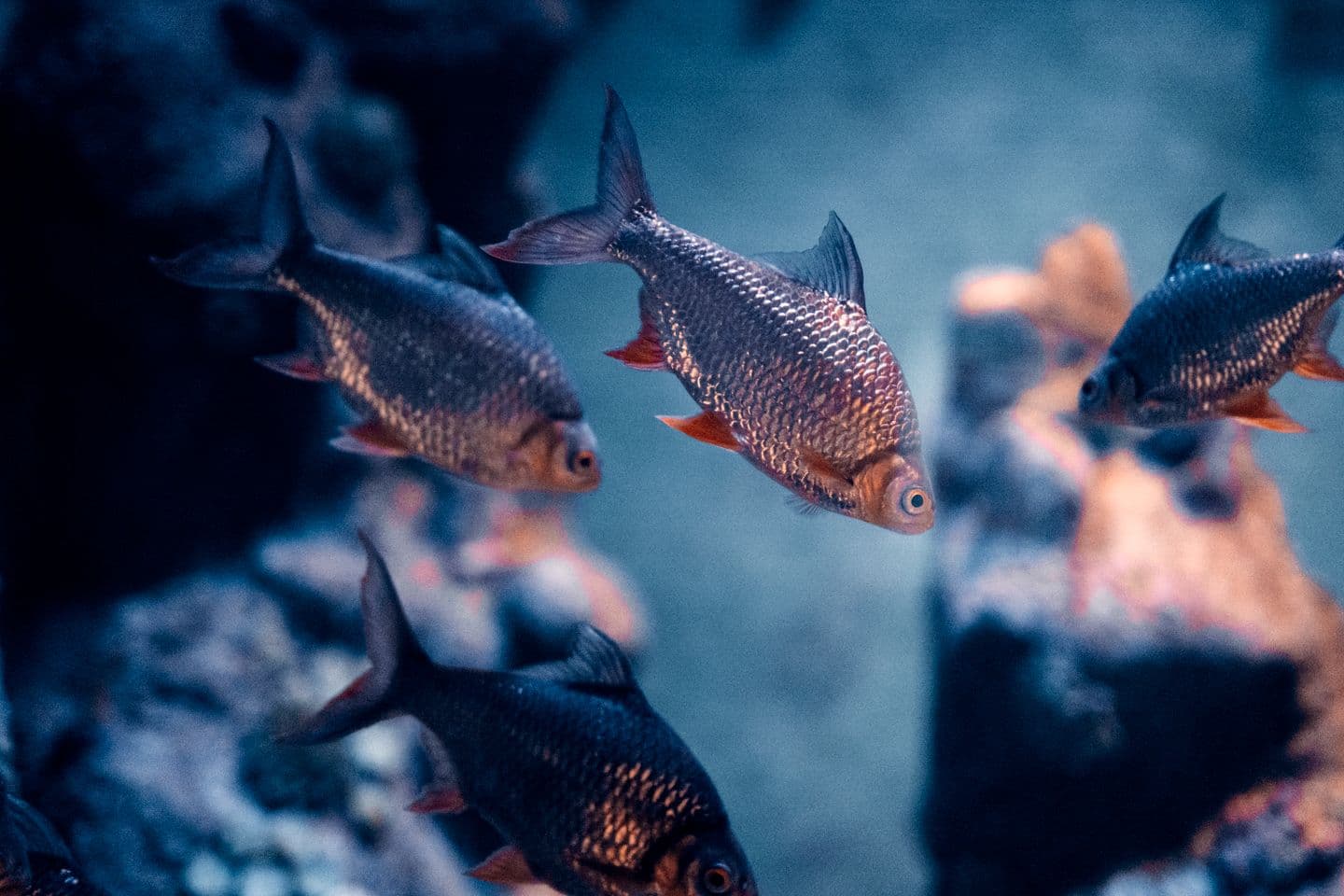
The Odessa barb, Pethia padamya, is one of the more visually striking small barbs, with breeding males showing a vivid red band running the length of the body against a silver base. Despite the name,
The Odessa barb, Pethia padamya, is one of the more visually striking small barbs, with breeding males showing a vivid red band running the length of the body against a silver base. Despite the name, it has nothing to do with Ukraine: it entered the European aquarium trade through the Ukrainian port city of Odessa in the 1970s, and the name simply stuck, even though the fish is actually native to central Myanmar.
Adding to the oddity, its exact wild origin remained a mystery for decades. It was kept and bred in aquariums worldwide for years before a wild population was finally located and the species formally described in 2008.
Tank and water requirements
A group of six or more does well in a tank of sixty to eighty litres. In the wild it is found in upland streams and ponds at real elevation in Myanmar, and while decades of captive breeding have made it tolerant of a wide range of aquarium conditions, including typical Indian tap water, it does especially well without excessive heat.
A tank with open swimming space, some planting and a secure lid, since Odessa barbs are active, occasionally skittish swimmers, suits them well.
Diet and behaviour
An omnivorous diet of good-quality flakes or pellets, supplemented with occasional live or frozen food, keeps them in good colour. They are active and generally peaceful, though like most barbs can turn nippy if kept in too small a group.
A shoal of at least six, ideally with more females than males, keeps behaviour calm and gives the males room to display without constant squabbling.
Buying tips
Priced around thirty to seventy rupees per fish, a little higher than common barbs given its more specialised supply in India
A genuinely interesting fish to talk about given its mixed-up naming history, worth mentioning to curious buyers or visitors
Buy a full group at once, favouring females, to keep the shoal settled and reduce squabbling among males
The scissortail rasbora, Rasbora trilineata, gets its name from the black-and-white banded tail fin, which opens and closes in a scissoring motion as the fish swims, a genuinely visible behaviour rath
Flushing a fish, whether dead or simply unwanted, down the toilet is a habit many Indian households have inherited without questioning it, and it carries real risks that are worth understanding.
A cover might seem like an afterthought compared to filtration or lighting, but for a saltwater tank it does real, unglamorous work: cutting evaporation, which matters a great deal given how salinity