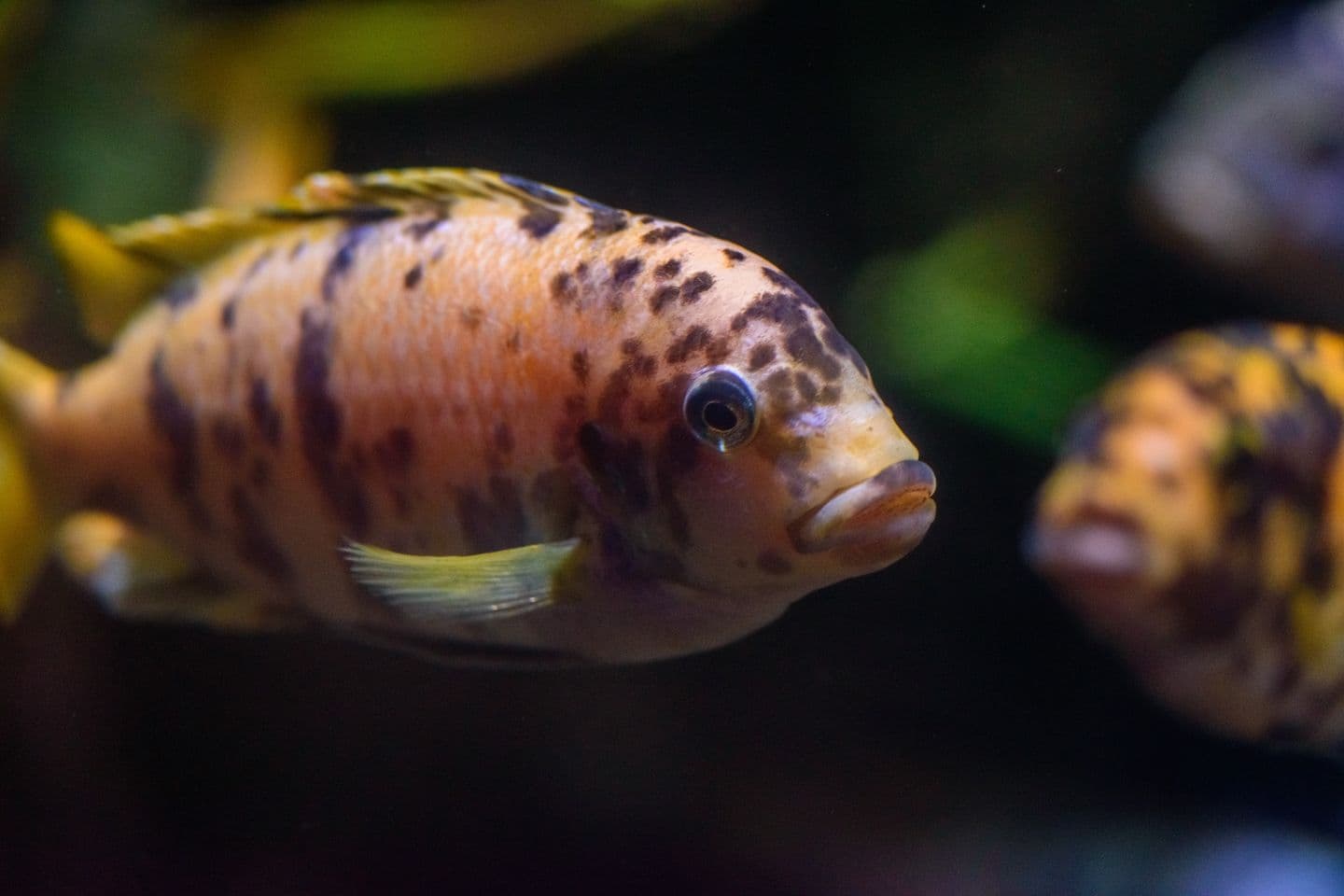
The Oscar is a large, intelligent, strikingly patterned cichlid from the Amazon and Orinoco basins, often kept for its genuinely dog-like personality: Oscars learn to recognise their owners, respond t
The Oscar is a large, intelligent, strikingly patterned cichlid from the Amazon and Orinoco basins, often kept for its genuinely dog-like personality: Oscars learn to recognise their owners, respond to hand feeding, and even seem to display individual moods and preferences in a way unusual among fish. It reaches around thirty to thirty five centimetres, a genuinely large fish that surprises many first-time buyers.
Common colour forms include the wild tiger pattern, the red variant, and the albino, all sharing the same size and temperament regardless of colouring.
Tank requirements
A single Oscar needs a minimum of two hundred litres, with more required for a pair or a larger tank shared with suitably robust tankmates. Given its size and messy, enthusiastic eating habits, strong filtration and frequent water changes are essential rather than optional.
Oscars are known to rearrange decor, dig, and occasionally uproot plants, so a tank set up for one should use heavy, secured decorations and hardy or artificial plants rather than delicate live planting.
Diet and behaviour
A varied diet of good-quality cichlid pellets, supplemented with occasional live or frozen food, suits it well, though Oscars should not be fed a diet of exclusively feeder fish, which carries real disease risk and offers poor nutrition. They are intelligent, food-motivated fish that learn feeding routines quickly.
Oscars are predatory and will eat any fish small enough to swallow, so tankmates need to be robust, similarly sized and ideally other large, semi-aggressive cichlids or catfish rather than small community fish.
Buying tips
Priced around one hundred fifty to five hundred rupees for young fish, rising for premium colour forms
A genuinely large, long-term commitment, not a fish to buy on impulse for a small or medium tank
Feed a varied, pellet-based diet rather than relying heavily on feeder fish, given the disease and nutrition concerns involved
The scissortail rasbora, Rasbora trilineata, gets its name from the black-and-white banded tail fin, which opens and closes in a scissoring motion as the fish swims, a genuinely visible behaviour rath
Flushing a fish, whether dead or simply unwanted, down the toilet is a habit many Indian households have inherited without questioning it, and it carries real risks that are worth understanding.
A cover might seem like an afterthought compared to filtration or lighting, but for a saltwater tank it does real, unglamorous work: cutting evaporation, which matters a great deal given how salinity