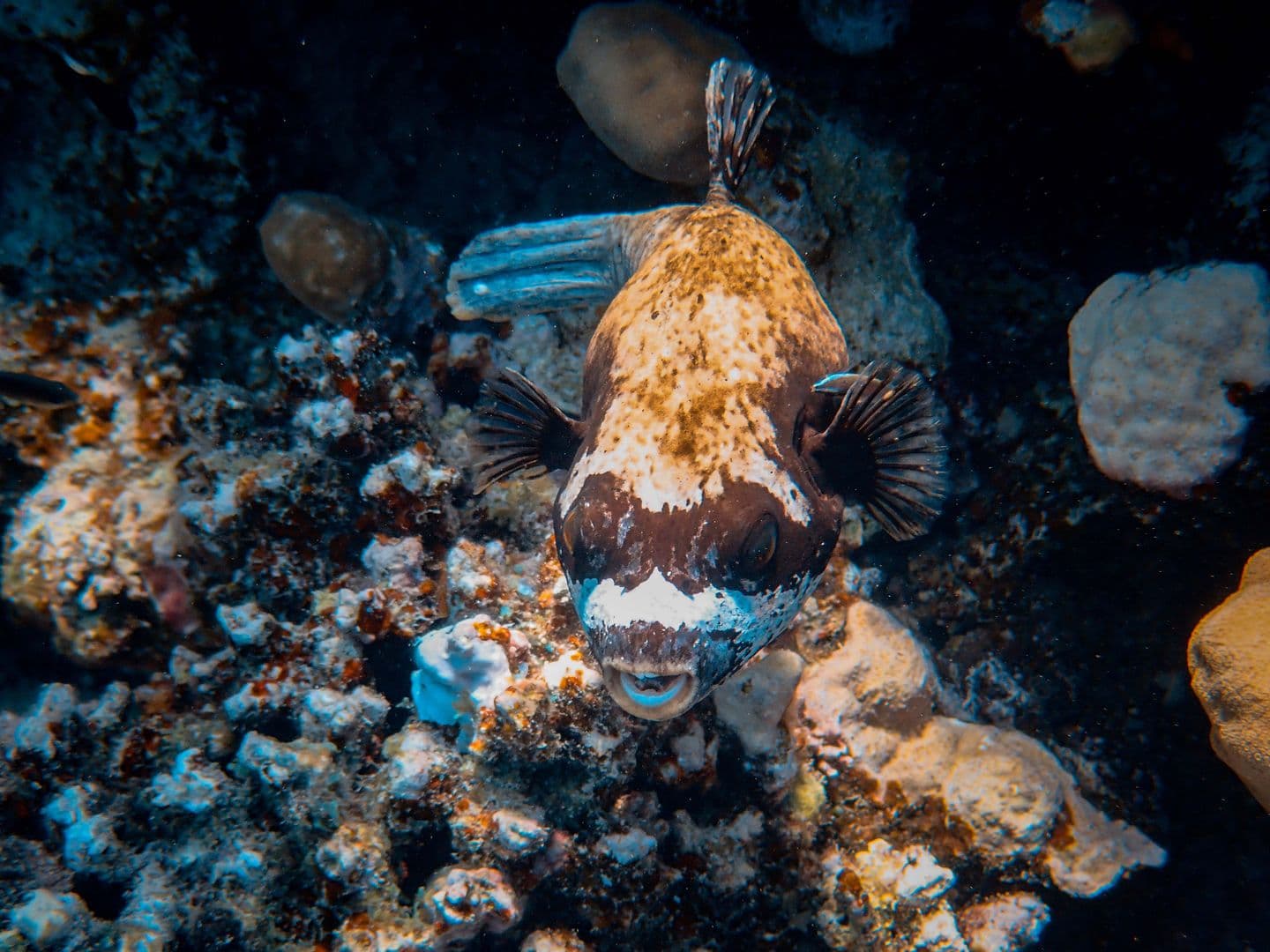
The pea puffer is one of the smallest pufferfish in the world, rarely exceeding two and a half centimetres, and is a genuine Indian native, found only in the slow, densely vegetated rivers and wetland
The pea puffer is one of the smallest pufferfish in the world, rarely exceeding two and a half centimetres, and is a genuine Indian native, found only in the slow, densely vegetated rivers and wetlands of Kerala and southern Karnataka in the Western Ghats. Its scientific name, travancoricus, refers directly to Travancore, the historic princely state that once covered much of modern Kerala.
Despite its tiny size, it has real personality, recognising its keeper, exploring actively, and displaying the same inflating defence response as its ocean-going relatives when genuinely startled, though this should never be deliberately provoked, since inflating is a stress response that carries real risk to the fish.
Tank and water requirements
Given its territorial, sometimes nippy nature towards its own kind, a single pea puffer does well in a tank of twenty to thirty litres, while a carefully managed small group needs considerably more space and hiding cover to reduce conflict. It is a true freshwater species, unlike several other puffers, and does not need salt added to its water.
Dense planting and hiding spots help reduce stress and territorial disputes, particularly if keeping more than one.
Diet and a genuine care requirement
This is a fish with a real dietary need rather than just a preference: pea puffers have continuously growing teeth that must be worn down through eating hard-shelled prey such as snails, or the teeth can overgrow and prevent normal feeding. A diet of snails, along with other live or frozen foods such as bloodworm and brine shrimp, is genuinely necessary rather than optional.
It generally refuses standard dry flake food, so a keeper needs to be prepared to source live or frozen foods regularly rather than relying on the convenience of a simple flake diet.
Buying tips
Priced around eighty to two hundred rupees per fish, reflecting its more specialised sourcing and its IUCN Vulnerable wild status from overcollection and wetland habitat loss in Kerala
Plan for a live and frozen food supply, particularly snails, before buying, given this species' genuine dietary needs
A wonderful, genuinely Indian species to highlight for anyone curious about native aquarium fish rather than imported ones
The scissortail rasbora, Rasbora trilineata, gets its name from the black-and-white banded tail fin, which opens and closes in a scissoring motion as the fish swims, a genuinely visible behaviour rath
Flushing a fish, whether dead or simply unwanted, down the toilet is a habit many Indian households have inherited without questioning it, and it carries real risks that are worth understanding.
A cover might seem like an afterthought compared to filtration or lighting, but for a saltwater tank it does real, unglamorous work: cutting evaporation, which matters a great deal given how salinity