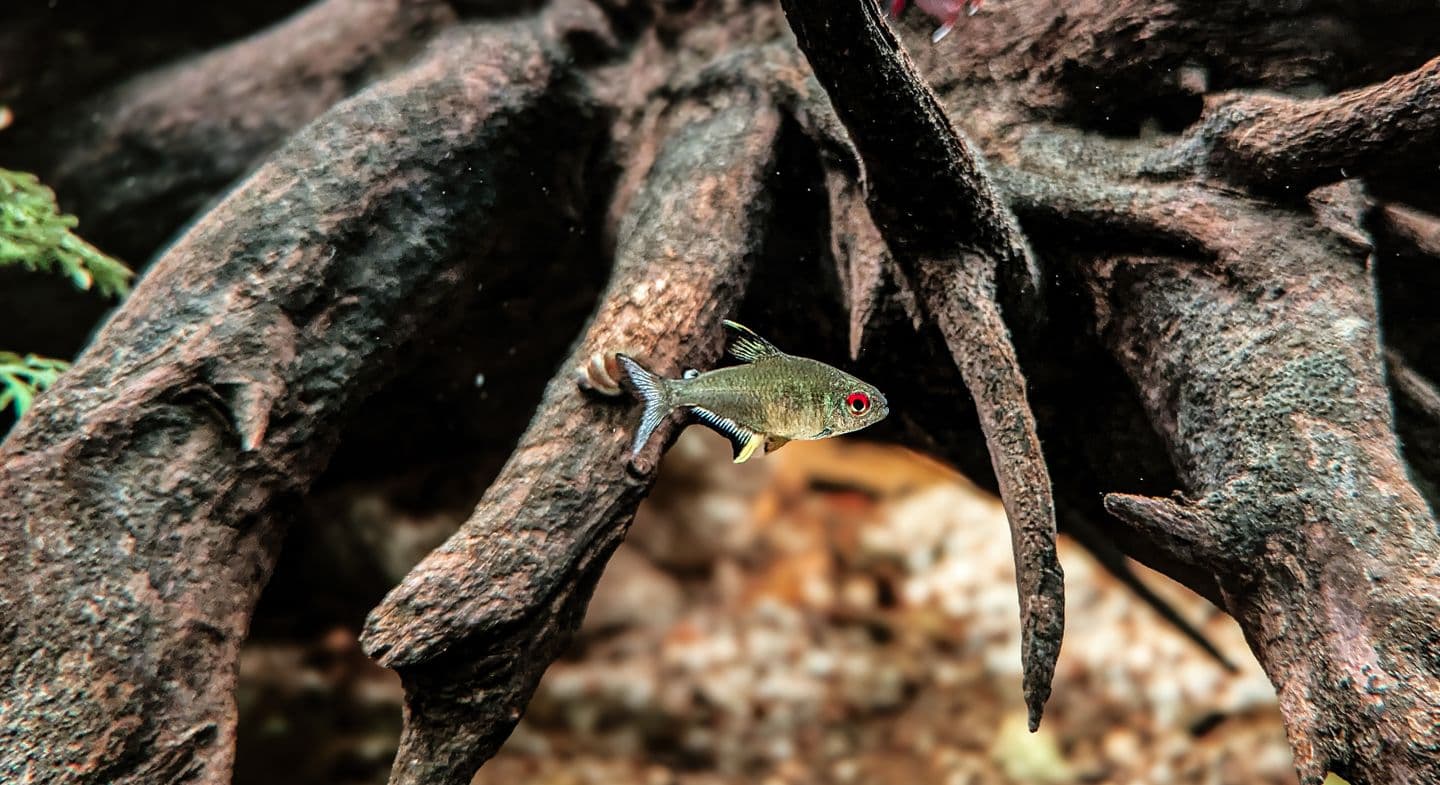
The penguin tetra carries a bold black horizontal stripe along a silvery body, similar in colouring to several other tetras, but its most distinctive trait is behavioural rather than visual: it habitu
The penguin tetra carries a bold black horizontal stripe along a silvery body, similar in colouring to several other tetras, but its most distinctive trait is behavioural rather than visual: it habitually swims with its head tilted upward at a slight angle, a posture that gives it its penguin-referencing common name. It comes from the Amazon basin and reaches around five to six centimetres.
This angled swimming style is entirely normal for the species and not a sign of a swim bladder problem or illness, a distinction worth knowing since a new keeper unfamiliar with the fish might otherwise mistake it for a health issue.
Tank and water requirements
A group of six or more does well in a tank of sixty litres or more, with open swimming space in the upper and middle water column, where this species spends most of its time. It tolerates a reasonable range of water conditions, including typical Indian tap water.
A well-planted tank with some open water suits its active, mid-to-upper-level shoaling habits well.
Diet and behaviour
A varied diet of small flakes, micro pellets and occasional live or frozen food suits it well. It is peaceful and active, and generally an easy, low-maintenance addition to a community tank.
It shoals confidently in a proper group and is one of the more distinctive-looking, easy tetras for a keeper wanting something visually a little different from the classic neon or cardinal.
Buying tips
Priced around twenty five to sixty rupees per fish in most Indian shops that stock tetras
The angled swimming posture is entirely normal behaviour, not a health concern, worth mentioning to a new owner
A hardy, easy tetra that offers visual variety without any real increase in care difficulty
The scissortail rasbora, Rasbora trilineata, gets its name from the black-and-white banded tail fin, which opens and closes in a scissoring motion as the fish swims, a genuinely visible behaviour rath
Flushing a fish, whether dead or simply unwanted, down the toilet is a habit many Indian households have inherited without questioning it, and it carries real risks that are worth understanding.
A cover might seem like an afterthought compared to filtration or lighting, but for a saltwater tank it does real, unglamorous work: cutting evaporation, which matters a great deal given how salinity