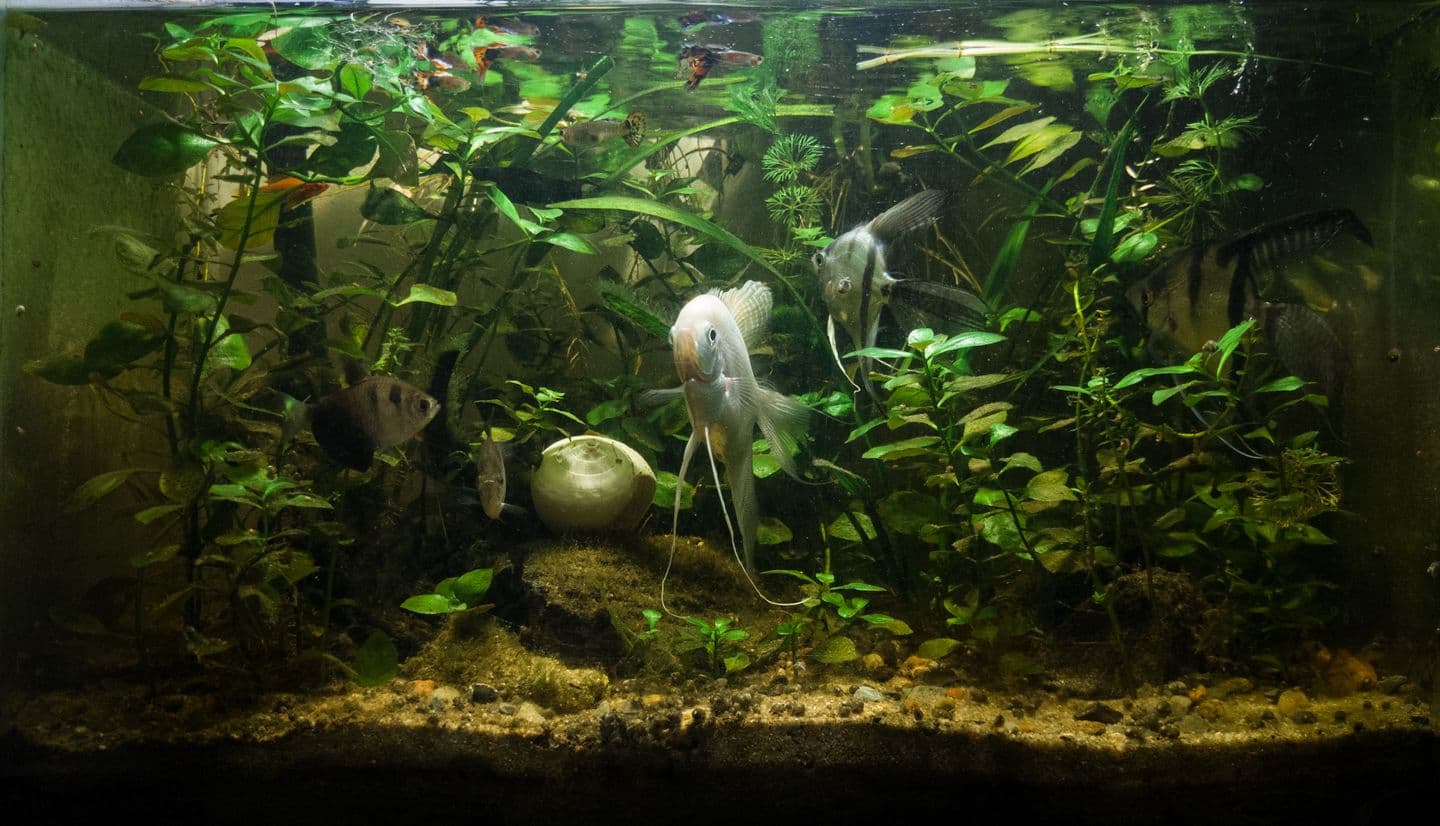
Substrate does a lot more work than most beginners give it credit for. Beyond simply looking natural underfoot, it hosts beneficial bacteria, supports plant roots, shapes water chemistry, and affects
Substrate does a lot more work than most beginners give it credit for. Beyond simply looking natural underfoot, it hosts beneficial bacteria, supports plant roots, shapes water chemistry, and affects how comfortable certain fish are in their environment. Choosing the right one for your particular tank is worth more thought than picking whatever colour catches your eye at the shop.
What substrate actually does
A layer of substrate provides surface area for beneficial bacteria, supplementing whatever your filter media is already doing. It gives rooted plants somewhere to anchor and draw nutrients from, provides bottom dwelling fish somewhere natural to forage and rest, and in the case of some substrate types, actively influences water hardness and pH as minerals slowly dissolve into the water.
Gravel
Standard aquarium gravel is chemically inert, does not break down over time, and is the most forgiving substrate for a beginner. Its larger particle size allows water and oxygen to circulate freely through the bed, which helps prevent the anaerobic dead zones that can form under a compacted fine substrate. It offers essentially no plant nutrition on its own, so a heavily planted tank on plain gravel usually needs root tabs or liquid fertiliser to support demanding species.
Sand
Sand gives a clean, natural look and is essential for species with sensitive barbels, corydoras catfish and many loaches in particular, who use it to forage and sift without injury the way sharp gravel can cause. It compacts more readily than gravel, though, which means it needs gentler cleaning, a light hover with the siphon rather than a deep vacuum, and occasional stirring to prevent it from packing down too tightly.
Aquasoil
Purpose built for planted tanks, aquasoil is a manufactured, nutrient rich substrate that feeds plant roots directly and often softens water and lowers pH as a side effect, generally suiting soft water plants and fish well. It is considerably more expensive than gravel or sand and breaks down gradually over one to two years, eventually needing replacement, which is worth budgeting for if choosing this route for a serious planted tank.
Specialised substrates for marine and hardness needs
Aragonite and crushed coral, common in marine and African cichlid setups, slowly dissolve and raise both hardness and pH, useful for species that need alkaline conditions but genuinely unsuitable for soft water fish like discus or many tetras, where the same effect works against what the fish need.
Matching substrate to your tank's actual purpose
A fish only community tank with plastic décor does perfectly well on ordinary gravel, and there is little reason to spend more. A serious planted aquascape benefits genuinely from aquasoil. A tank housing corydoras, loaches, or other sand-loving bottom dwellers is worth the slightly higher maintenance that sand demands. Matching the substrate to what the tank is actually for, rather than defaulting to whatever looks nicest in the shop, saves both money and future headaches.
Rinsing substrate before it goes in
Whatever substrate you choose, rinse it thoroughly in a bucket with plain water before adding it to the tank, swirling and pouring off the cloudy water repeatedly until it runs clear. Skipping this step is one of the most common reasons a freshly set up tank looks like a dust storm for the first few days, and while it is not harmful to fish once cycled, it is an entirely avoidable inconvenience that a few extra minutes of rinsing prevents outright.
The scissortail rasbora, Rasbora trilineata, gets its name from the black-and-white banded tail fin, which opens and closes in a scissoring motion as the fish swims, a genuinely visible behaviour rath
Flushing a fish, whether dead or simply unwanted, down the toilet is a habit many Indian households have inherited without questioning it, and it carries real risks that are worth understanding.
A cover might seem like an afterthought compared to filtration or lighting, but for a saltwater tank it does real, unglamorous work: cutting evaporation, which matters a great deal given how salinity