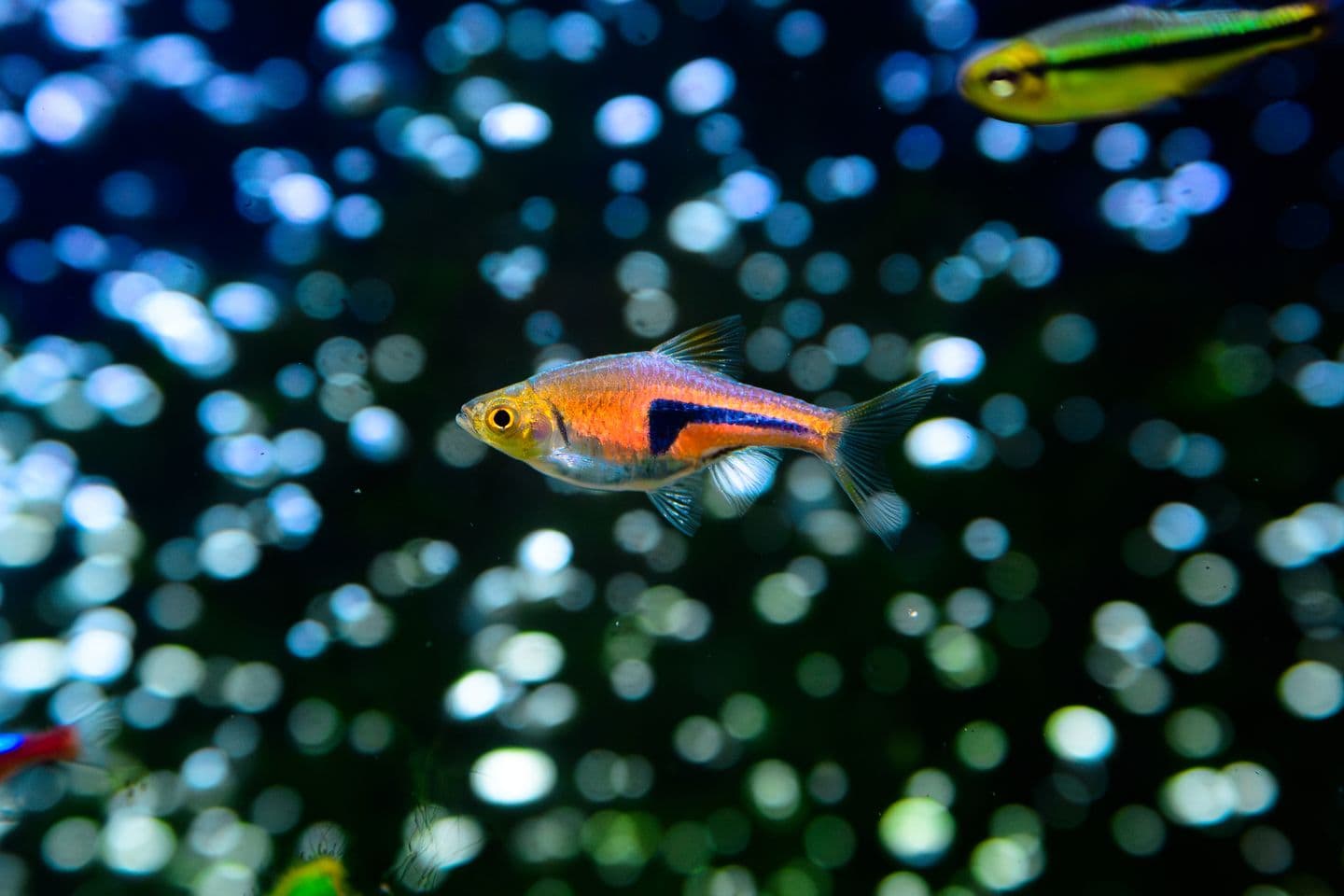
The rosy barb, Pethia conchonius, carries a rosy pink to orange-red body, most vivid in breeding males. It is capable of reaching up to fourteen centimetres in the wild, but aquarium-raised fish are c
The rosy barb, Pethia conchonius, carries a rosy pink to orange-red body, most vivid in breeding males. It is capable of reaching up to fourteen centimetres in the wild, but aquarium-raised fish are considerably more modest, typically settling at five to eight centimetres, still on the larger side for a commonly kept barb. It comes from streams across northern India, Bangladesh, Pakistan and Nepal, giving it genuine home-ground status for Indian keepers.
Unusually for a tropical aquarium fish, it tolerates cooler water better than most, making it a sensible choice for outdoor tubs or unheated tanks in the cooler parts of India during winter.
Tank and water requirements
Given its adult size, a group of six or more rosy barbs needs a tank of at least a hundred litres, with good length for swimming. They are hardy and adaptable to a wide range of water conditions, including typical Indian tap water, and do not require a heater through most of the year outside genuinely cold northern winters.
A tank with plenty of open swimming space and some plant cover suits their active, mid-water swimming style.
Diet and behaviour
An omnivorous diet of good-quality flakes or pellets, supplemented with occasional live or frozen food and some vegetable matter, suits them well. They are generally peaceful in a properly sized group, though can show mild fin-nipping tendencies if kept too small a shoal.
Best paired with similarly sized, active tankmates rather than very small or very slow, long-finned fish.
Buying tips
Priced around twenty to fifty rupees per fish, among the more affordable larger barbs in India
A genuinely Indian native species, worth knowing given how many aquarium fish in this list come from elsewhere
One of the few tropical aquarium fish that copes reasonably well without a heater through an Indian winter
The scissortail rasbora, Rasbora trilineata, gets its name from the black-and-white banded tail fin, which opens and closes in a scissoring motion as the fish swims, a genuinely visible behaviour rath
Flushing a fish, whether dead or simply unwanted, down the toilet is a habit many Indian households have inherited without questioning it, and it carries real risks that are worth understanding.
A cover might seem like an afterthought compared to filtration or lighting, but for a saltwater tank it does real, unglamorous work: cutting evaporation, which matters a great deal given how salinity