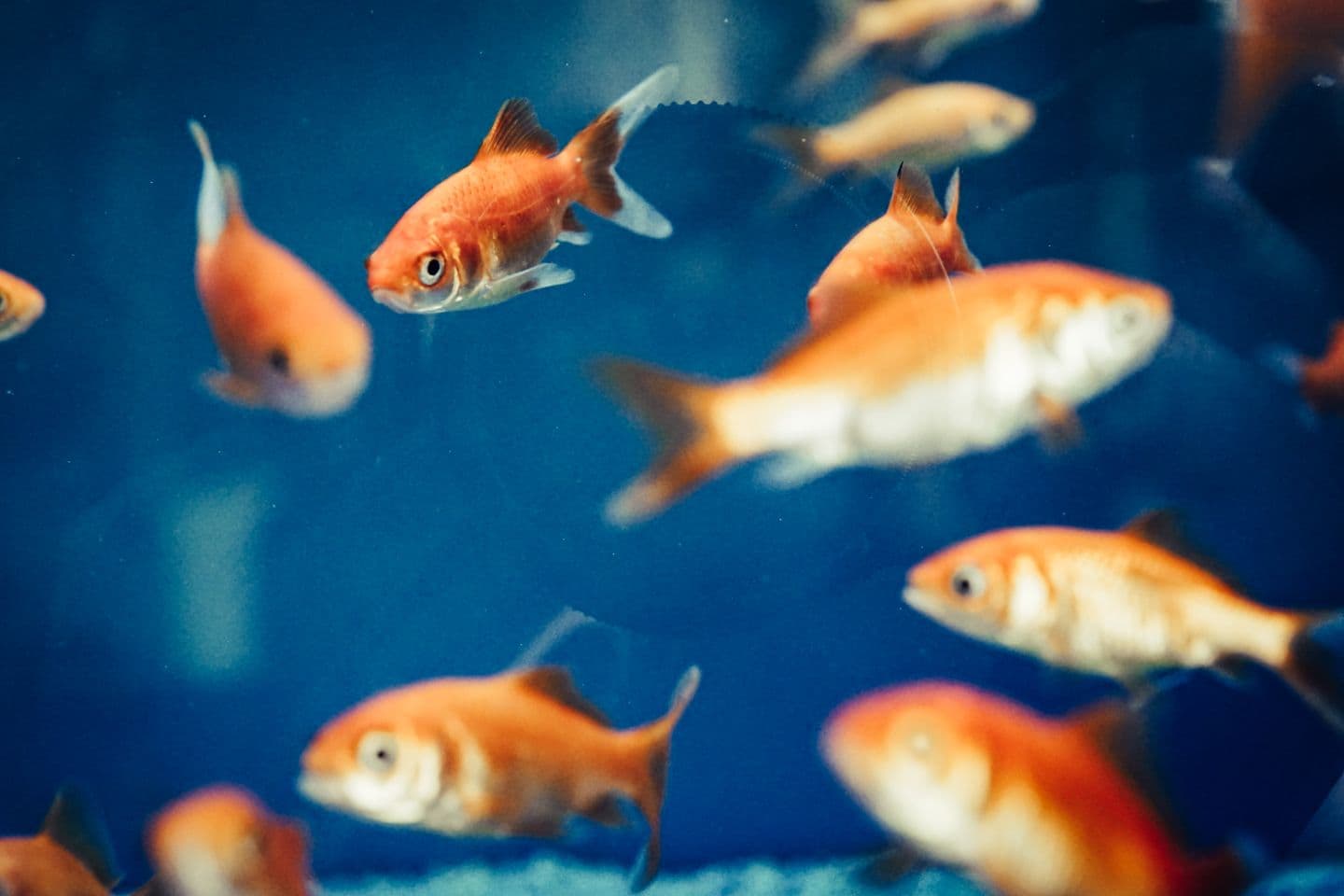
The ryukin is a Japanese fancy goldfish variety recognisable by the pronounced hump just behind its head, giving it a taller, more angular profile than the fantail it is often compared to. It grows to
The ryukin is a Japanese fancy goldfish variety recognisable by the pronounced hump just behind its head, giving it a taller, more angular profile than the fantail it is often compared to. It grows to around fifteen to eighteen centimetres and carries a long, flowing double tail.
Colour forms commonly seen in India include red and white, solid orange, and calico, with the long-finned versions especially popular in specialist shops.
Tank requirements
A single ryukin needs at least seventy five litres, more for a small group. The pronounced back hump does not affect swimming ability much, and ryukins are actually reasonably active swimmers for a fancy goldfish variety, so they appreciate a bit more open space than a bubble eye or lionhead would need.
Coldwater by nature, ryukins do not need heating anywhere in India and are comfortable at typical room temperature, doing especially well in the cooler months and in northern and hill station climates.
Diet and care
A varied diet of goldfish pellets, blanched vegetables and occasional live or frozen food supports the ryukin's growth and colour. As with most fancy goldfish, soaking dry pellets before feeding reduces the risk of swim bladder trouble.
Good filtration and weekly partial water changes matter more here than tank decor, since ryukins are hardy but still sensitive to poor water quality over time.
Buying tips
Priced from around one hundred to three hundred rupees for younger fish in most Indian shops
Long-finned ryukins command a premium over the short-finned standard form
Choose fish with a symmetrical hump and no visible curve or kink in the spine, which can indicate poor breeding
The scissortail rasbora, Rasbora trilineata, gets its name from the black-and-white banded tail fin, which opens and closes in a scissoring motion as the fish swims, a genuinely visible behaviour rath
Flushing a fish, whether dead or simply unwanted, down the toilet is a habit many Indian households have inherited without questioning it, and it carries real risks that are worth understanding.
A cover might seem like an afterthought compared to filtration or lighting, but for a saltwater tank it does real, unglamorous work: cutting evaporation, which matters a great deal given how salinity