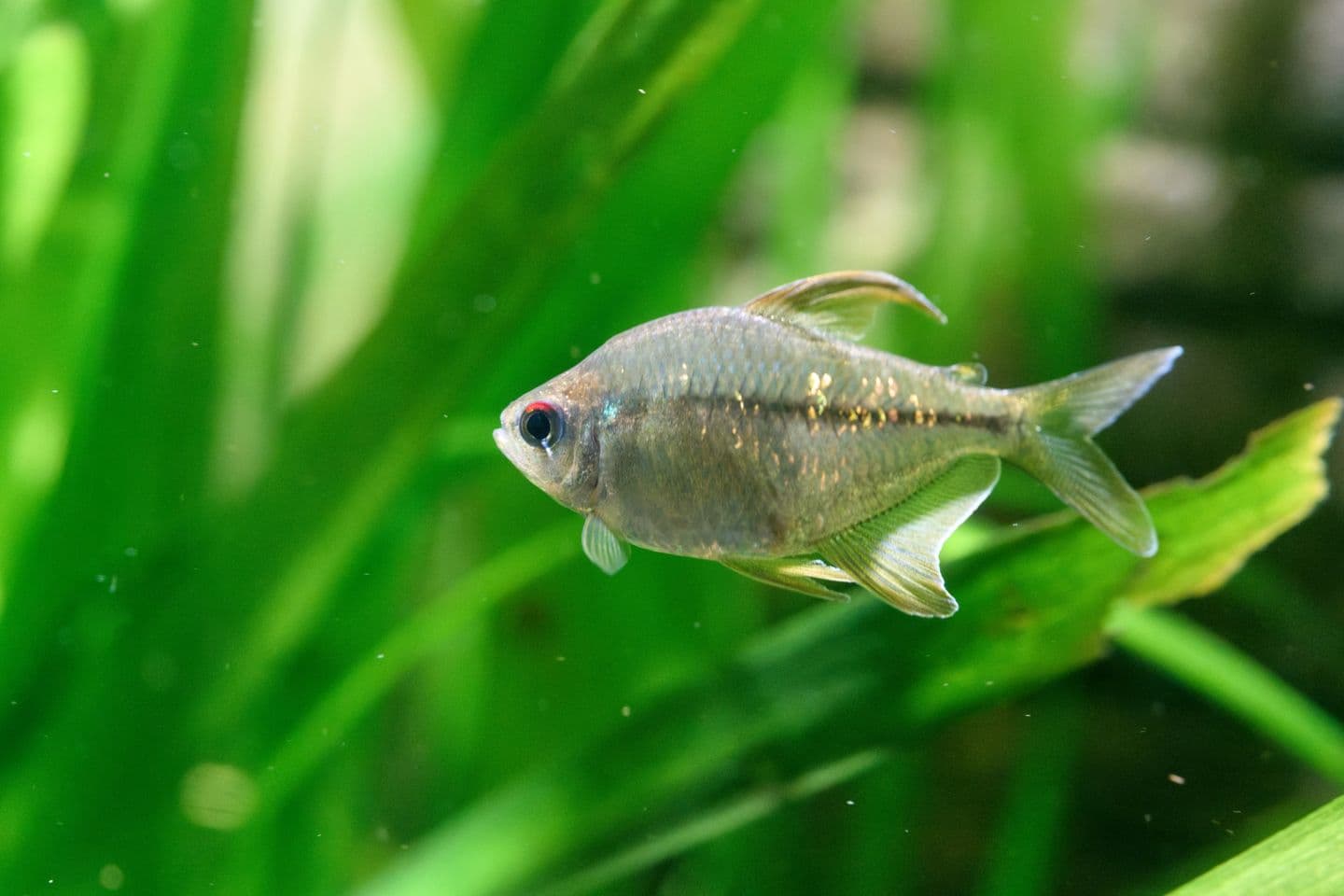
The serpae tetra, Hyphessobrycon eques, is a deep blood-red fish with a distinctive black shoulder patch and black-edged fins, native to the Amazon and Paraguay river basins. It reaches around four ce
The serpae tetra, Hyphessobrycon eques, is a deep blood-red fish with a distinctive black shoulder patch and black-edged fins, native to the Amazon and Paraguay river basins. It reaches around four centimetres and is one of the more visually striking, if slightly controversial, tetras in the trade.
The reputation issue is real: serpae tetras have a genuine tendency towards fin nipping, particularly when kept in too small a group or with slow, long-finned tankmates such as bettas or angelfish.
It is also worth knowing this fish by its other names, since Indian shops sell it under several: jewel tetra, callistus tetra and blood tetra all refer to the same species, a legacy of its confusing taxonomic history.
Tank and water requirements
A group of eight or more, kept in a tank of sixty litres or larger, is the single most effective way to manage their nipping tendency, since a properly sized shoal directs its energy at establishing pecking order within the group rather than at other tankmates.
They are hardy and adapt well to a range of water conditions, including typical Indian tap water, making them easier to keep from a pure water chemistry standpoint than many of the softer-water-loving tetras.
Diet and behaviour
An omnivorous diet of flakes, pellets and occasional live or frozen food keeps them in good colour and condition. They are active, confident feeders that rarely go hungry in a community tank.
Tankmates are worth choosing carefully: fast, similarly sized fish that will not be intimidated make better companions than slow-moving, long-finned species that could become a target.
Buying tips
Priced around twenty to fifty rupees per fish in most Indian shops
Buy the full intended group at once, since serpae tetras kept in insufficient numbers are the ones most likely to turn into fin nippers
Avoid mixing with bettas, guppies or other long-finned, slow-moving fish given the real nipping risk
The scissortail rasbora, Rasbora trilineata, gets its name from the black-and-white banded tail fin, which opens and closes in a scissoring motion as the fish swims, a genuinely visible behaviour rath
Flushing a fish, whether dead or simply unwanted, down the toilet is a habit many Indian households have inherited without questioning it, and it carries real risks that are worth understanding.
A cover might seem like an afterthought compared to filtration or lighting, but for a saltwater tank it does real, unglamorous work: cutting evaporation, which matters a great deal given how salinity