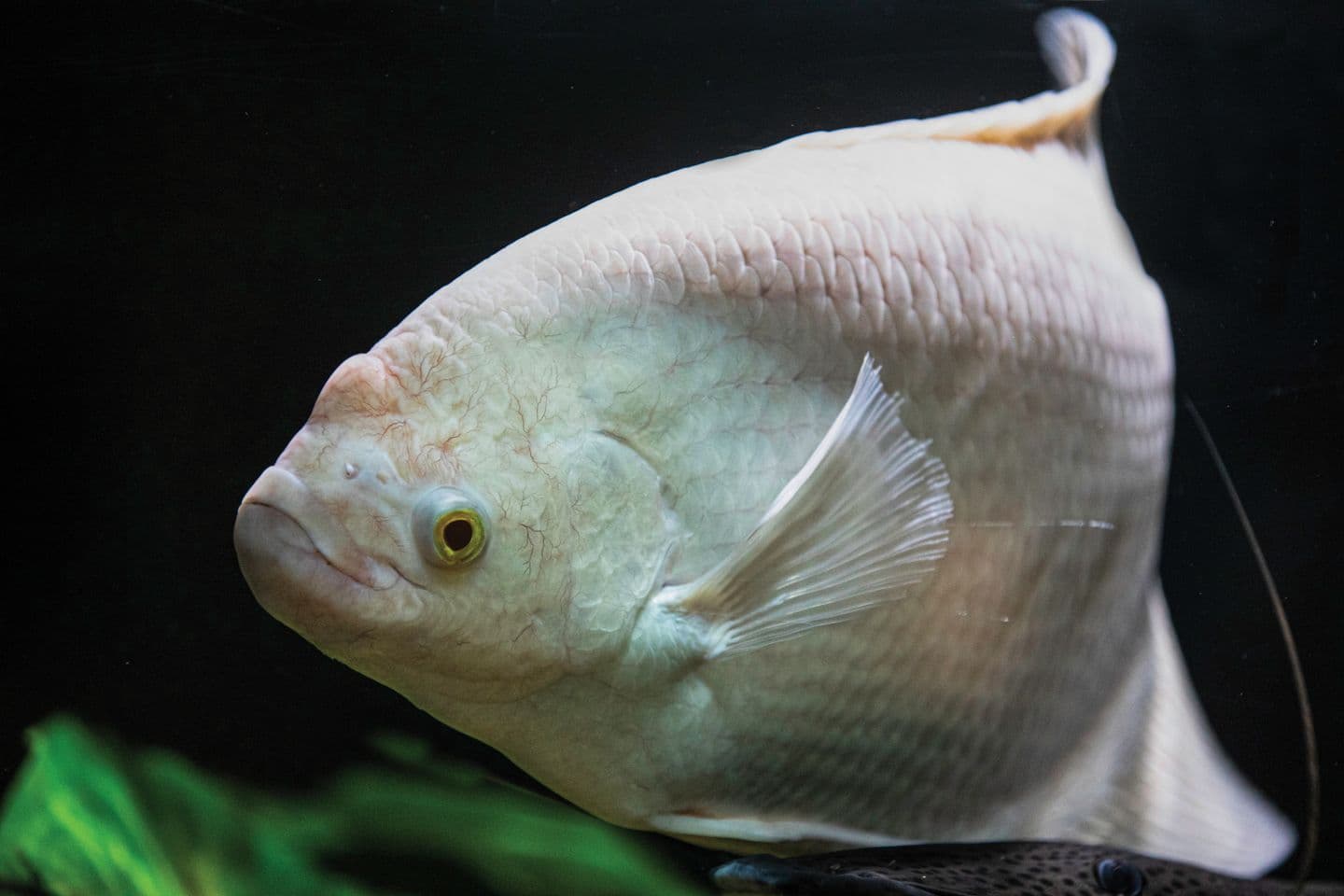
The sparkling gourami is the smallest commonly kept gourami, rarely exceeding four centimetres, with an iridescent scattering of blue and green spots over a warm pink-tan body that genuinely sparkles
The sparkling gourami is the smallest commonly kept gourami, rarely exceeding four centimetres, with an iridescent scattering of blue and green spots over a warm pink-tan body that genuinely sparkles under the right light. It comes from the slow-moving swamps, rice paddies and forest streams of Thailand, Cambodia, Vietnam and southern Laos.
What makes it genuinely unusual is sound: males, and to some extent females, produce an audible croaking or clicking noise using modified pectoral fin muscles, most often during courtship or territorial disputes between males. It is one of the very few aquarium fish a keeper can actually hear from across the room.
Tank and water requirements
Given its tiny size, a small group does well in a tank as modest as forty litres, provided the setup is calm and well planted. It comes from soft, tannin-stained blackwater and shows its best colour and confidence in a similarly dim, densely planted tank with a dark substrate, though it can adapt somewhat to harder Indian tap water.
As with other gouramis, a lid with an air gap above the water suits its labyrinth breathing.
Diet and behaviour
Very fine flakes or micro pellets suit its small mouth, alongside appreciated live or frozen micro foods such as baby brine shrimp. It is shy and peaceful, and does best with equally tiny, calm tankmates rather than anything that might see it as a snack.
Keeping a small group together, rather than a single fish, gives the best chance of hearing the species' signature croaking during courtship displays.
Buying tips
Priced around eighty to one hundred fifty rupees per fish, reflecting its more specialised sourcing as a nano species
Usually found through specialist aquascaping shops rather than general pet shops in India
A genuinely conversation-worthy fish given its audible croaking, worth mentioning to curious visitors
The scissortail rasbora, Rasbora trilineata, gets its name from the black-and-white banded tail fin, which opens and closes in a scissoring motion as the fish swims, a genuinely visible behaviour rath
Flushing a fish, whether dead or simply unwanted, down the toilet is a habit many Indian households have inherited without questioning it, and it carries real risks that are worth understanding.
A cover might seem like an afterthought compared to filtration or lighting, but for a saltwater tank it does real, unglamorous work: cutting evaporation, which matters a great deal given how salinity