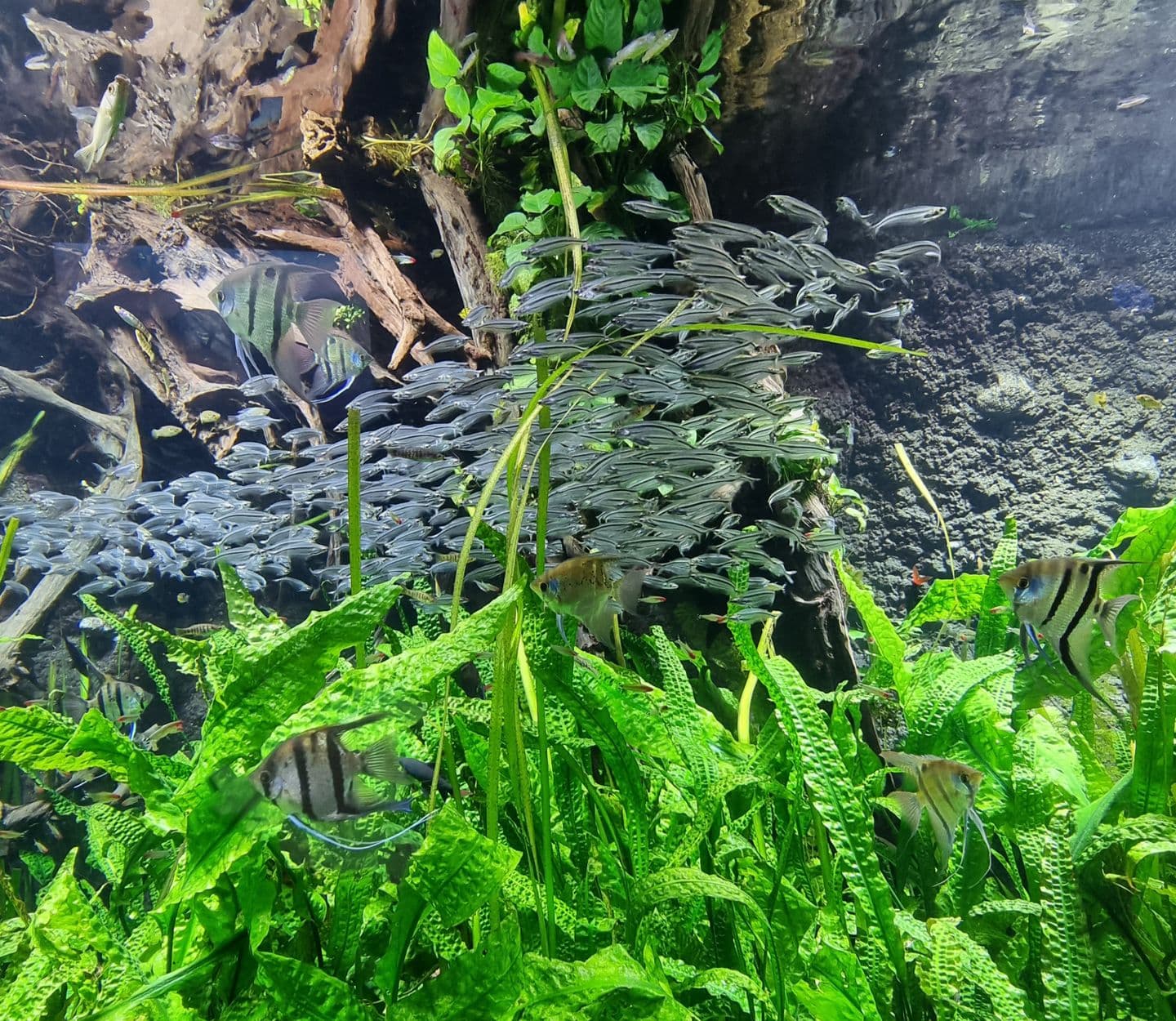
Choosing a substrate for a tank with no serious planting ambitions is fairly simple, but the moment live plants become the focus, substrate choice starts to matter a great deal more, since it directly
Choosing a substrate for a tank with no serious planting ambitions is fairly simple, but the moment live plants become the focus, substrate choice starts to matter a great deal more, since it directly affects how well plants root, feed and grow over the long term.
Aquasoil, the purpose built option
Aquasoil is a manufactured, nutrient rich substrate specifically designed for planted tanks, and it remains the standard choice for anyone serious about plant growth. It feeds root systems directly, buffers pH downward into a range many soft water plants and fish prefer, and generally produces the lushest, fastest growth of any substrate option. The trade-offs are cost, since it runs considerably more expensive than plain gravel or sand, and the fact that it depletes gradually, typically over one to three years depending on the brand and how heavily the tank is planted, and eventually needs topping up or replacing. Fresh aquasoil can also leach a noticeable amount of ammonia in its first few weeks, so a new aquasoil tank benefits from a proper fishless cycle before any fish go in.
Inert substrate with root tabs, the budget-friendly route
Plain sand or fine gravel, paired with root tab fertiliser tablets pushed into the substrate near root-feeding plants every three to four months, is a genuinely capable and considerably cheaper alternative to aquasoil. It will not match aquasoil's growth rates for the most demanding species, but for a first planted tank, or for anyone not chasing a competition-grade aquascape, it is a perfectly sound and much more forgiving choice, and it does not alter water chemistry the way aquasoil does.
The dirted substrate approach
A more hands-on option involves using ordinary garden topsoil as a nutrient base, capped with a layer of sand or fine gravel to keep it from clouding the water. This gives long term nutrition at a fraction of aquasoil's cost, and is popular among hobbyists comfortable with a slightly messier setup process, but it is harder to predict and troubleshoot than a commercial product, since the exact nutrient content of garden soil varies considerably.
Matching substrate to the plants you actually want
A tank of undemanding, low light plants such as Java fern, Anubias and Java moss barely needs a nutrient rich substrate at all, since these species draw most of what they need from the water column rather than their roots, and plain gravel with the occasional root tab is more than sufficient. It is heavier root feeders, such as Amazon sword and crypts, along with any ambition toward a dense, fast growing carpet plant, that genuinely benefit from aquasoil or a well set up dirted substrate.
A practical note on rinsing and capping
Whichever substrate you choose, rinse inert sand or gravel thoroughly before adding it to avoid a cloudy tank for the first few days. Aquasoil, by contrast, should only be rinsed lightly if at all, since a hard rinse strips away the very nutrients that make it worth using in the first place.
Sourcing substrate in India
Imported aquasoil brands are available through specialist online aquarium sellers in India but carry a real cost premium once shipping is factored in, which makes the inert sand or gravel plus root tabs route particularly attractive for a first planted tank here. For a dirted substrate, ordinary garden topsoil is easy to source locally, but avoid anything treated with chemical fertiliser or pesticide, and stick to plain, untreated soil sold for potting rather than lawn or agricultural use.
The scissortail rasbora, Rasbora trilineata, gets its name from the black-and-white banded tail fin, which opens and closes in a scissoring motion as the fish swims, a genuinely visible behaviour rath
Flushing a fish, whether dead or simply unwanted, down the toilet is a habit many Indian households have inherited without questioning it, and it carries real risks that are worth understanding.
A cover might seem like an afterthought compared to filtration or lighting, but for a saltwater tank it does real, unglamorous work: cutting evaporation, which matters a great deal given how salinity