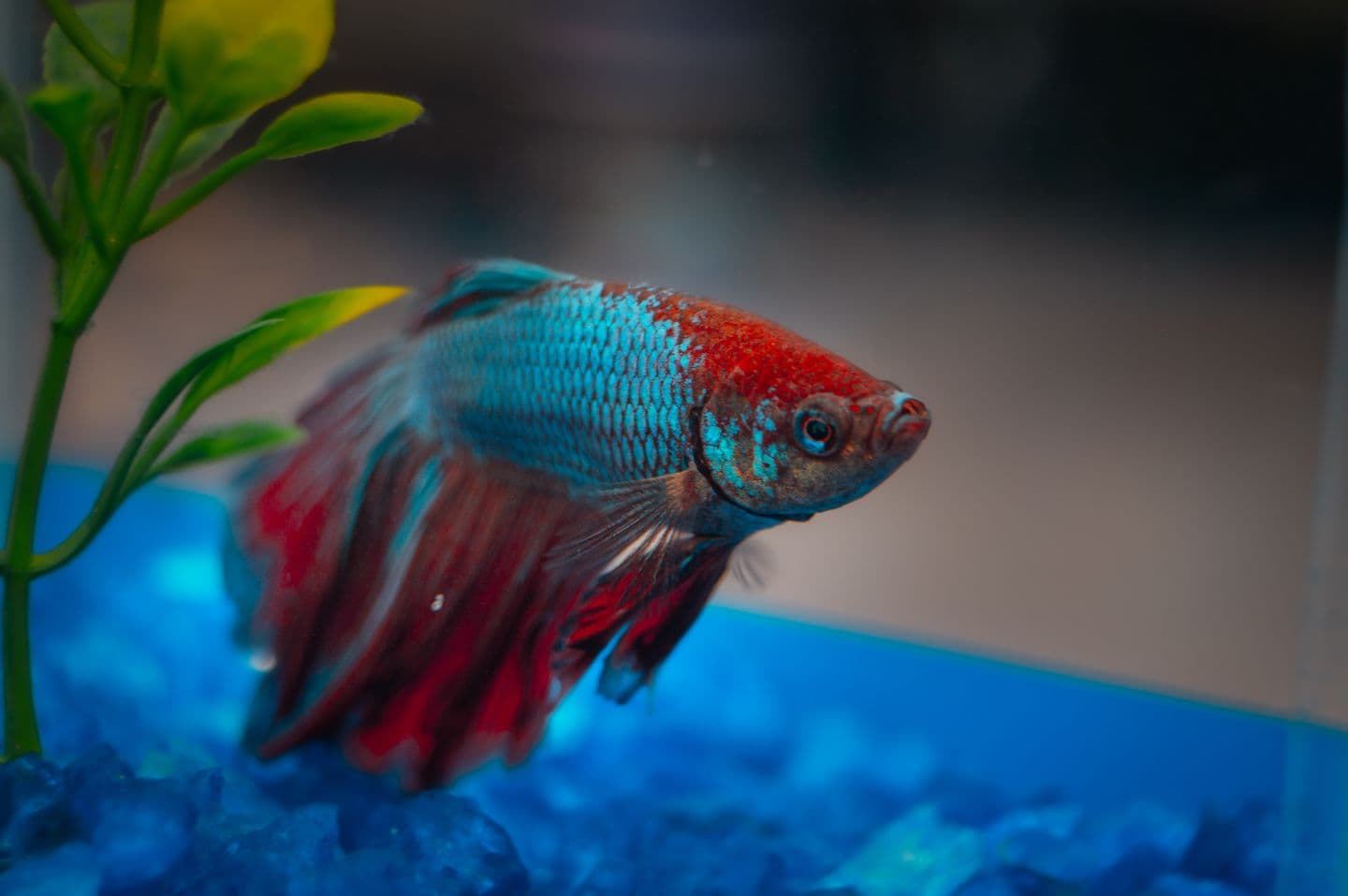
Bettas have a reputation for being an easy, low maintenance fish, largely thanks to years of being sold in tiny cups and bowls, but a healthy betta actually needs a proper, considered setup, and the g
Bettas have a reputation for being an easy, low maintenance fish, largely thanks to years of being sold in tiny cups and bowls, but a healthy betta actually needs a proper, considered setup, and the gap between what bettas are commonly given and what they genuinely need is one of the widest in the aquarium hobby.
Tank size, contrary to popular belief
A betta does not thrive in a bowl or anything under about 10 litres. A tank of at least 20 to 40 litres, ideally with a heater and gentle filtration, gives a betta considerably more stable water and a far better quality of life than the small, unheated bowls still sold specifically as betta homes in many Indian pet shops.
Temperature and water movement
Bettas are tropical fish and need a heater in almost every part of India outside the very warmest months, held steady between 24 and 27 degrees Celsius. They are also naturally accustomed to slow moving or still water, so a filter with a gentle flow, or one fitted with a sponge or baffle to soften the outflow, suits a betta's long, delicate fins far better than a strong current designed for an active schooling fish.
Décor that suits a betta's personality
Bettas appreciate broad leafed plants and floating cover near the surface, both because they naturally rest near the top of the water and because it gives them somewhere to retreat and feel secure. Avoid sharp or rough decorations, since a betta's flowing fins tear easily on anything abrasive, and smooth silk or live plants are a noticeably safer choice than stiff plastic ones.
A single betta, or with company
Most male bettas do best alone, without other fish competing for space or attention, and a solitary betta in a well set up tank is a perfectly content fish rather than a lonely one, contrary to a common misconception. If tank mates are wanted, peaceful, fast moving bottom or mid-water fish such as corydoras or ember tetras are safer choices than anything with long, bright fins that might be mistaken for a rival.
Feeding and daily care
Bettas are primarily carnivorous and do best on a good quality betta-specific pellet, fed in small amounts once or twice daily rather than one large feeding, since overfeeding is a common cause of bloating and poor water quality in betta tanks specifically.
The scissortail rasbora, Rasbora trilineata, gets its name from the black-and-white banded tail fin, which opens and closes in a scissoring motion as the fish swims, a genuinely visible behaviour rath
Flushing a fish, whether dead or simply unwanted, down the toilet is a habit many Indian households have inherited without questioning it, and it carries real risks that are worth understanding.
A cover might seem like an afterthought compared to filtration or lighting, but for a saltwater tank it does real, unglamorous work: cutting evaporation, which matters a great deal given how salinity