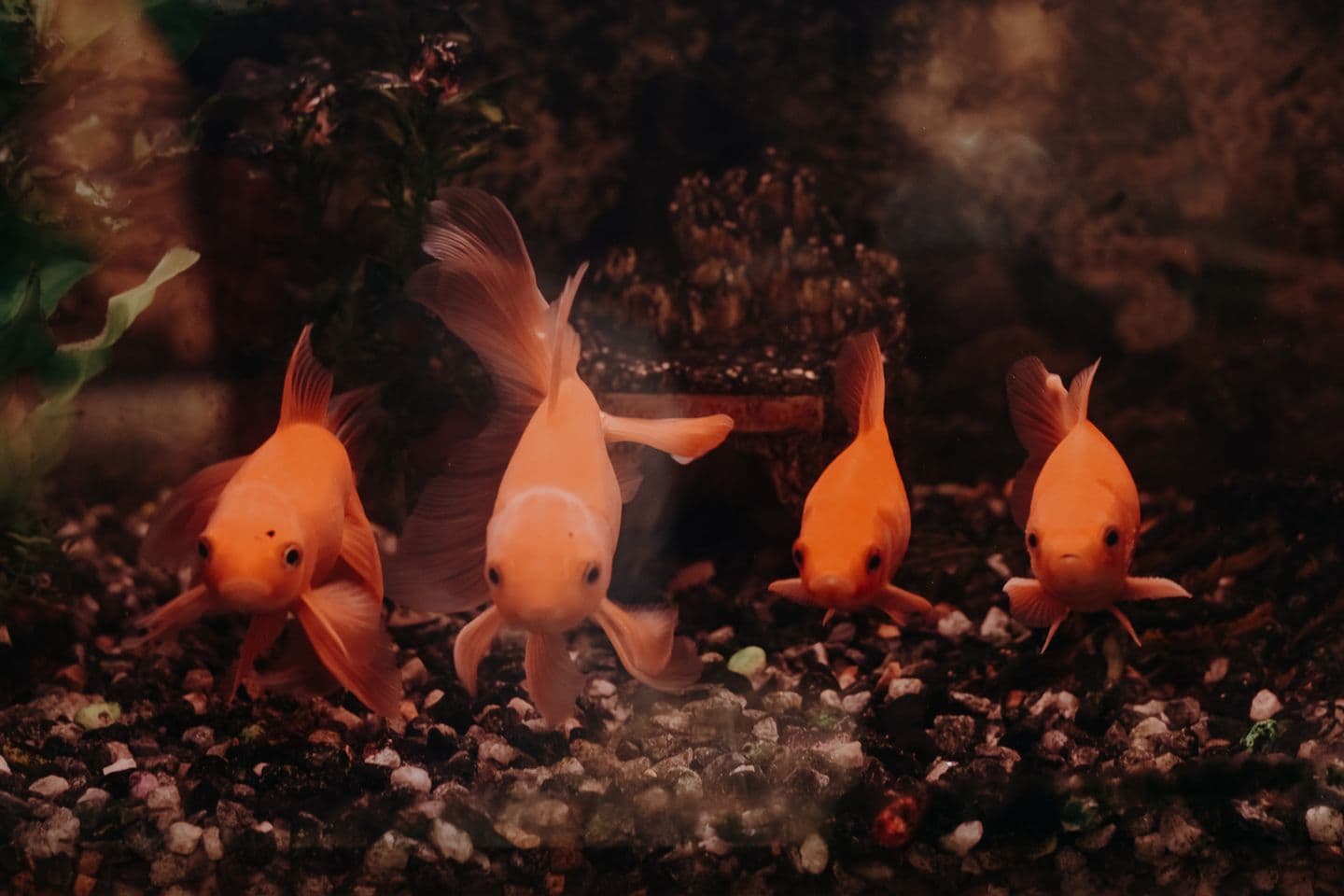
The Common Goldfish: India's Most Underestimated Pet Fish
The common goldfish was bred from a wild silver-grey crucian carp in China over a thousand years ago. Scientists still debate exactly which wild Carassius population it descends from, but the fish its
The common goldfish was bred from a wild silver-grey crucian carp in China over a thousand years ago. Scientists still debate exactly which wild Carassius population it descends from, but the fish itself, Carassius auratus, is settled and well documented. It is often sold in India as a starter fish for a small bowl. In truth it is one of the most demanding fish on this list, capable of growing past thirty centimetres in a large pond and living fifteen to twenty years or more when kept properly.
It is a coldwater fish, which makes it an odd fit for much of tropical India, though it copes well in the cooler winters of the north and in hill stations, and can tolerate warmer water than true coldwater species if the tank is well oxygenated.
Tank requirements
A single common goldfish needs a minimum of seventy five to a hundred litres, not the small bowl it is so often sold with. Bowls lack the surface area for adequate oxygen exchange and the volume to dilute waste, which is why bowl-kept goldfish so often die within months.
Strong filtration is essential, since goldfish are messy eaters and produce a lot of waste for their size. In most of India, no heater is needed, and in fact keeping the water on the cooler side, below twenty four degrees where possible, suits them better than tropical temperatures.
Diet and care
A diet of goldfish-specific pellets, supplemented with blanched peas, spinach and the occasional bloodworm, supports healthy growth. Overfeeding is the most common mistake, since goldfish beg constantly regardless of how full they are.
Given the eventual size, most owners are better served by a large tank or, where climate allows, a garden pond, rather than trying to keep a goldfish long term indoors in a small container.
Buying tips
Widely available and inexpensive, often forty to a hundred rupees per fish
Ask the shop what size tank the fish will eventually need before buying, since undersized housing is the leading cause of early goldfish deaths in India
Choose fish with clear eyes, an upright posture in the water, and no visible sores or frayed fins
The scissortail rasbora, Rasbora trilineata, gets its name from the black-and-white banded tail fin, which opens and closes in a scissoring motion as the fish swims, a genuinely visible behaviour rath
Flushing a fish, whether dead or simply unwanted, down the toilet is a habit many Indian households have inherited without questioning it, and it carries real risks that are worth understanding.
A cover might seem like an afterthought compared to filtration or lighting, but for a saltwater tank it does real, unglamorous work: cutting evaporation, which matters a great deal given how salinity