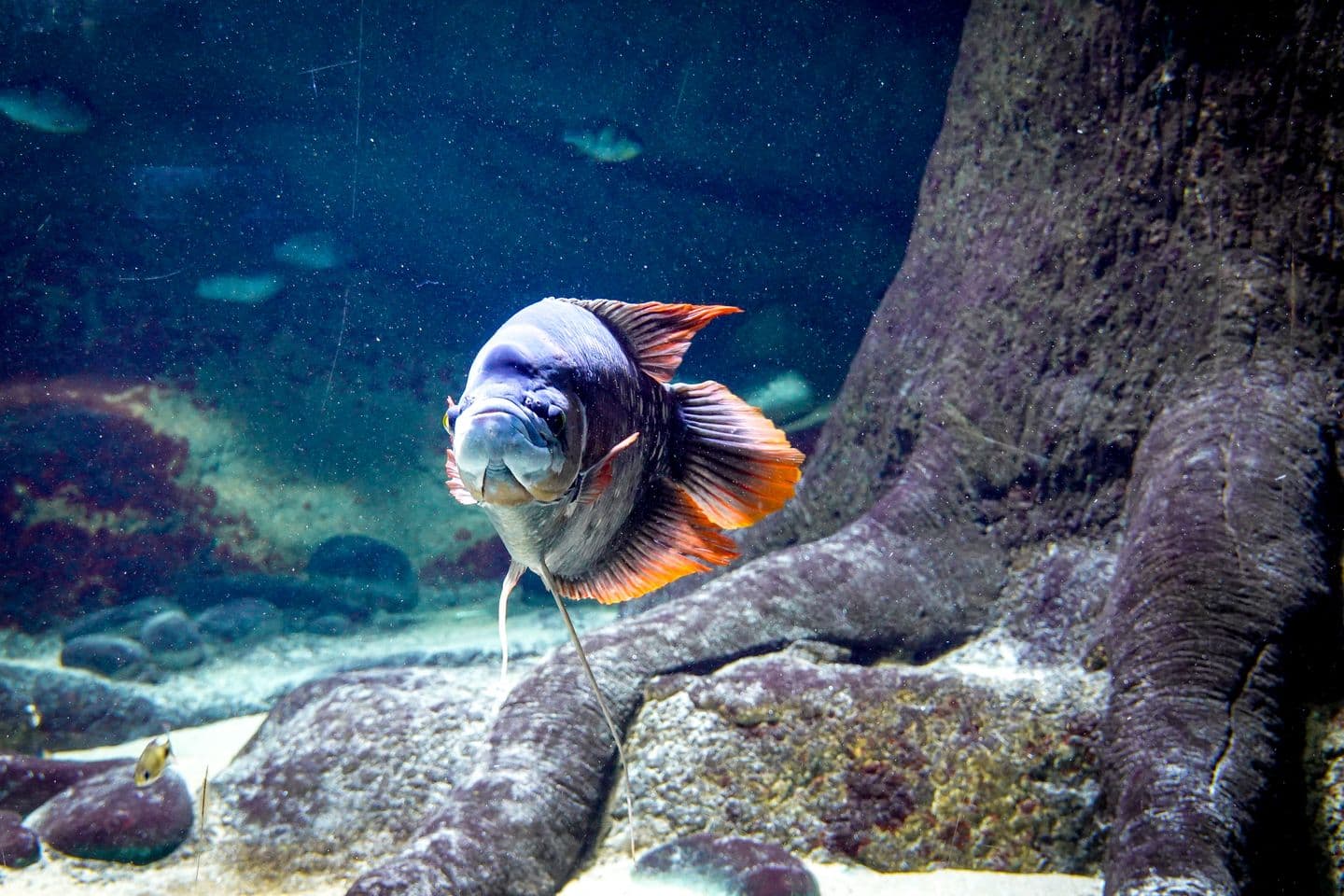
The thick-lipped gourami is named for its noticeably fuller, more pronounced lips compared to its close relatives, a genuine anatomical feature rather than just a marketing name. It carries a pinkish
The thick-lipped gourami is named for its noticeably fuller, more pronounced lips compared to its close relatives, a genuine anatomical feature rather than just a marketing name. It carries a pinkish tan body with faint darker banding and reaches around eight to ten centimetres, sitting between the dwarf and the larger three spot or moonlight gouramis in size.
It is considerably less commonly seen in the aquarium trade than its more famous relatives, which makes it an interesting choice for a keeper who has already kept the standard gouramis and wants something a little different.
Tank and water requirements
A single thick-lipped gourami or a calm pair does well in a tank of eighty litres or more, with floating plants and some quiet, planted retreat space. It is tolerant of a range of water conditions, including typical Indian tap water.
As a labyrinth fish, it benefits from a lid with an air gap above the surface, as with the rest of this family.
Diet and behaviour
A varied diet of good-quality flakes or pellets, supplemented with occasional live or frozen food, suits it well. It is generally peaceful, though like several other gouramis can show some territoriality between males.
Being less widely bred than the dwarf or three spot gourami, it tends to be a hardier, less inbred fish overall, without the same health concerns that affect commercially farmed dwarf gouramis.
Buying tips
Less commonly stocked in India than other gouramis, so may need to be sourced from a specialist aquarium shop
Priced around one hundred to two hundred rupees per fish where available
A good pick for a keeper wanting an unusual, hardy gourami rather than the most common colour forms
The scissortail rasbora, Rasbora trilineata, gets its name from the black-and-white banded tail fin, which opens and closes in a scissoring motion as the fish swims, a genuinely visible behaviour rath
Flushing a fish, whether dead or simply unwanted, down the toilet is a habit many Indian households have inherited without questioning it, and it carries real risks that are worth understanding.
A cover might seem like an afterthought compared to filtration or lighting, but for a saltwater tank it does real, unglamorous work: cutting evaporation, which matters a great deal given how salinity