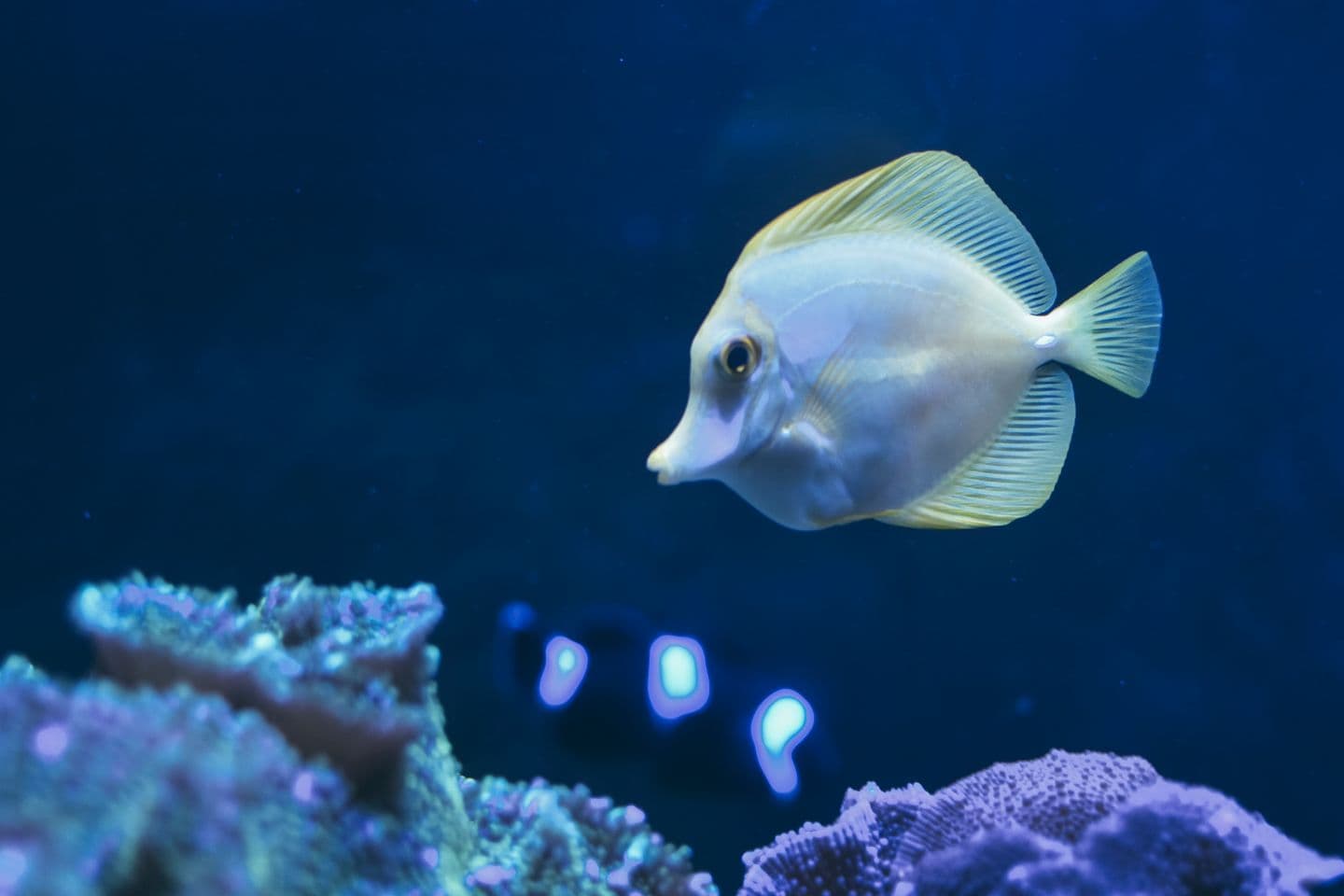
Black Spot or Tang Disease: The Flatworm Problem That Looks Worse Than It Is
Black spot disease, also called tang disease or black ich, is caused by tiny parasitic flatworms of the genus Paravortex. Despite the alarming appearance, it is one of the less dangerous marine parasi
Black spot disease, also called tang disease or black ich, is caused by tiny parasitic flatworms of the genus Paravortex. Despite the alarming appearance, it is one of the less dangerous marine parasites, and understanding that distinction matters, because overreacting with harsh medication can do more damage than the parasite itself.
Recognising it
Small black or dark brown spots, roughly the size of a grain of salt, appear scattered across the body and fins. Tangs and surgeonfish are affected far more often than other fish, though butterflyfish, angelfish and gobies can occasionally pick it up too. Infected fish may flash against rock or substrate to relieve the irritation, but many continue eating normally, which is a useful way to tell it apart from more dangerous diseases like velvet.
How the parasite spreads
The worms live in the substrate as juveniles, feeding on detritus until they find a fish host. Once attached, they feed for about six days before dropping off to reproduce in the sand, and the population can build quickly in a tank with heavy organic waste. This is why black spot outbreaks are often traced back to inconsistent gravel vacuuming rather than a single infected fish.
Treatment options
Praziquantel dosed in a quarantine tank, typically over two treatment cycles roughly 8 days apart with a water change in between, since it kills adult worms but not eggs, and a single round misses whatever hadn't hatched yet
A brief formalin bath as an alternative, following label dosing and never exceeding the stated exposure time
Improving water quality and substrate cleanliness in the display tank to starve out juvenile worms between fish hosts
A five minute freshwater dip is sometimes suggested for black spot, but experienced marine keepers are split on how effective this actually is against turbellarian worms specifically, unlike its clearer effectiveness against ich and velvet. Praziquantel remains the more reliable route.
Should you panic?
Not really. Compared to velvet or Brooklynella, which can wipe out a tank in days, black spot is slow-moving and rarely fatal on its own. Fish continue eating, and the main risk is secondary stress from constant flashing rather than the parasite itself. Treat it, but there is no need for the emergency response that faster diseases demand.
The scissortail rasbora, Rasbora trilineata, gets its name from the black-and-white banded tail fin, which opens and closes in a scissoring motion as the fish swims, a genuinely visible behaviour rath
Flushing a fish, whether dead or simply unwanted, down the toilet is a habit many Indian households have inherited without questioning it, and it carries real risks that are worth understanding.
A cover might seem like an afterthought compared to filtration or lighting, but for a saltwater tank it does real, unglamorous work: cutting evaporation, which matters a great deal given how salinity