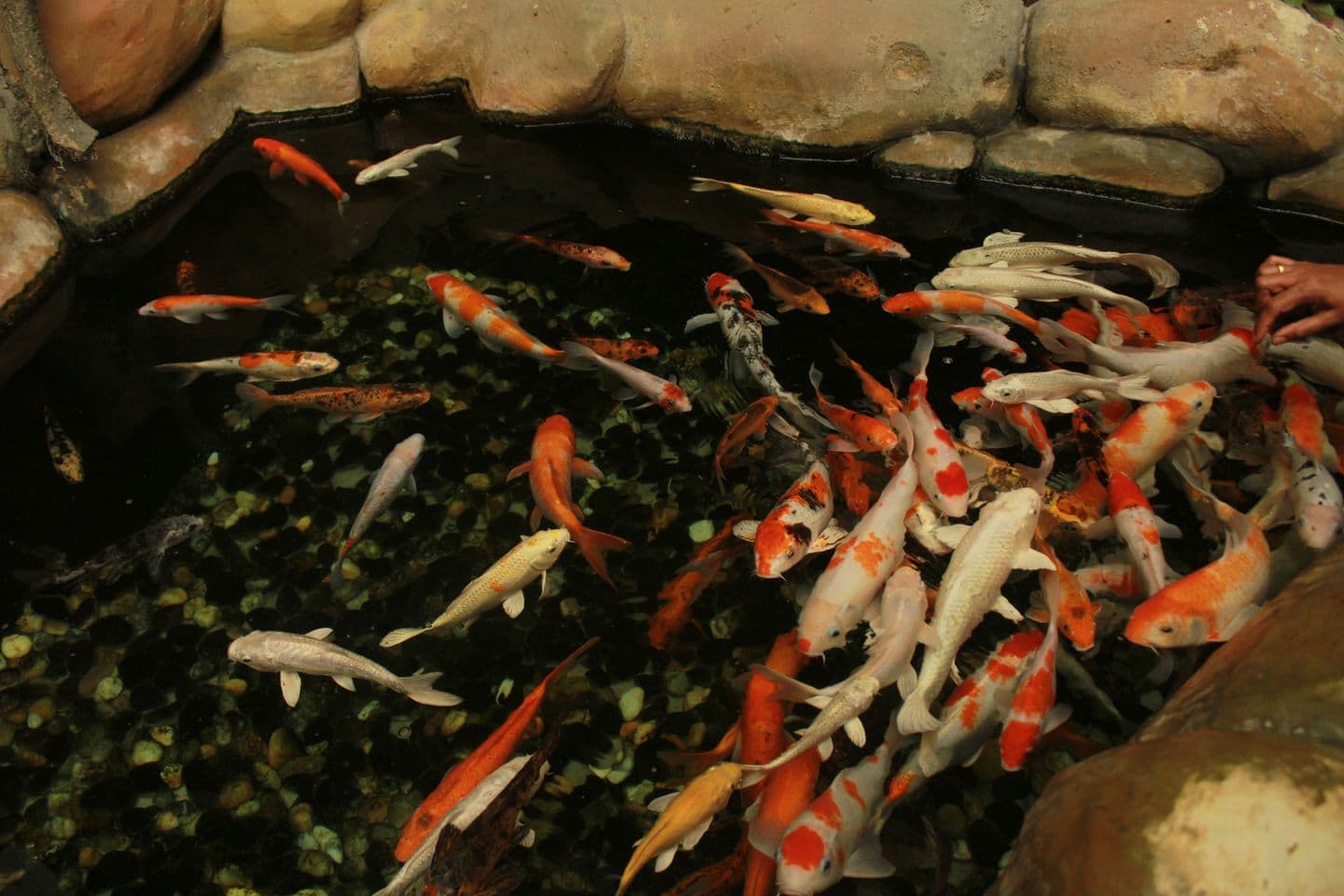
Koi are pond fish through and through, bred over centuries to be viewed from above in open water, and moving them indoors is a genuine departure from what the species is built for. That said, there ar
Koi are pond fish through and through, bred over centuries to be viewed from above in open water, and moving them indoors is a genuine departure from what the species is built for. That said, there are legitimate reasons Indian keepers consider it: a balcony or terrace pond that has run out of room, a prized koi that needs temporary isolation for treatment, or simply wanting a closer, eye level view of fish usually seen from a distance.
The scale problem
Koi are simply not small fish. A well cared for koi can reach 45 to 75 centimetres, and a single full grown adult genuinely needs a large volume of water to stay healthy long term. Experienced keepers commonly work with a conservative guide of roughly 1,000 to 1,900 litres per adult koi, considerably more generous than the old inch-of-fish-per-gallon rule sometimes quoted for aquarium fish, since koi produce far more waste relative to their size and never really stop growing. This rules out anything resembling a typical home aquarium as a permanent home for a full grown koi, though a smaller setup works reasonably well for young koi still under 15 to 20 centimetres, provided there is a clear plan to upgrade as the fish grow.
What an indoor koi setup actually needs
A large stock tank or purpose built indoor pond, realistically starting at 1,000 litres or more for a single adult fish, smaller only as a temporary home for young, still growing koi
Strong filtration, since koi produce a heavy bio load, a filter genuinely rated well above the tank's stated capacity is the safer choice
Good surface agitation or a dedicated air pump, since koi are large, active fish with high oxygen demands
A cover or netting over the top, since koi are strong enough to jump and will do so if startled
A stable water source, since koi are sensitive to chlorine and heavy metals and need properly conditioned water for every top up and water change
Extra attention to aeration in warmer parts of India, since warm indoor water holds less dissolved oxygen than a cooler outdoor pond, and large, active koi have high oxygen demands
When indoor koi keeping makes genuine sense in India
Indoor tanks work best as a temporary or quarantine measure, for a sick fish that needs close observation, a newly purchased koi serving out a quarantine period before joining an outdoor pond, or a keeper genuinely planning to build out a proper indoor pond setup rather than relying on a standard glass tank. For most Indian climates, which rarely see the sustained cold that makes overwintering indoors necessary elsewhere in the world, a well maintained outdoor pond with adequate depth remains the simpler and more natural long term home for koi.
A realistic word of caution
Koi purchased small and kept in a modest indoor tank will outgrow that tank, often faster than new keepers expect. Anyone considering indoor koi keeping as a permanent arrangement should plan from the outset for a tank in the thousand-litre-plus range per adult fish, or accept that an eventual move to an outdoor pond will likely be necessary as the fish mature.
The scissortail rasbora, Rasbora trilineata, gets its name from the black-and-white banded tail fin, which opens and closes in a scissoring motion as the fish swims, a genuinely visible behaviour rath
Flushing a fish, whether dead or simply unwanted, down the toilet is a habit many Indian households have inherited without questioning it, and it carries real risks that are worth understanding.
A cover might seem like an afterthought compared to filtration or lighting, but for a saltwater tank it does real, unglamorous work: cutting evaporation, which matters a great deal given how salinity