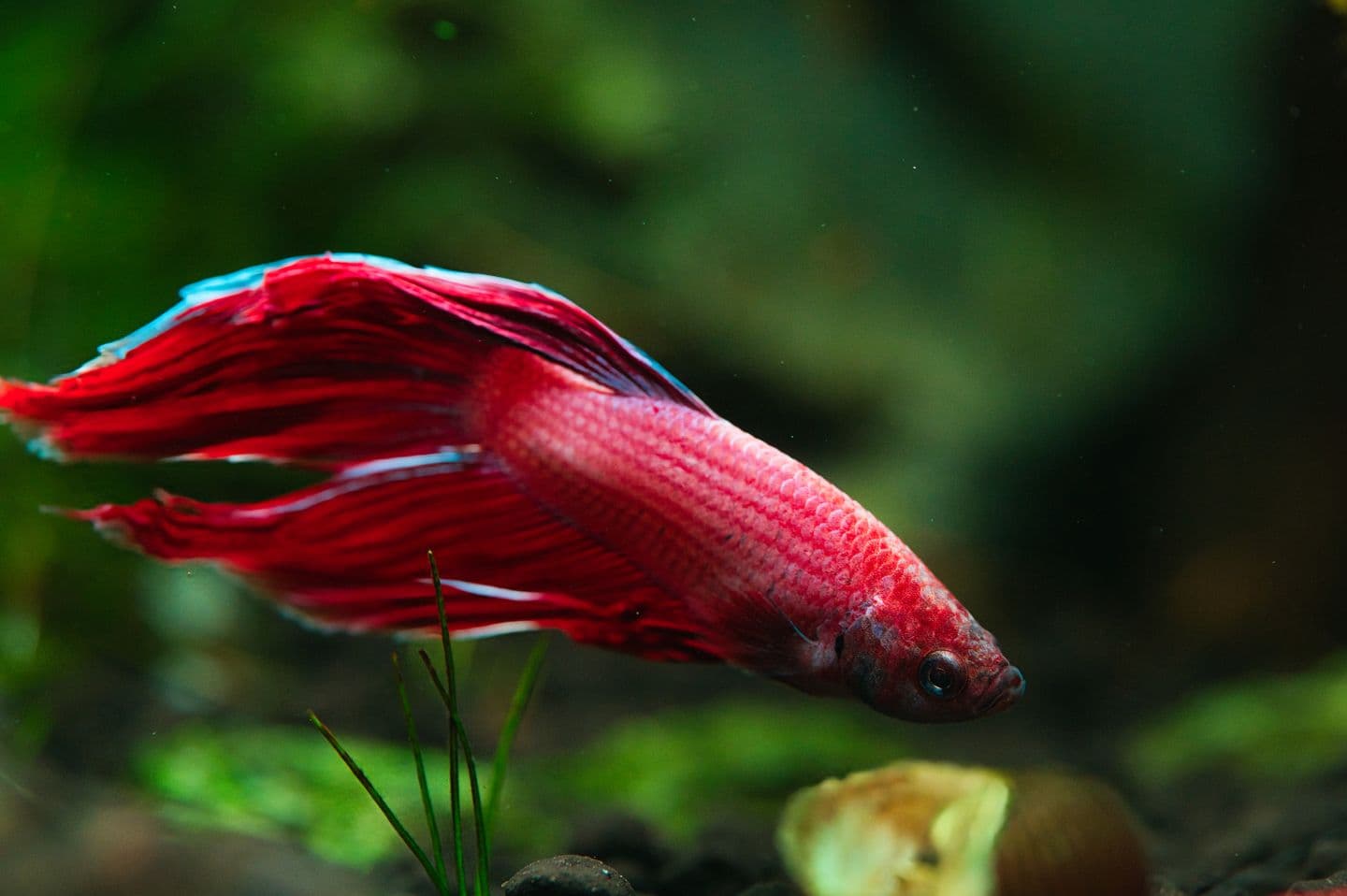
How to Tell Betta Fish Gender: Identifying Male vs. Female
Sexing a betta is usually straightforward in a healthy adult, since captive breeding for elaborate finnage and colour has made males and females look considerably more different from each other than t
Sexing a betta is usually straightforward in a healthy adult, since captive breeding for elaborate finnage and colour has made males and females look considerably more different from each other than their wild ancestors ever did. Young or juvenile bettas are a genuine exception, and patience is often the only real answer there.
Fin length and shape
This is the most obvious and reliable indicator in adult fish. Males typically carry fins four to five times longer than females, with the elaborate flowing tails most people picture when they think of a betta. Females have noticeably shorter, more rounded fins, though certain male varieties, such as some plakat types, are deliberately bred with shorter fins closer to the wild form, which is worth keeping in mind before relying on fin length alone.
The egg spot
Between the ventral and anal fins, mature females typically show a small white dot, the ovipositor, the organ used to deposit eggs during spawning. This is one of the more reliable single indicators, though it can be genuinely difficult to spot in photographs or under poor lighting, and very young females may not have developed a clearly visible one yet.
Females tend to have a somewhat rounder, wider body shape, while males run more elongated and slightly flatter side to side. This difference is subtler than fin length and easier to misjudge on its own, best used to support other indicators rather than relied on in isolation.
Colour and behaviour
Males are generally, though not universally, more vividly coloured than females, who can still be quite bright in many varieties
Males are considerably more aggressive and territorial, flaring their gill covers and fins readily, including at their own reflection in a mirror
Females preparing to spawn sometimes develop faint vertical stripes on the body, a pattern males do not show
Using a mirror to check
Holding a mirror up to the tank prompts most bettas, male or female, to flare, and photographing this reaction makes the fin length and shape differences considerably easier to assess side by side than trying to judge them from a fish swimming normally.
Why juveniles are genuinely harder to sex
Young bettas have not yet developed the fin length, egg spot or colour intensity that make adult sexing straightforward, and rushing to a conclusion based on immature features often leads to a wrong guess. Waiting until a betta is closer to three to four months old, when these features become more pronounced, gives a far more reliable read than trying to sex a very young fish.
Why getting this right matters practically
Two male bettas will fight, often fatally, if housed together, which makes correct sexing essential before considering any tank mates of the same species. Female bettas can be kept in a group, sometimes called a sorority, but this requires careful setup and enough fish, generally five or more kept in odd numbers, to distribute aggression rather than concentrate it on one individual, and is a more advanced setup than simply assuming any two bettas will get along.
The scissortail rasbora, Rasbora trilineata, gets its name from the black-and-white banded tail fin, which opens and closes in a scissoring motion as the fish swims, a genuinely visible behaviour rath
Flushing a fish, whether dead or simply unwanted, down the toilet is a habit many Indian households have inherited without questioning it, and it carries real risks that are worth understanding.
A cover might seem like an afterthought compared to filtration or lighting, but for a saltwater tank it does real, unglamorous work: cutting evaporation, which matters a great deal given how salinity