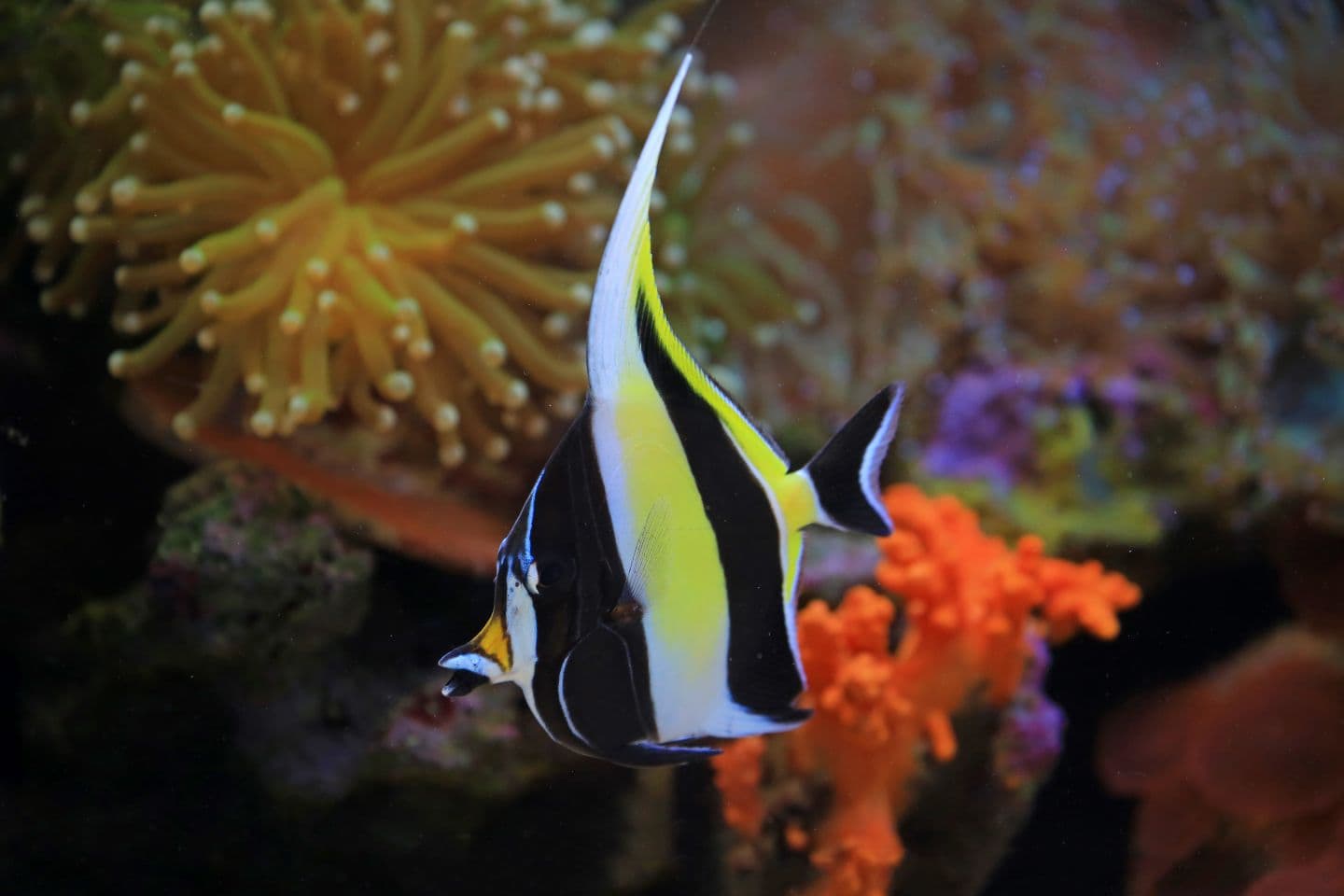
Swim Bladder Treatment: Why Marine Fish Lose Their Balance
A fish that suddenly can't hold its position in the water column, floating nose-up, sinking tail-first, or drifting sideways, is showing a swim bladder problem. In marine fish this has a genuinely dif
A fish that suddenly can't hold its position in the water column, floating nose-up, sinking tail-first, or drifting sideways, is showing a swim bladder problem. In marine fish this has a genuinely different set of usual suspects compared to the overfed goldfish stereotype most fishkeeping advice assumes.
The marine-specific cause: barotrauma
Reef fish are frequently collected from significant depth and brought to the surface quickly, and the sudden pressure change can cause a fish's swim bladder to over-expand, a condition called barotrauma. Yellow tangs and other deep-collected reef fish are particularly prone to this, and it is a recognised, well-studied problem in the marine ornamental trade. A fish arriving from the wholesaler with buoyancy trouble may simply be recovering from this, rather than suffering an infection or dietary issue.
Other causes worth ruling out
Overfeeding or gulping air while eating at the surface, less common in marine fish than in goldfish but still possible
Constipation or a gut blockage, particularly in fish fed a heavy pellet diet without enough fibrous or marine algae content
Bacterial infection affecting the bladder itself
Physical injury from aggressive tankmates or a fall against rockwork
What you can actually do
For a newly arrived fish showing mild positive buoyancy, patience is often the correct response. Many barotrauma cases resolve on their own within days as excess gas is reabsorbed, provided the fish is in a calm, low-stress quarantine tank and not competing hard for food. For suspected constipation, a period of fasting followed by offering fibre-rich foods such as nori or spirulina-based pellets can help. If the fish is severely and persistently over-buoyant, a vet experienced with fish can, in some cases, vent the swim bladder with a fine needle, but this is a last resort, not a home remedy.
When to worry
A single fish with mild buoyancy trouble that is still eating is usually not an emergency. A fish that cannot right itself at all, or several fish in the same tank developing symptoms together, points toward something systemic like poor water quality or bacterial infection, and needs a proper diagnostic look rather than a wait-and-see approach.
The scissortail rasbora, Rasbora trilineata, gets its name from the black-and-white banded tail fin, which opens and closes in a scissoring motion as the fish swims, a genuinely visible behaviour rath
Flushing a fish, whether dead or simply unwanted, down the toilet is a habit many Indian households have inherited without questioning it, and it carries real risks that are worth understanding.
A cover might seem like an afterthought compared to filtration or lighting, but for a saltwater tank it does real, unglamorous work: cutting evaporation, which matters a great deal given how salinity