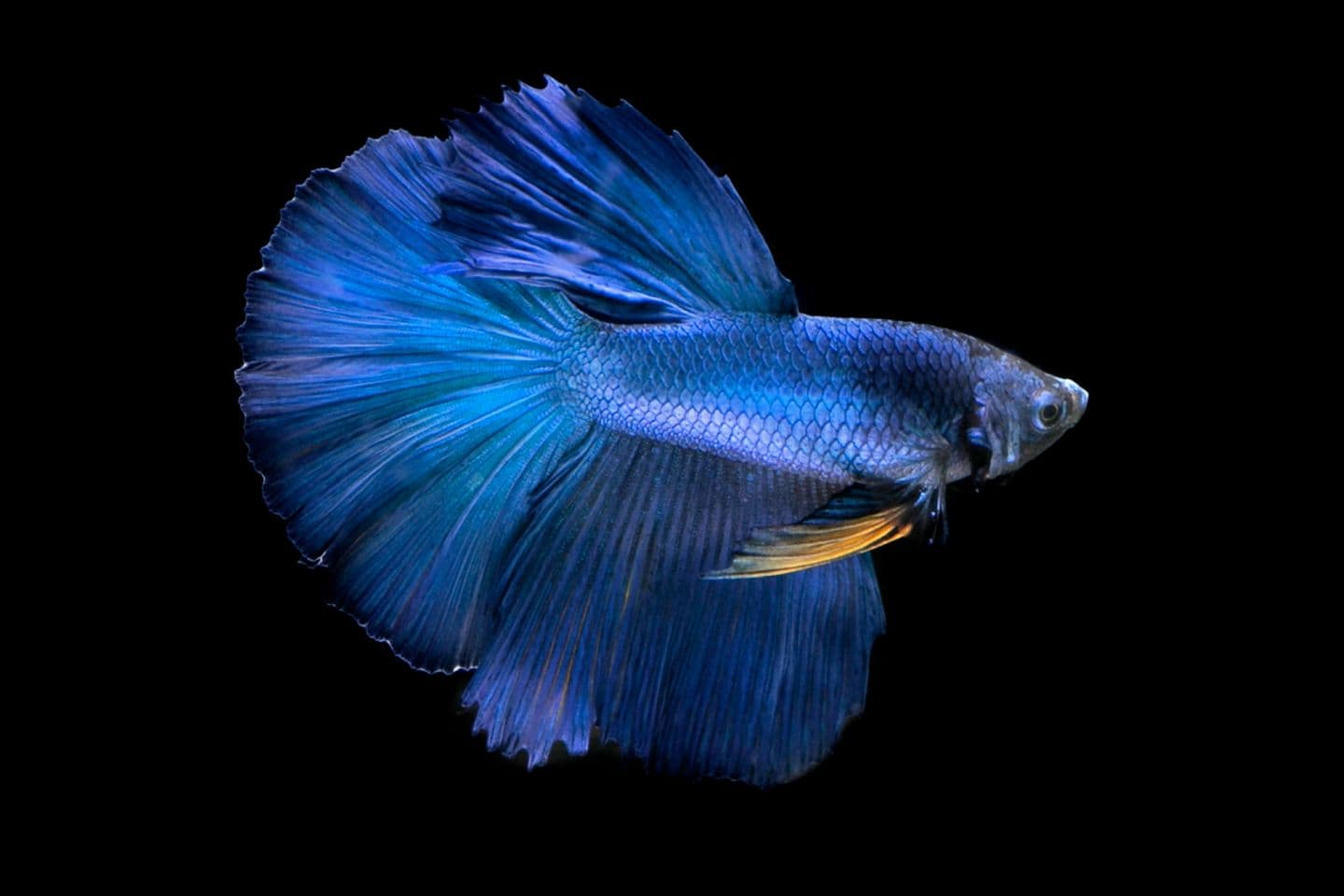
Betta constipation is common, usually straightforward to resolve, and worth catching early, since left unaddressed it can progress toward more serious swim bladder trouble. The good news is that most
Betta constipation is common, usually straightforward to resolve, and worth catching early, since left unaddressed it can progress toward more serious swim bladder trouble. The good news is that most cases trace back to the same simple cause: too much food, not enough fibre, and it responds well to a fairly predictable treatment sequence.
Recognising constipation versus normal variation
Bettas do not need to pass waste every single day, so a day without visible poop is not automatically cause for concern. What is worth investigating is two to three days with no waste alongside other signs: a visibly bloated belly, stringy or pale faeces still trailing from the fish, lethargy, spitting out food after attempting to eat it, or trouble maintaining normal buoyancy.
Telling constipation apart from something more serious
Healthy betta waste is dark brown and drops quickly to the substrate. Pale, white, or unusually long stringy waste can point toward an internal parasite rather than simple constipation, which is worth keeping in mind if the standard fasting and pea protocol below does not resolve things within a few days. Constipation can also be confused with early dropsy, since both cause bloating, but true dropsy comes with scales beginning to lift away from the body, which straightforward constipation does not.
The standard treatment sequence
Fast the fish completely for two to three days, longer, up to a week, for a more severe case; this alone resolves many mild cases without needing anything further
If fasting alone does not work, offer a small piece of blanched, deshelled pea, roughly a quarter to half a pea for a betta, once daily; the fibre acts as a natural laxative and most bettas pass waste within 24 hours of this
Thawed daphnia is a good alternative or addition to peas, since its natural fibre content offers a similar digestive benefit and many bettas find it more appealing
An Epsom salt bath, one teaspoon dissolved in a separate container of dechlorinated water, with the fish soaking for 10 to 15 minutes, can help with more stubborn cases; this should be done in a separate container, never added directly to the main tank
Preventing it from becoming a recurring problem
Feed appropriately small portions, remembering that a betta's stomach is roughly the size of its own eye; two to four pellets once or twice daily is usually enough for an adult
Build in a weekly fasting day as a standing routine rather than only fasting reactively once constipation appears
Include fibre-rich food regularly, not just as an emergency fix, peas or daphnia offered every seven to ten days as part of the normal diet meaningfully reduces how often constipation recurs
Avoid relying exclusively on dry pellets or flakes, which tend to be lower in moisture and fibre than a varied diet including some live or frozen food
When to take it more seriously
If constipation does not resolve within about a week of consistent treatment, or the fish shows worsening buoyancy problems, increasing lethargy, or scales beginning to stand away from the body, it is worth treating this as a more significant health issue, potentially swim bladder disease or an early sign of dropsy, rather than continuing to repeat the standard constipation protocol.
The scissortail rasbora, Rasbora trilineata, gets its name from the black-and-white banded tail fin, which opens and closes in a scissoring motion as the fish swims, a genuinely visible behaviour rath
Flushing a fish, whether dead or simply unwanted, down the toilet is a habit many Indian households have inherited without questioning it, and it carries real risks that are worth understanding.
A cover might seem like an afterthought compared to filtration or lighting, but for a saltwater tank it does real, unglamorous work: cutting evaporation, which matters a great deal given how salinity